
TL;DR
Listen free for 30 days with Audible
Thousands of audiobooks and originals — cancel anytime.
Start your free trialAs an affiliate, we earn on qualifying purchases.
Use a thermometer to check doneness—timing varies with thickness and heat. Burgers take about 8-12 mins, brats 15-20 mins, kebabs 8-15 mins. Always rest meat before serving.
Imagine biting into a burger that’s perfectly cooked, juicy on the inside, with a smoky crust on the outside. Or a bratwurst with a snap that makes you grin, cooked just right. Grilling is an art, but it’s also science—knowing how long to cook each item makes all the difference between a meal that’s safe and one that’s disappointing.
In this guide, you’ll learn the exact times and techniques for grilling burgers, brats, and kebabs. Whether you’re a weekend warrior or a seasoned griller, these tips help you hit that sweet spot—perfectly cooked, safe, and full of flavor.
Always use an instant-read thermometer to verify safety—timing alone isn’t enough.
Burgers need about 8–12 minutes, flipping once, to reach 160°F safely.
Brats take 15–20 minutes over medium heat; simmering in beer beforehand boosts flavor.
Kebabs usually cook in 8–12 minutes, with chicken reaching 165°F and shrimp just 2–3 minutes per side.
Rest grilled meat for 3–5 minutes to keep juices in and improve flavor.
How Long to Grill Burgers, Brats, and Kebabs
Great grilling is equal parts heat, timing, and verification. Use these ranges to plan the cook—then let an instant-read thermometer confirm a safe, juicy finish.
Plan the fire. Know the range.
Thickness, starting temperature, grill heat, wind, and lid position all change the clock. These ranges assume a preheated grill and typical portion sizes.
Burgers
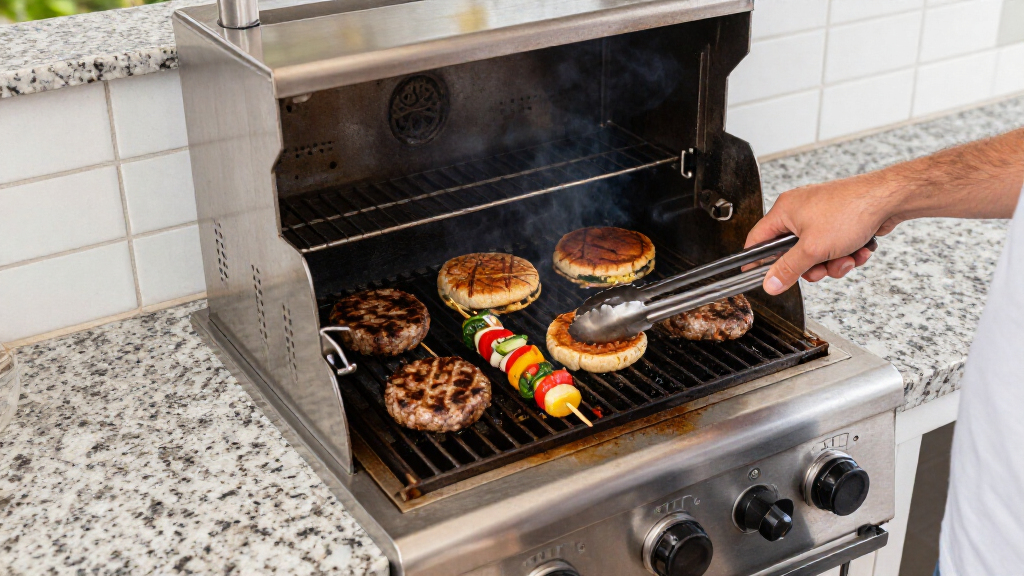
Grill over medium-high direct heat. Flip once around the halfway point, then verify the center reaches 160°F.
Bratwurst
Use steady medium heat and turn every few minutes. High heat can split the casing before the center cooks through.
Kebabs
Turn every 2–3 minutes for even browning. Keep pieces uniform and leave small gaps so hot air can circulate.
Relative grill time
Longest common range shown = 20 minutesThe thermometer decides.
Insert the probe into the thickest part without touching the grate, skewer, or bone. For thin foods, insert from the side toward the center.
A burger’s color, firmness, or juice color cannot reliably confirm safety. Check the center of every unusually thick patty.
| Food | Approx. time | Safe internal target | Heat & handling | Visual cue |
|---|---|---|---|---|
| Ground beef burger | 8–12 min | ✓ 160°F | Medium-high; flip once | ✗ Color is unreliable |
| Pork or beef brat | 15–20 min | ✓ 160°F | Medium; turn regularly | ~ Even browning only |
| Poultry brat | 15–20 min | ✓ 165°F | Medium; avoid split casing | ✗ Casing color is unreliable |
| Chicken kebab | 10–15 min | ✓ 165°F | Medium-high; turn often | ~ Opaque, but verify |
| Beef or lamb kebab | 8–12 min | ✓ 145°F + 3-min rest | Whole-muscle pieces | ~ Browning varies |
| Shrimp | 2–3 min/side | ✓ Opaque & firm | Quick direct heat | ✓ Opaque and curled |
From raw to ready in five moves.
Good results come from controlling heat and checking progress—not from chasing an exact minute on the clock.
Preheat
Stabilize the grill before food goes on. Clean and lightly oil the grate.
Build zones
Create a hot side for browning and a cooler side for finishing.
Turn with purpose
Flip burgers once; rotate brats and kebabs regularly for even heat.
Probe the center
Check the thickest portion as the lower end of the time range approaches.
Rest
Wait 3–5 minutes so juices redistribute and carryover heat settles.
Open or closed?
Close the lid for thick burgers, brats, and substantial kebabs. Keep it open for thin patties, shrimp, and quick searing.
Use two-zone heat
Sear over the hot zone, then move food to the cooler zone if the exterior browns before the center reaches temperature.
Beer-simmered brats
Simmer raw brats gently with beer and onions for 10–15 minutes, then grill briefly for browning and casing snap.
Better skewers
Soak wooden skewers for 30 minutes. Use double skewers to prevent spinning, and separate meat from vegetables.
Every great bite follows the same logic.
The clock starts the process, but preparation, controlled heat, and temperature verification determine the result.
Fast habits, better results.
Keep the process simple: prepare consistently, manage the heat, verify the center, and give the food time to rest.
Do this every time
Avoid these traps
Rest grilled meat before serving. Expect roughly 5°F of carryover rise in many items, but always ensure the final verified temperature reaches the applicable safe target.
How Long to Grill Burgers for Juicy, Safe Results
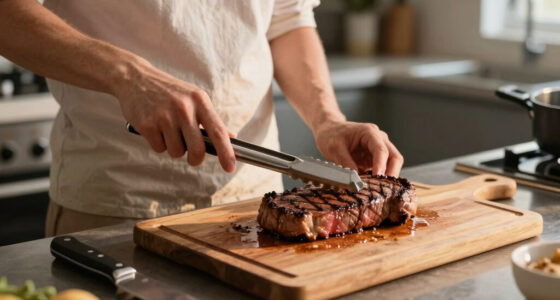
For a 3/4-inch beef patty cooked over medium-high heat (~375–450°F), plan on about 8–12 minutes total. Flip once at the halfway point—around 4–6 minutes. Use an instant-read thermometer to aim for 160°F internally.
Imagine the sizzle as you flip—each side gets about 3–5 minutes. Pressing a shallow dimple in the center prevents puffing, which can cause uneven cooking. Resting the burger for 3–5 minutes after removing it from the grill allows the juices to redistribute, resulting in a juicier, more flavorful bite. Relying solely on visual cues like pink or brown can be misleading because different cuts and cooking methods can produce similar appearances at different safety levels. Using a thermometer ensures you reach the safe internal temperature without overcooking, which can dry out the meat. The tradeoff here is between convenience and accuracy—without a thermometer, you risk undercooking or overcooking, affecting safety and taste.
As an affiliate, we earn on qualifying purchases.
Master the Perfect Bratwurst Timing for Flavor and Safety
Grill bratwurst over medium heat (~300–350°F) for about 15–20 minutes, turning every few minutes. This careful turning helps achieve an even browning and prevents splitting casings, which is crucial because uneven cooking can lead to food safety issues or burst casings that cause flare-ups. For safety, internal temp should reach 160°F for pork and beef, or 165°F for poultry, as these temperatures ensure pathogens are eliminated. Many cooks prefer to simmer brats in beer and onions for 10–15 minutes before grilling; this technique gently cooks the sausages, making them tender and flavorful, and reduces grilling time. Pre-cooked brats only need 5–10 minutes to heat through and develop a crispy exterior. The key here is balancing flavor development with safety—overcooking can dry out the sausage, but undercooking risks foodborne illness. Using a thermometer helps find that sweet spot, but understanding how the sausage changes during cooking guides your intuition and timing.
As an affiliate, we earn on qualifying purchases.
How to Cook Kebabs Perfectly Without Drying or Spinning
For beef or lamb kebabs, aim for 8–12 minutes at medium-high heat (~375–450°F), turning every 2–3 minutes to promote even browning and prevent charring. Proper turning distributes heat uniformly, preventing dry patches or undercooked centers. Chicken kebabs take about 10–15 minutes, reaching 165°F, which is essential because poultry must be cooked thoroughly to destroy harmful bacteria. Shrimp only need 2–3 minutes per side; looking for an opaque, curled flesh indicates doneness, but timing and visual cues can vary with size. Soaking wooden skewers for 30 minutes before grilling prevents them from burning, which is critical because burnt skewers can impart off-flavors or cause safety hazards. Leaving gaps between pieces ensures heat circulation, promoting even cooking. Threading meat and vegetables separately or using double skewers prevents spinning, which can make turning difficult and cause uneven cooking. Understanding these details helps you avoid common pitfalls like dry meat, uneven doneness, or flare-ups, ensuring your kebabs are flavorful and safe.
As an affiliate, we earn on qualifying purchases.
Cross-Cutting Tips for Perfect Grilling Every Time
- Use a thermometer for accuracy—times are estimates, but internal temperature confirms doneness and safety. This avoids undercooking, which can be dangerous, or overcooking, which ruins texture and flavor.
- Keep lid open or closed depending on item thickness. Thick burgers and kebabs benefit from lid down to trap heat and cook evenly through thicker pieces. Thin patties or seafood cook quickly and benefit from lid open to sear surface and prevent overcooking. This balance ensures proper heat transfer without burning or drying out the food.
- Employ two-zone fire—hot for searing, cooler for finishing. This technique allows you to develop a flavorful crust without risking overcooking the interior, especially helpful for thick burgers and large sausages.
- Remember carryover cooking: meat rises about 5°F after removing from heat. Pulling meat slightly early and resting ensures it reaches the target temperature without overcooking, preserving juiciness and flavor. This practice requires understanding how residual heat continues to cook the meat even after removal, which can be the difference between a perfectly cooked burger and an overdone one.
As an affiliate, we earn on qualifying purchases.
Frequently Asked Questions
How do I know when my burger is done without a thermometer?
Relying on visual cues alone isn’t safe. The only foolproof method is checking the internal temperature with a thermometer—target 160°F for ground beef. Juices running clear and firmness can help, but they’re unreliable indicators.Should I grill brats raw or pre-cooked?
Pre-cooked brats only need 5–10 minutes on the grill for reheating and browning. Raw or fresh brats take longer—about 15–20 minutes—cooked over medium heat, turning regularly to prevent splitting and ensure safety.How long should kebabs stay on the grill?
Most kebabs cook in about 8–12 minutes, depending on the meat. Chicken kebabs need to reach 165°F, while beef or lamb are safe at 145°F after a 3-minute rest. Shrimp are done in just 2–3 minutes per side.Can I grill frozen burgers or brats?
Yes, but add roughly 50% more cooking time. Always verify internal temperature—160°F for beef and pork, 165°F for poultry—to ensure safety and proper doneness. This extra time helps ensure the center reaches a safe temperature without overcooking the exterior.Should I flip my kebabs more than once?
Flip kebabs every 2–3 minutes to promote even cooking and prevent burning. Using two parallel skewers helps keep pieces from spinning, especially with smaller chunks or seafood, ensuring uniform doneness and easier handling.Conclusion
Mastering grilling times isn’t about guesswork—it’s about precision and patience. Your thermometer is your best friend, guiding you to perfectly cooked, safe, and flavorful results every time.
Next time you fire up the grill, remember: a little time and a quick temp check make a world of difference. That sizzling, smoky aroma will be worth it—and so will the perfect bite.
NFL season / tailgating Picks
team gear
As an affiliate, we earn on qualifying purchases.