
TL;DR

Get kitchen gear delivered free with Prime
- Fast, free delivery on millions of items
- Prime Video, Amazon Music and more included
- Member-only deals all year
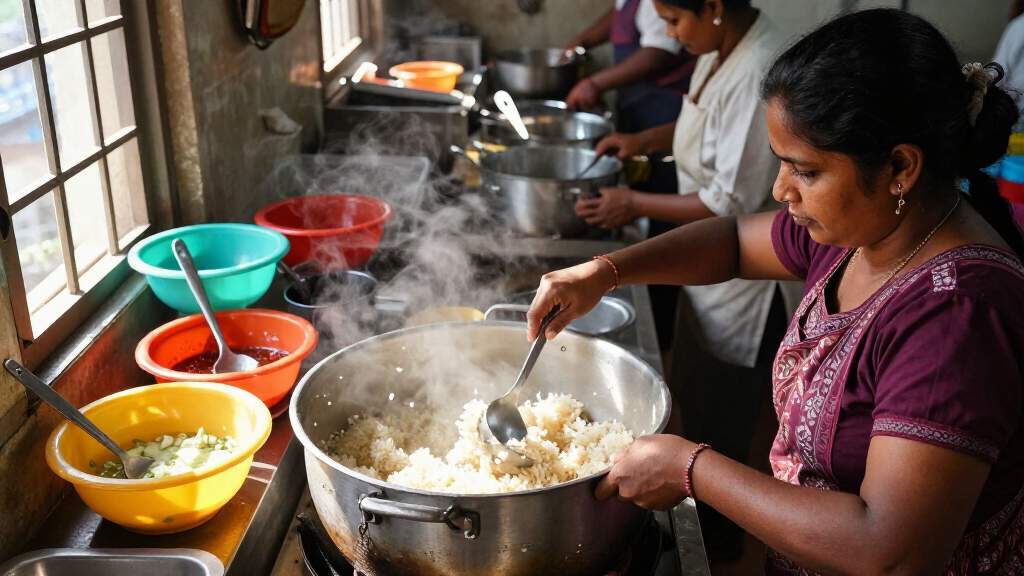
Delhi’s Atal Canteens are now serving subsidized, filling meals to the city’s poor, with confirmed expansion and positive community feedback. The initiative aims to address food security and affordability.
Delhi’s Atal Canteens are now providing subsidized meals designed to fill stomachs and improve food security among low-income residents, according to official sources. The scheme, launched by the Delhi government, aims to offer affordable, nutritious food, and has seen recent expansion across multiple localities, making it a significant development in the city’s social welfare efforts.
The Atal Canteen scheme was officially expanded in Delhi earlier this year, with new outlets opening in various districts, according to government officials. The canteens offer meals at a fixed, highly subsidized price—typically around Rs. 20 per plate—aimed at ensuring no resident goes hungry due to financial constraints. The program’s operational details, including the number of canteens and the menu offerings, have been confirmed by Delhi’s Food and Civil Supplies Department.
Community feedback has been largely positive, with many residents expressing relief at the availability of affordable, filling meals. Officials have emphasized that the scheme is part of the city’s broader efforts to address food insecurity and improve nutritional standards among the urban poor. The initiative is also seen as a step towards reducing reliance on informal, often unsafe, food sources.
Impact of the Atal Canteen Scheme on Food Security in Delhi
The expansion of the Atal Canteen scheme is significant because it directly addresses the issue of food insecurity among Delhi’s low-income populations. By providing affordable, nutritious meals, the scheme aims to reduce hunger and improve health outcomes. It also represents a government effort to ensure social safety nets are accessible and effective, especially in urban settings where economic disparities are stark.
Furthermore, the initiative could influence similar schemes in other Indian cities, highlighting a model of government intervention in ensuring basic nutritional needs are met. The scheme’s success could also bolster public confidence in government-led social welfare programs.
Products Worth Considering

EGO Power+ PST3041 3000W Nexus Portable Power Station with Four 5.0Ah Batteries

WORX Pegasus Portable Folding Workbench and Sawhorse, WX051

Greenworks 2100 PSI Electric Pressure Washer
As an affiliate, we earn on qualifying purchases.
Background and Recent Expansion of Delhi’s Food Schemes
The concept of subsidized community canteens in Delhi has been part of the city’s social welfare initiatives for several years, with the Atal Canteen scheme launched to provide affordable meals to the urban poor. Prior to the recent expansion, a limited number of canteens operated in select localities, serving a modest number of residents.
The recent push to expand the scheme was announced by Delhi’s government in response to rising concerns over food security, especially amid economic challenges faced by many residents. This expansion has involved increasing the number of operational outlets, updating menu options, and streamlining procurement processes to ensure sustainability.
While the scheme has been generally well-received, there are ongoing discussions about its long-term financial viability and how it can be scaled further without compromising quality or accessibility.
Questions About Long-Term Sustainability and Expansion
While the current expansion is confirmed, it remains unclear how sustainable the scheme will be in the long term, especially regarding funding and operational costs. There are also questions about whether the scheme will be further expanded to cover more localities or integrated with other social welfare programs. Details about future plans and potential challenges are still emerging and have not been officially clarified.
Next Steps for the Atal Canteen Initiative in Delhi
Officials are expected to continue monitoring the scheme’s impact and may announce further expansion plans in the coming months. There is also likely to be increased community feedback and evaluations to assess nutritional quality, operational efficiency, and financial sustainability. Stakeholders are watching closely to see if the scheme can maintain its current success and scale further to reach more vulnerable populations.
Key Questions
How much do meals cost at the Atal Canteens?
Meals are typically priced at around Rs. 20 per plate, making them highly affordable for low-income residents.
Where are the new Atal Canteens located?
New outlets have been opened across various districts in Delhi, with details available from the Delhi government’s official notifications.
Are the meals nutritious?
Yes, officials have stated that the menus are designed to provide balanced, nutritious food, with regular reviews to maintain quality standards.
Is the scheme expected to expand further?
While current plans focus on consolidating the existing expansion, officials have hinted at possible future growth depending on funding and operational success.
How is the scheme funded?
The scheme is funded by the Delhi government’s social welfare budget, with some support from local municipal bodies. Long-term financial sustainability remains under review.
Source: local