
TL;DR

Get kitchen gear delivered free with Prime
- Fast, free delivery on millions of items
- Prime Video, Amazon Music and more included
- Member-only deals all year
Most vegetables roast best at 400°F to 425°F, but specific times vary. Root veggies take longer, while greens need less time. Proper prep and spacing are key for crispy, tender results.
Ever thought about how a simple change in temperature or time can turn a good roasted vegetable into an unforgettable one? The secret lies in knowing the right balance for each type. When you get the timing and heat just right, you unlock rich caramel notes, a crispy edge, and a tender inside.
In this guide, you’ll learn exactly how long to roast different vegetables at specific temperatures. Whether you’re roasting carrots for a sweet glow or broccoli for that perfect crunch, these tips will help ensure every batch hits the mark.
Most vegetables roast well between 400°F and 425°F, which promotes caramelization and browning.
Root vegetables need 30–45 minutes, while greens like asparagus only take 10–15 minutes at similar temperatures.
Uniform cutting and proper spacing ensure even cooking and crispy results.
Use convection and flavor-enhancing oils for quicker, tastier roasts.
Adjust cooking times based on size and texture for perfect doneness every time.
Roasting Vegetables: Times and Temperatures by Type
TL;DR: Most vegetables roast best at 400°F to 425°F, but timing changes by density. Root vegetables take longer, greens need less time, and crisp edges depend on uniform cuts, oil, and space on the tray.
Match heat to density
The denser the vegetable, the longer heat needs to travel to the center. Softer and greener vegetables roast quickly, so texture depends on close timing and an uncrowded tray.
Roots
Carrots, potatoes, parsnips, sweet potatoes: roast at 400°F for 30-45 minutes. Uniform chunks help the centers soften while edges brown.
Cruciferous
Broccoli, Brussels sprouts, cauliflower: roast at 400°F for 20-30 minutes. Halved or flat-cut sides create crisp, deeply browned contact points.
Greens
Asparagus and green beans: roast at 400°F for 10-15 minutes. Pull them when tender-firm with lightly charred tips.
Times and temperatures by type
Use 400°F as the default, then adjust by moisture, size, and how much browning you want. Smaller pieces finish faster; larger cuts need patience.
| Vegetable type | Examples | Temperature | Time | Texture target | Risk check |
|---|---|---|---|---|---|
| Root vegetables | Carrots, potatoes, parsnips | 400°F / 200°C | 30-45 min | ✓ Tender center, crisp edge | ~ Large chunks need longer |
| Cruciferous | Broccoli, Brussels sprouts, cauliflower | 400°F / 200°C | 20-30 min | ✓ Nutty, browned, crisp | ~ Burns quickly if uneven |
| Squash and soft veg | Butternut squash, zucchini | 400°F / 200°C | 20-30 min | ✓ Silky, caramelized | ✗ Overcooking turns mushy |
| Peppers and alliums | Bell peppers, onions, tomatoes | 375-400°F / 190-200°C | 20-25 min | ✓ Soft with light char | ~ Moisture slows browning |
| Quick greens | Asparagus, green beans | 400°F / 200°C | 10-15 min | ✓ Bright and tender-firm | ✗ Too long becomes limp |
From raw tray to crisp edges
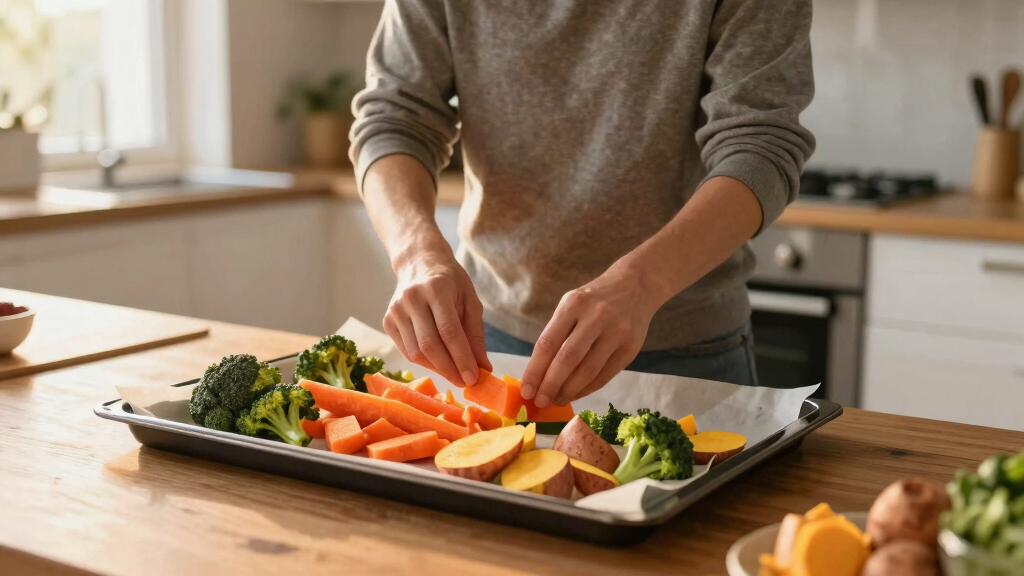
Perfect roasting is a chain of small decisions: cut evenly, coat lightly, give the vegetables room, then use high heat to drive browning instead of steaming.
Cut
Match piece size within each vegetable family so every bite finishes together.
Coat
Use high smoke point oil, salt, and herbs without soaking the vegetables.
Space
Arrange in one layer so hot air reaches the edges and moisture can escape.
Toss
Turn halfway to expose new surfaces to the pan and avoid one-sided browning.
Finish
Pull when fork-tender with browned edges; broil briefly for extra crispness.
Roasting time spectrum
The same 400°F oven can produce very different results depending on density and moisture. This scale shows the practical time spread from quick greens to hearty roots.
Temperature sweet spot
Use 375°F for low-and-slow tenderness, 400°F for everyday roasting, and 425°F when you want faster browning and sharper edges.
Small changes, better batches
Recent roasting habits lean on convection, flavor-infused oils, vegetable blends with similar cook times, and slower roasting for deeply tender roots.
- AUse enough space. Crowded vegetables release steam and lose crispness.
- BToss halfway. Turning exposes more surfaces to dry heat and even browning.
- CChoose sturdy oils. Avocado, grapeseed, or light olive oil handle high heat well.
- DGroup by timing. Pair carrots with parsnips, or peppers with onions, for easier sheet-pan meals.
Convection shortcut
Convection circulates hot air around the pan, improving browning and reducing cooking time. Start checking a few minutes early, especially for quick greens and smaller cuts.
How do you know they are ready?
Look for two signals at once.
Vegetables should be tender inside when pierced with a fork or skewer, while the edges look browned, crisp, and slightly caramelized. If the centers are still firm, keep roasting; if the edges are done but the centers lag, cut smaller next time or lower the temperature slightly.
Why 400°F to 425°F Is Your Best Roasting Range
Roasting vegetables at **400°F to 425°F** promotes caramelization, which gives them that irresistible golden-brown crust and deep flavor. This temperature range strikes a perfect balance—hot enough to crisp, but not so hot that it burns or dries them out.
For example, roasting a tray of carrots at 425°F develops a sweet, smoky flavor with a tender interior in about 30 minutes. The high heat encourages natural sugars to caramelize, creating that rich, savory aroma that fills your kitchen.
As an affiliate, we earn on qualifying purchases.
Mastering Times & Temperatures for Root Vegetables
Root vegetables like carrots, potatoes, and parsnips need a steady, moderate heat to soften while developing a crispy exterior. Roast at **400°F (200°C)** for **30–45 minutes**. Cutting them into uniform pieces ensures even cooking, which is crucial because uneven pieces can lead to overcooked or undercooked portions, affecting both texture and flavor. Larger chunks may need longer, but uniformity helps manage timing.
For example, a batch of cubed sweet potatoes roasted at this temperature produces a caramelized, fluffy inside with a lightly crisped edge. The tradeoff here is balancing size for even cooking versus time—smaller pieces cook faster but can become mushy if overdone, while larger chunks need patience but retain better texture.
As an affiliate, we earn on qualifying purchases.
Cruciferous Vegetables: Crispy and Brown in 20–30 Minutes
Broccoli, Brussels sprouts, and cauliflower roast quickly at **400°F (200°C)** for **20–30 minutes**. Achieving the perfect crispy, browned edges intensifies their nutty flavor, which is a hallmark of well-roasted cruciferous vegetables. The key is to monitor closely because they can quickly go from perfectly charred to burnt, especially if cut unevenly or if the oven runs hot.
For instance, roasting Brussels sprouts halved and seasoned with olive oil and sea salt at 400°F for 25 minutes yields a balance of crunch and tenderness. The tradeoff between time and browning is important; too short, and they won’t develop enough flavor; too long, and they risk burning or becoming bitter. Proper spacing and tossing during roasting help promote even browning, maximizing flavor development without overdoing it.
digital kitchen thermometer for roasting
As an affiliate, we earn on qualifying purchases.
As an affiliate, we earn on qualifying purchases.
Squash & Soft Vegetables: When 20–30 Minutes Is Enough
Butternut squash, zucchini, and other softer vegetables roast at **400°F (200°C)** for **20–30 minutes**. This time frame is optimal because their high moisture content and delicate structure mean they can become mushy if overcooked. The goal is to develop a deep, caramelized flavor while maintaining a silky texture, which enhances their natural sweetness and makes them versatile for various dishes.
For example, roasted butternut cubes develop a deep, caramelized flavor with a silky texture after 25 minutes. Cutting them uniformly helps ensure even cooking, but the tradeoff is that smaller pieces will cook faster and risk overdoing, while larger chunks take longer but retain better shape. Proper timing prevents mushiness, ensuring a perfect balance of flavor and texture.
As an affiliate, we earn on qualifying purchases.
Quick-Cooking Veggies: Asparagus & Green Beans in 10–15 Minutes
Delicate greens like asparagus and green beans need less time—just **10–15 minutes** at **400°F (200°C)**—to stay bright, crisp, and vibrant. Overcooking these vegetables causes them to lose their texture and vibrant color, turning limp and dull, which diminishes their appeal and flavor.
Imagine placing a bunch of asparagus spears on the tray, drizzled with olive oil and sprinkled with salt. After 12 minutes, they should be tender but still firm, with a slight char on the tips. The tradeoff here is that undercooking leaves them too raw, while overcooking results in a soggy, flavorless vegetable. Monitoring closely and adjusting the time helps preserve their delicate texture and fresh flavor, making them more appealing and nutritious.
How Size and Texture Change Roasting Times
Size matters significantly because smaller pieces cook faster and develop a crisp exterior sooner, while larger chunks require longer in the oven to reach tenderness inside. This is due to the greater volume-to-surface-area ratio in larger pieces, which slows heat penetration.
For example, thin carrot sticks roast in about 20 minutes, developing a crispy exterior quickly, whereas thick chunks may need nearly 40 minutes. The tradeoff is between speed and texture control—smaller pieces can overcook easily, risking dryness or burning, while larger pieces need patience but often result in a more balanced interior and exterior. To optimize results, cut vegetables uniformly and turn them halfway through roasting, which promotes even browning and avoids uneven cooking. Adjusting oven temperature slightly higher or giving them a quick broil at the end can add extra crispness if desired.
Recent Trends: Convection & Flavor Boosts
Using convection ovens helps circulate hot air around vegetables, which speeds up browning and ensures even cooking, especially with larger batches. This method minimizes hot spots and reduces overall cooking time, providing a more consistent result. Additionally, tossing vegetables with flavored oils, herbs, or marinades before roasting infuses layers of flavor that develop during caramelization and browning. The tradeoff is that some flavors may become overpowering if not balanced properly, so moderation and tasting as you go are key. Blending different vegetables with similar roasting times, like carrots and parsnips, allows for more efficient meal prep, reducing the need for multiple batches. Low and slow roasting at 375°F is also gaining popularity for tender, evenly cooked root veggies, as it allows flavors to deepen gradually without risking burning or dryness, but it takes longer.
Key Tips for Perfect Roasted Vegetables
- Use enough space— overcrowding steams, ruining crispness. Proper spacing allows hot air to circulate, promoting even browning and preventing sogginess.
- Toss halfway for even browning. This helps expose all sides to heat, ensuring uniform texture and color.
- Choose high smoke point oils like avocado or light olive oil. These oils withstand high temperatures without burning, which helps achieve a crispy exterior without imparting bitterness.
- Cut uniformly for consistent cooking. Similar-sized pieces cook evenly, preventing some from overcooking while others are underdone.
Frequently Asked Questions
How do I tell when vegetables are perfectly roasted?
They should be tender inside with crispy, browned edges. Use a fork or skewer to test for tenderness. If they resist, give them a few more minutes and check again.
Can I roast different veggies together?
Yes, but pick vegetables with similar roasting times and cut them into uniform pieces. For example, carrots and parsnips roast well together, while greens like spinach should be added later or cooked separately.
What’s the best temperature for roasting vegetables?
Generally, 400°F (200°C) works for most veggies. For delicate items like greens, a slightly lower temp (375°F) helps prevent burning. Adjust based on the vegetable and desired texture.
How do I avoid burning or overcooking?
Keep an eye on your vegetables, toss them halfway through, and set timers. For quick-cooking greens, check early. Adjust temperature or reduce cooking time if you notice signs of burning.
Which oils are best for roasting?
High smoke point oils like avocado, grapeseed, or light olive oil are ideal. They withstand high heat and help vegetables crisp without smoking or burning.
Conclusion
Getting perfect roasted vegetables isn’t just about temperature—it’s about understanding how different veggies respond to heat and time. When you match the right vegetable with the right roasting schedule, every bite becomes a celebration of flavor and texture.
Next time you load up your sheet pan, remember: a little attention to detail transforms simple vegetables into something extraordinary. Your taste buds will thank you.
Fall Picks
fall essentials
As an affiliate, we earn on qualifying purchases.