
TL;DR

Get kitchen gear delivered free with Prime
- Fast, free delivery on millions of items
- Prime Video, Amazon Music and more included
- Member-only deals all year
Most home cooks need more than one timer to manage multiple dishes or steps simultaneously. Multiple timers improve accuracy, reduce stress, and make cooking more enjoyable, especially with modern digital and smart options.
Ever tried juggling multiple pots, pans, and dishes at once? It’s chaotic. Without enough timers, it’s easy to forget what’s cooking, burn a meal, or leave something underdone.
My guess is you’ve already realized that one timer can’t handle a full, multi-component dinner. That’s why having more than one timer isn’t just a luxury — it’s a game-changer. It keeps your kitchen organized, your food perfectly cooked, and your stress levels down.
In this guide, you’ll learn why every home cook needs more than one timer, what types work best, and how to set up your kitchen for maximum efficiency. Ready to become a timing pro?
Multiple timers prevent overcooking, burning, and forgotten dishes, especially during complex meals.
Digital and smart timers with multiple countdowns are best suited for managing several tasks at once.
Label and place timers visibly to stay organized and ensure you hear alerts.
Start with a few timers and expand as your cooking skills grow — it’s a small investment for big results.
Using more than one timer turns a chaotic kitchen into a well-orchestrated cooking space.
Why Every Home Cook Needs More Than One Timer
TL;DR Most home cooks need more than one timer to manage multiple dishes or steps simultaneously. Multiple timers improve accuracy, reduce stress, and make cooking feel less chaotic, especially with modern digital and smart options.
One timer tracks a dish. Multiple timers conduct the whole meal.
From mental juggling to visible controlfewer overcooked dishes among cooks using at least two timers, according to Timer Tools.
timers are enough for most weeknight dinners, side dishes, and multi-step recipes.
dish gets its own countdown, reducing forgotten steps and uneven results.
covers many simple digital timers with multiple countdown options.
adds voice activation, app alerts, and smart-home integration.
make each alert instantly clear: pasta, roast, sauce, bread, or rest time.
One Timer Creates a Bottleneck
When you roast potatoes, bake bread, and simmer stew at the same time, a single countdown forces you to remember the rest. That mental load is where burning, undercooking, and missed resets sneak in.
Forgotten Dishes
A pot on low heat can quietly drift past perfect while your attention moves to chopping, plating, or answering a question.
Domino Timing
Resetting one timer again and again means every new step depends on perfect memory. One slip can throw off the meal.
Stress Spikes
Trying to hold three cooking times in your head makes the kitchen feel reactive instead of calm, focused, and organized.
The Multi-Timer Method
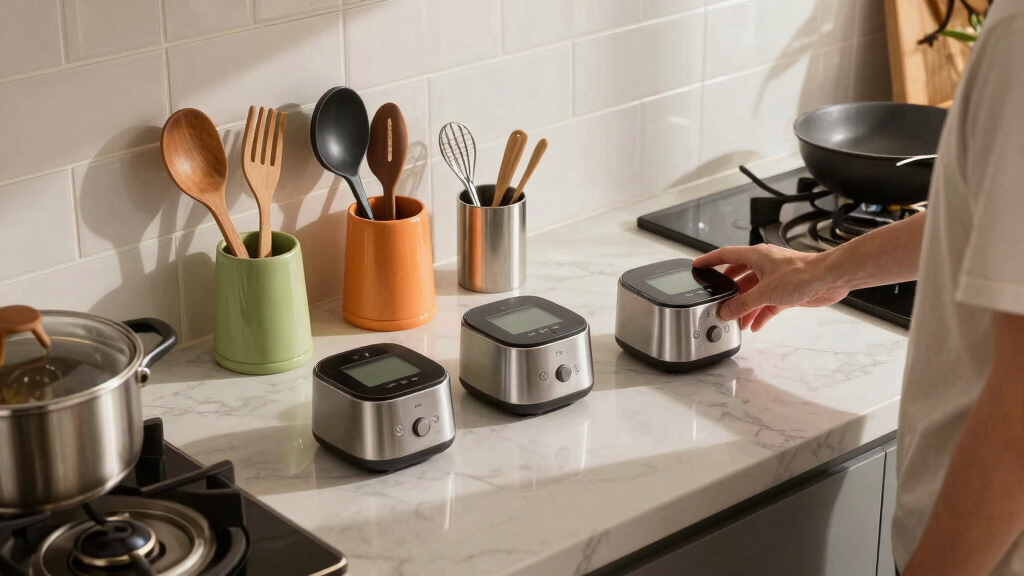
Think of timers as small, dedicated assistants. Each one owns a task, announces the next action, and frees you from constant clock-watching.
Choose
Match the number of timers to your usual meal complexity.
Label
Name each countdown by dish, step, or cooking zone.
Place
Keep timers visible and audible near the stove or prep area.
Start
Begin each timer exactly when its task starts.
Act
Respond immediately, then reset or clear the alert.
Pick the Tool That Fits Your Kitchen
Mechanical timers are simple, digital timers are flexible, and smart timers shine when your cooking involves several countdowns, rooms, or devices.
| Type of Timer | Strengths | Multi-Task Fit | Best For |
|---|---|---|---|
| Basic Mechanical | Simple, inexpensive, no batteries needed | ✗Usually one event | One dish, quick checks, backup alerts |
| Digital Timer | Multiple countdowns, loud alarms, easy repeat use | ✓Strong fit | Managing 2–3 dishes at once |
| Smart Timer | Voice control, phone alerts, smart-home links | ✓Excellent fit | Busy kitchens and complex meals |
| Phone Timer | Always nearby and easy to rename | ~Good with discipline | Remote alerts, casual cooking, travel |
A Holiday Dinner Without the Panic
The turkey, stuffing, vegetables, sauce, and bread all need different attention windows. Multiple timers turn the meal into a visible sequence instead of a frantic memory test.
The alert is vague.
You know something is done, but you still need to remember what it was for. If you silence it too early or forget to reset it, the next dish pays the price.
From Kitchen Chaos to Control
Move right by adding clear labels, visible placement, louder alerts, and separate countdowns for each active dish or stage.
Build a Timer System You’ll Actually Use
The best setup is not the fanciest one. It is the one you can see, hear, understand instantly, and reset without breaking your cooking rhythm.
Start With Two
Use one for the main dish and one for the most time-sensitive side. Add a third when meals get more complex.
Label Every Countdown
Masking tape, color coding, or app labels stop you from wondering which alert belongs to which dish.
Use Loud Alerts
Choose timers with strong alarms or flashing lights if your kitchen is noisy or you step away while cooking.
Expand Gradually
As your cooking skills grow, add timers for resting, marinating, proofing, simmering, and final crisping.
How Better Timing Improves the Meal
Multiple timers do more than beep. They create a chain of small controls that protect texture, flavor, confidence, and enjoyment.
Task
Each dish gets a dedicated clock.
Label
Every alarm has a clear meaning.
Alert
The next action arrives on time.
Result
Food lands closer to ideal doneness.
Feeling
The kitchen feels organized and calm.
Why Managing Multiple Dishes with One Timer Is a Recipe for Chaos
When you cook a roast, boil pasta, and simmer a sauce at the same time, one timer just isn’t enough. Imagine setting a single timer for the roast, only to forget to stop it when the pasta’s ready. Even a few minutes of overcooking can turn perfectly crisp vegetables into mush, or meat into dry leather.
Using multiple timers lets you keep each dish on its own schedule. This isn’t just about convenience; it’s about precision and consistency. When each dish has its own timer, you’re less likely to forget or misjudge cooking times, which can lead to uneven results or ruined meals. This approach also reduces the mental load — instead of juggling all timing in your head, you delegate each task to a dedicated timer. The tradeoff is that managing multiple timers requires some initial setup and organization, but the payoff in meal quality and stress reduction is well worth it.
Real-world scenario: You’re roasting potatoes, baking bread, and making a stew. Without multiple timers, you might forget the potatoes or overbake the bread. With three timers, each step stays on track, and dinner turns out just right.
digital kitchen timers with multiple countdowns
As an affiliate, we earn on qualifying purchases.
As an affiliate, we earn on qualifying purchases.
The Big Benefits of Having More Than One Timer in Your Kitchen
Efficiency skyrockets when you don’t have to constantly check or remember each step. Timers act as your personal reminders, freeing you from the need to constantly monitor each dish. This allows you to focus on other tasks or enjoy your time in the kitchen, which is especially important during busy days or holiday preparations. Additionally, timers help prevent overcooking or undercooking, ensuring each component of your meal hits its ideal doneness. This consistency reduces waste and enhances your confidence as a cook.
Food quality improves — no more overcooked veggies or burnt bread. When timers alert you precisely at the right moment, your dishes are more likely to turn out as intended, preserving texture, flavor, and nutritional value. Over time, this consistency helps you develop a reliable cooking rhythm, making meal prep smoother and more predictable.
Stress drops. When timers do the remembering, you stay relaxed, confident, and in control during busy cooking sessions. It’s like having a personal sous-chef reminding you what’s next. This mental relief can be particularly significant during elaborate meals or when cooking for guests, reducing the mental clutter and allowing you to enjoy the process rather than just focus on the timing.
Picture this: You’re preparing a holiday feast with multiple dishes. Multiple timers keep everything on schedule without the frantic mental tallying. The turkey, stuffing, and green beans all land on the table hot, perfectly cooked, and stress-free. The tradeoff is investing a few moments to set and manage these timers, but the resulting peace of mind and quality make it a worthwhile tradeoff.
smart kitchen timers for multiple dishes
As an affiliate, we earn on qualifying purchases.
As an affiliate, we earn on qualifying purchases.
What Are the Best Types of Timers for Managing Multiple Tasks?
Not all timers are created equal when it comes to multi-tasking. Here’s a quick comparison:
| Type of Timer | Strengths | Best For |
|---|---|---|
| Basic Mechanical Timer | Simple, inexpensive, no batteries needed | One dish at a time, or quick checks |
| Digital Timer | Multiple countdowns, alarms, easy to set | Managing 2–3 dishes simultaneously |
| Smart Timer (App or Voice-Activated) | Multiple timers, remote alerts, integration with smart home devices | Busy or complex meal preps, high-tech kitchens |
Choosing the right timer depends on your cooking style and needs. Digital timers are versatile and easy to use, offering multiple countdowns that help you keep track of several dishes at once. Smart timers, especially those integrated with apps or voice commands, provide additional convenience by allowing remote alerts and synchronization with other smart devices. The tradeoff with smart timers is often a higher cost and a reliance on technology, which might require a learning curve or power sources. For most home cooks, a good digital timer strikes the right balance between simplicity and functionality, making multi-tasking more manageable and less stressful.
Example: You might set one timer for 30 minutes for the roast, another for 10 minutes for the veggies, and a third for 20 minutes for a sauce. All can run independently but alert you at the right moments.
As an affiliate, we earn on qualifying purchases.
How to Set Up Your Kitchen for Multiple Timers Without Losing Your Mind
Managing multiple timers takes a bit of organization. Here’s a simple step-by-step:
- Decide how many timers you need based on your typical meals.
- Choose timers that can handle multiple countdowns or set separate devices.
- Label each timer with the dish or step it’s for — use masking tape or color coding.
- Place timers where you can see and hear them easily — near your stove or prep area.
- Start timers as you begin each task, and check them off mentally or on your list.
Example: You’re preparing a lasagna, salad, and garlic bread. Set a timer for 45 minutes for the lasagna, 10 minutes for the garlic bread, and a third for the salad prep. Label them, place them nearby, and focus on cooking without second-guessing.
Tip: Use timers with loud alarms or flashing lights so you don’t miss the alert, especially if your kitchen is noisy or you’re multitasking elsewhere.
programmable digital timers for cooking
As an affiliate, we earn on qualifying purchases.
As an affiliate, we earn on qualifying purchases.
Common Mistakes Home Cooks Make When Using Only One Timer
Relying on a single timer for everything can lead to chaos. For example, setting one timer for all your dishes and then forgetting to reset it for each new task. This often results in overcooked oversights or burnt meals.
Another mistake is ignoring the timer alarms or turning them off prematurely, which can ruin a dish. Plus, trying to remember multiple times mentally is a recipe for mistakes, especially during busy holidays or weeknights.
Real story: A home cook once forgot to turn off the timer for her baked chicken while preparing rice. The chicken dried out, and she only realized after the rice was overcooked. More timers could have prevented that slip.
Deepening this insight: Relying solely on one timer often causes a domino effect of errors, because if the initial timing isn’t precise or if you forget to reset, subsequent dishes suffer. This creates a cycle of overcooking or undercooking that’s hard to break without dedicated timers for each step. The tradeoff is the need for a bit of extra setup and mental discipline, but the benefits of accuracy and peace of mind far outweigh these small inconveniences.
Why Upgrading to Multiple Timers Is a Smart Investment
Investing in more than one timer doesn’t have to break the bank. Basic digital timers can cost as little as $10, yet they dramatically improve your cooking process. For more elaborate setups, smart timers range from $50 to $200 but offer features like remote alerts and multiple countdowns.
Think of it as adding an extra set of ears and eyes in your kitchen. It’s about precision, consistency, and peace of mind. Over time, the saved food, reduced stress, and improved results easily justify the cost.
Example: A busy parent managing schoolwork, work calls, and dinner prep finds that a multi-timer system cuts their cooking time in half and reduces forgotten dishes by 80%, according to Timer Tools.
Deepening this: The real value lies in how these timers create a more reliable cooking environment. They minimize guesswork and reduce the chance of human error, which often leads to spoiled dishes or last-minute scrambling. While the initial cost might seem like an investment, the long-term savings in food waste, time, and stress are significant. Additionally, as technology advances, timers with smart features are becoming more affordable and accessible, making this a wise upgrade for any home kitchen.
Your Action Plan: How to Build Your Perfect Multi-Timer Setup
Start small. Pick up a digital timer with multiple countdowns or a few smart timers. Label each one clearly based on your common dishes or steps.
Gradually expand as you get comfortable. Consider adding color-coded tags or app integrations for even smoother management.
Use a dedicated spot on your countertop or near your stove for timers. Keep them in sight and within reach, so you’re always aware of what’s ticking away.
Over time, you’ll develop a routine that ensures each dish finishes at its peak — no more frantic last-minute checks or burnt dinners.
Remember: a well-organized timing system makes you a more confident, efficient cook. It turns chaos into harmony.
Deepening this: By establishing a dedicated, consistent setup for your timers, you embed the habit into your routine. This consistency reduces the mental effort needed for planning and makes multi-tasking second nature. Over time, this approach not only improves your cooking outcomes but also enhances your overall kitchen experience, making every meal a more relaxed and enjoyable process.
Frequently Asked Questions
Why do I need more than one timer?
Having multiple timers lets you manage several dishes or steps at once. It prevents overcooking, burning, or forgetting, especially during multi-component meals.What types of timers work best for home cooks?
Digital timers with multiple countdowns or smart timers that sync with your phone are ideal. They offer flexibility, loud alerts, and easy setup for managing various tasks.How many timers should I own?
Most home cooks find 2–3 timers sufficient for everyday cooking. If you prepare elaborate meals often, consider more to keep everything perfectly timed.Are smart timers worth the extra cost?
Yes, if you regularly cook multiple dishes or want remote alerts and advanced features. They make managing multiple timers more convenient and reliable.Can I use my phone as a timer?
You can, but dedicated timers with multiple countdowns and louder alarms are more effective for multitasking. Phones may get lost or have notifications missed.Conclusion
Adding more than one timer to your kitchen isn’t just about convenience — it’s about transforming your cooking experience. It’s the secret weapon for perfectly timed, stress-free meals.
Next time you prep dinner, set up a few timers. Watch how your kitchen becomes more organized, your food more consistent, and your stress levels drop. Because in the end, a well-timed meal is a happy meal.
Evergreen bestsellers Picks
bestsellers
As an affiliate, we earn on qualifying purchases.