
TL;DR

Get kitchen gear delivered free with Prime
- Fast, free delivery on millions of items
- Prime Video, Amazon Music and more included
- Member-only deals all year
A countdown timer keeps your plank and core workouts focused, consistent, and safe. It helps you track progress, push your limits, and prevent overexertion, making your routines smarter and more motivating.
Using a countdown timer isn’t just about tracking time; it’s about creating a rhythm that pushes your limits while keeping you safe. Whether you’re holding a plank for the first time or battling through a challenging core routine, timing keeps you honest and focused. It turns a simple exercise into a measurable, motivating task.
In this guide, you’ll learn how to pick the right timer, set realistic goals, and incorporate timing into your routine for maximum gains. Get ready to turn your core workouts into precision-crafted challenges that build strength and endurance.
Choose a timer that’s easy to see and operate during your workouts.
Set clear, achievable goals for each session—start small and build up.
Use timers not just for holds, but also to structure rest and recovery periods.
Track your progress over time to stay motivated and adjust your challenge.
Gradually increase your hold duration or decrease rest to build endurance safely.
Why a Stopwatch or Timer Makes Your Core Workouts Smarter
A timer is your secret weapon for consistent, effective core training. It removes guesswork, so you focus on form instead of counting reps. For example, instead of saying, “I’ll hold this plank for as long as I can,” you set a timer for 30 seconds and aim to beat that time next session. This creates a clear, measurable goal.
Using a timer also prevents you from overdoing it or slacking off. It’s easy to lose track of time when you’re deep into a plank. With a timer, you get a gentle buzz or alarm when your hold ends, helping you stay in control. That way, you can push yourself safely, knowing when to rest or add more time next round.
Furthermore, timing your workouts encourages a focus on quality over quantity. Instead of endless reps, you learn to hold with proper form for a specific duration, which is more effective for building endurance and strength. It also helps identify your weaknesses—if you struggle to hold longer, it signals a need to improve core stability. Over time, this targeted approach leads to more efficient gains and reduced risk of injury due to poor form or overexertion.
digital countdown timer for workouts
As an affiliate, we earn on qualifying purchases.
As an affiliate, we earn on qualifying purchases.
How to Pick the Perfect Timer for Your Core Challenges
- Decide on your workout style: Do you prefer simple countdowns or interval timers? For planks, a basic timer works well, but if you’re doing circuit-style workouts, interval or tabata timers can add variety and structure.
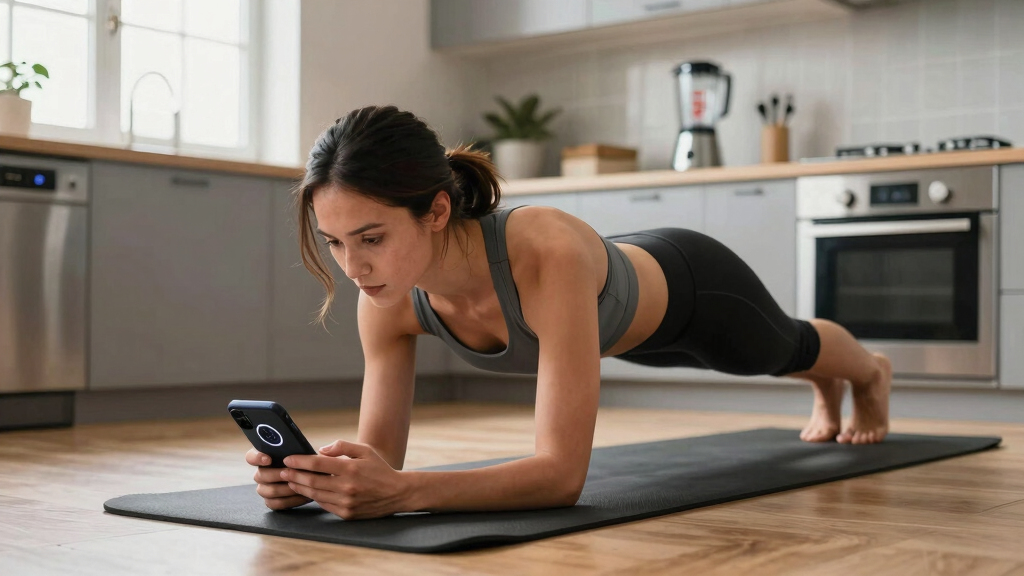
- Choose a device: Smartphone apps, digital timers, or wearables are all good options. Look for features like customizable durations, alarms, and visual cues because these features enhance usability and help keep you focused during intense workouts. For example, a visual countdown can be more effective than a sound if you’re in a noisy environment, and customizable alarms ensure you won’t miss your start or end times.
- Test visibility: Place your timer where you can see it clearly without straining or breaking your form. Large displays or visual countdowns are especially useful to keep your attention on your core rather than glancing away, which can break your concentration and compromise form.
- Prioritize simplicity: Avoid timers with complicated controls that distract you during your workout. Ease of use is crucial; a simple start/stop function allows you to focus entirely on maintaining proper form and breathing rather than fiddling with settings, which can disrupt your flow and reduce workout effectiveness.
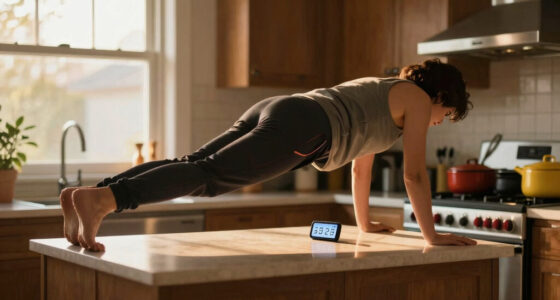
For example, a tablet propped on your kitchen counter, or a dedicated app on your phone, can serve as your workout buddy. I recommend apps like Interval Timer or Seconds for customizable, reliable timing that syncs with your routines. These apps often allow you to set multiple intervals, alarms, and visual cues, making your workouts more engaging and effective.
As an affiliate, we earn on qualifying purchases.
Compare the Best Timers for Core Challenges in a Snap
| Feature | Smartphone Apps | Digital Timers | Wearables |
|---|---|---|---|
| Customization | High — set multiple intervals, alarms | Moderate — basic countdowns | High — real-time feedback, vibration |
| Ease of Use | Very simple — tap to start | Very simple — dedicated button | Requires syncing, some setup |
| Tracking Progress | Yes — logs and history | No | Yes — heart rate, reps |
| Best For | Interval training, beginners | Simple timed holds | Advanced tracking & motivation |
Choosing the right timer depends on your specific training goals and how much data you want to track. Smartphone apps excel at providing detailed logs and customizable settings, which help you analyze progress over time and adjust your routines accordingly. Digital timers are straightforward, making them ideal for simple timed holds without distractions. Wearables, on the other hand, offer real-time feedback like heart rate monitoring and vibration alerts, which can motivate you to push harder and maintain proper form. Tradeoffs include complexity versus convenience: apps and wearables might require some setup and learning, but they offer richer data, whereas basic timers are quick and easy but less informative. Consider your priorities—whether you value detailed tracking or simplicity—and choose accordingly to maximize your workout efficiency.
As an affiliate, we earn on qualifying purchases.
Using a Timer Step-by-Step: Turn a Basic Plank into a Challenge
- Set your goal: Decide on a starting duration, like 30 seconds, based on your current fitness level. Remember, setting realistic yet challenging goals ensures steady progress without risking injury or burnout. The goal-setting process is crucial because it provides direction and motivation, making your workouts purposeful rather than aimless.
- Start the timer: Press start, focus on maintaining perfect form—neutral neck, tight abs, hips level. As the timer counts down, your focus on form helps prevent common mistakes like sagging hips or elevated buttocks, which can compromise effectiveness and cause strain. The timer acts as a constant reminder that quality, not just duration, matters.
- Hold until the alarm: Keep your muscles engaged. When it buzzes, carefully lower yourself out of the plank, making sure to avoid sudden movements that could strain your back or shoulders. This step teaches control and endurance, reinforcing proper technique under fatigue. The alarm provides an objective cue, removing guesswork about when to end, which helps develop discipline and consistency.
- Rest and repeat: Take 15-30 seconds to recover, then try to beat your previous time next round. This cycle encourages incremental improvement, which is the foundation of long-term progress. Rest periods are not just downtime—they’re strategic recovery moments that allow your muscles to prepare for the next effort, ensuring you don’t sacrifice form for duration.
- Track your progress: Record your best holds weekly and aim to increase gradually. Keeping a log helps you visualize your improvements, boosts motivation, and highlights areas needing extra focus. Over time, observing your growth can reinforce your commitment and make workouts more rewarding.
For example, a client started with 20 seconds. After two weeks, they hit 45 seconds by consistently timing and pushing their limits. This progression demonstrates how setting clear goals and using timing tools can accelerate gains and build confidence in your core strength.
As an affiliate, we earn on qualifying purchases.
Why Timing Your Rest Is Just as Important as Timing Your Holds
Rest periods are often overlooked but are key to a balanced core workout. Short, structured rest of 15-30 seconds allows your muscles to recover enough to maintain proper form and intensity without risking overfatigue. Properly timed breaks prevent burnout and help you sustain high-quality efforts across multiple sets. If rest is too short, muscles may not recover adequately, leading to compromised form and increased injury risk. Conversely, excessively long rests can diminish workout intensity and slow progress.
Imagine doing a series of 30-second planks with 20 seconds rest in between. The timer keeps you honest, making sure you stick to the plan rather than cheating or losing focus. This disciplined approach fosters mental resilience and helps you develop a consistent rhythm. Over time, these structured rest intervals contribute to increased muscular endurance, as your core adapts to longer holds and quicker recovery. The key is finding a balance—rest enough to recover but not so much that your workout loses its challenge. This strategic timing enhances overall effectiveness, ensuring your core becomes stronger, more resilient, and better conditioned for real-world activities and other fitness pursuits.
How to Keep Your Core Challenge Consistent Over Time
Use your timer to track your best times and set new goals weekly. For example, if you hit 45 seconds comfortably, bump it to 50 or 60 seconds next week. Recording each session allows you to visualize progress, which can be highly motivating. Seeing tangible improvements reinforces your commitment and helps you stay focused on long-term gains. Additionally, adjusting your timer—adding more seconds for holds or decreasing rest periods—keeps your routine challenging and prevents plateaus. This method ensures continuous adaptation, which is essential for ongoing strength development.
Remember, consistency beats intensity. Small, regular improvements with your timer—like adding a few seconds each week—compound over time, leading to significant gains. This incremental approach minimizes the risk of injury and burnout, making your workouts sustainable. The key is to listen to your body and adjust your goals accordingly. Over time, as your core strengthens, you can push further by setting higher benchmarks, all while maintaining safe and effective training habits.
Frequently Asked Questions
What is the best duration for a beginner’s plank?
Start with 10-20 seconds. Focus on perfect form, then gradually increase by 5 seconds each week as your core strength improves.How often should I do plank challenges?
Aim for 3-4 times per week, allowing at least a day of rest between sessions for recovery and growth.Can I use a regular stopwatch or do I need an app?
Both work fine. Apps offer extra features like interval settings and progress logs, but a simple stopwatch or timer on your device is perfectly adequate.How do I prevent my form from breaking down during timed planks?
Focus on maintaining a straight line from head to heels, engage your core, and stop immediately if your form deteriorates. Use the timer as a cue to check your alignment regularly.Are there recommended rest periods between sets?
Typically, 15-30 seconds works well for most people. Adjust based on your fitness level—shorter if you’re more advanced, longer if you need recovery.Conclusion
Incorporate a reliable timer into every plank and core challenge. It’s your secret weapon for consistency, motivation, and progress. With clear timing, your core gets stronger—faster and safer.
Picture yourself holding that perfect plank, feeling the burn, knowing each second is building a stronger core. That’s the power of timing—your workout’s best friend.
Fall Picks
fall essentials
As an affiliate, we earn on qualifying purchases.