
TL;DR
Listen free for 30 days with Audible
Thousands of audiobooks and originals — cancel anytime.
Start your free trialAs an affiliate, we earn on qualifying purchases.
Smart speakers can handle multiple timers and offer hands-free operation, making them a handy alternative to traditional timers. However, for precision and reliability, traditional timers still hold an edge. The future blends both for convenience and accuracy.
Imagine stirring a pot, chopping vegetables, and hearing your voice assistant announce, “Time’s up!” — all without reaching for a timer. Smart speakers like Amazon Echo and Google Nest have become kitchen companions, but do they really replace the trusty kitchen timer? If you’re wondering whether to ditch your old timer for a sleek voice-activated device, you’ll want to understand their true capabilities and limitations.
This guide breaks down how smart speakers stack up against traditional timers, with concrete examples and practical tips. Whether you’re a casual cook or a baking enthusiast, knowing when and how to rely on voice assistants can make your kitchen routines smoother and more efficient.
Voice assistants can handle multiple timers at once, reducing clutter and multitasking stress.
Reliability depends on Wi-Fi stability; traditional timers are foolproof for critical or precise tasks.
Visual displays on smart devices improve timer management and recipe following.
For critical baking or science, stick with dedicated timers for certainty.
Combining voice commands with smart screens offers the best of both worlds in modern kitchens.
What Can a Voice Assistant Do Better Than a Traditional Timer?
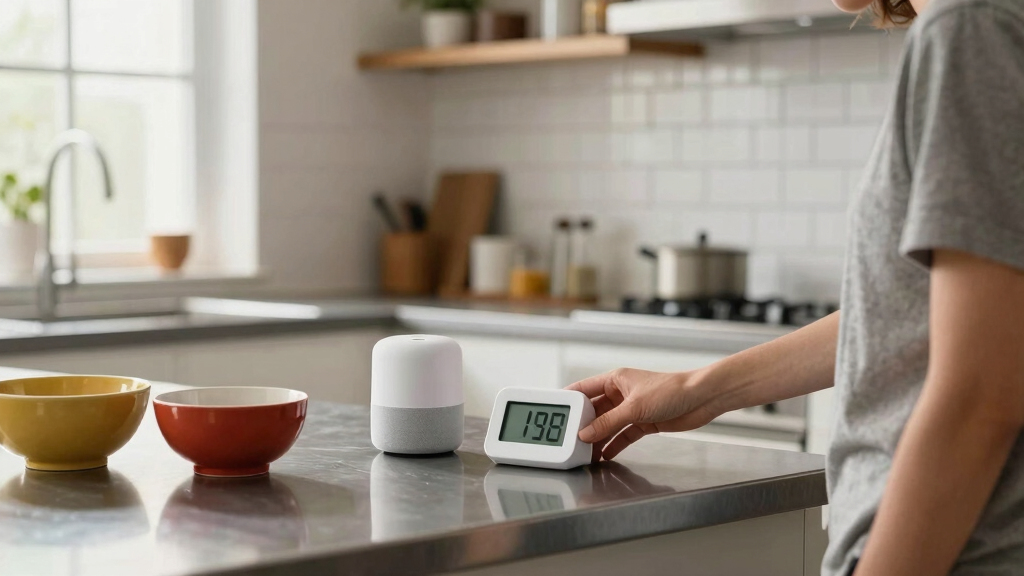
Voice assistants excel at multitasking. Say “Set a timer for 10 minutes,” and you get an instant countdown without lifting a finger. They can handle multiple timers at once, unlike most manual timers that only track one at a time. This multitasking capability is especially valuable when juggling different cooking steps or multiple dishes, reducing the need for constant manual resets. Additionally, they seamlessly integrate with your smart home ecosystem, allowing you to create routines — like turning on the oven or playing music when a timer ends — which can streamline your cooking process and enhance the overall kitchen experience.
For example, while baking bread, you can set a timer and ask your assistant to remind you when it’s ready — all hands-free. They also provide voice feedback, so you stay focused on your cooking without looking at a screen. This hands-free interaction minimizes interruptions, making your cooking more efficient and less cluttered with devices or timers.

Amazon Echo Dot (newest model) – Vibrant sounding speaker, Designed for Alexa+, Great for bedrooms, dining rooms and offices, Deep Sea Blue
- Music Streaming: Play music, audiobooks, podcasts from various services
- Voice Assistant: Ask Alexa for weather, timers, answers, jokes
- Smart Home Control: Control compatible devices with voice commands
As an affiliate, we earn on qualifying purchases.
As an affiliate, we earn on qualifying purchases.
How Accurate Are Voice Assistants for Cooking Timers?
Most voice assistants are surprisingly accurate, often measuring time with second-level precision, which is generally sufficient for most home cooking tasks. When you say, “Set a timer for 15 minutes,” they start counting immediately, providing reliable countdowns. However, their accuracy hinges on clear voice commands and a stable internet connection because they process your request in the cloud. Background noise or muffled speech can cause misinterpretations, potentially leading to incorrect timing. This can be critical when precise timing matters, such as in baking delicate pastries or scientific experiments, where even a minute can affect the outcome.
The implication is that while voice assistants are reliable for everyday cooking, they may not be suitable for tasks requiring exact timing. Understanding these limitations helps prevent over-reliance and ensures you have a backup plan—like a traditional timer—ready for critical moments. The tradeoff is convenience versus absolute certainty: voice assistants offer quick setup and multitasking but can occasionally falter under less-than-ideal conditions, which might compromise precision when it truly counts.

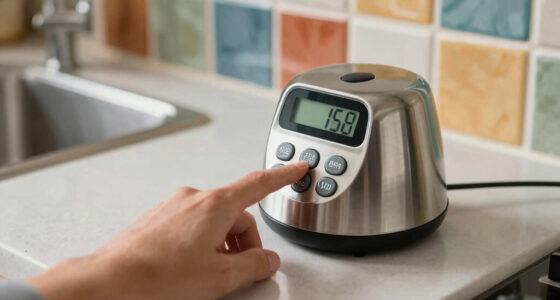
Magnetic Kitchen Timer – Smart Voice Activated Countdown Device | Digital Rotary Knob Magnet Timer | for Adults Chefs Student Study Fitness Baking Learning Teaching
- Hands-Free Voice Control: Voice-activated timer for easy operation
- Magnetic Base: Strong magnet for secure mounting on metal surfaces
- Clear Digital Display: Bright screen for easy time monitoring
As an affiliate, we earn on qualifying purchases.
As an affiliate, we earn on qualifying purchases.
Traditional Timer vs. Voice Assistant: How Do They Stack Up?
| Feature | Traditional Kitchen Timer | Voice Assistant |
|---|---|---|
| Reliability | Very high; no dependency on Wi-Fi or connectivity, making it dependable even during internet outages or technical issues. | Depends on Wi-Fi stability and voice command clarity, meaning external factors can cause timing failures or misinterpretations, especially in noisy environments. |
| Ease of Use | Physical button or dial, which provides tactile feedback and is straightforward, especially for those who prefer manual controls or have accessibility needs. | Voice command-based, offering hands-free operation, which is convenient but may require learning specific phrases or commands and can be prone to mishearing. |
| Multiple Timers | Typically supports only one timer at a time, requiring manual resetting or multiple devices for simultaneous timing. | Supports several timers simultaneously, allowing for complex cooking routines without additional devices or manual resets, which enhances flexibility but depends on correct command management. |
| Visual Feedback | Yes, through ticking sounds, digital displays, or physical indicators, providing reassurance and clarity. | Yes, on compatible screens or through voice alerts, but lacks tactile or auditory cues unless integrated with visual displays, which can be less immediate for some users. |
| Portability | Limited; usually stays in one place, which can be inconvenient if you need to move it around the kitchen or take it elsewhere. | Can be moved anywhere within Wi-Fi range, offering flexibility, but relies on stable internet and power sources. |
While traditional timers excel in reliability, especially in environments with unstable internet or for critical tasks, voice assistants offer unmatched flexibility and multitasking capabilities. The choice hinges on understanding these tradeoffs and choosing based on your specific needs—whether you prioritize dependability or convenience in your cooking routines.

TPNEG Digital Kitchen Timer – 4-Channel Cooking Timer with Alarm, Magnetic Back, Loud & Silent Modes, Count Up/Down, Ideal for ovens, Seniors, Kids and classrooms, Replaceable AAA Battery
- Easy to Use: Intuitive design with quick preset setup
- 4-Channel Timing: Simultaneously time four events with precision
- Long Battery Life: Operates over three months on two AAA batteries
As an affiliate, we earn on qualifying purchases.
As an affiliate, we earn on qualifying purchases.
Frequently Asked Questions
Can a smart speaker effectively replace a traditional kitchen timer?
For most home cooking and casual tasks, yes. Voice assistants are quick, easy, and support multiple timers. But for critical or precise timing, a traditional timer still offers unmatched reliability without tech glitches.
Are voice assistants accurate enough for baking or cooking that requires exact timing?
Generally, yes. They can set timers with second-level precision. But occasional misinterpretations or connectivity drops mean you should double-check for very precise tasks.
What are the main advantages of using a voice assistant over a traditional timer?
Hands-free operation, managing multiple timers, easy integration with smart home devices, and quick voice feedback make them a versatile kitchen helper.
Are there any downsides to relying solely on voice assistants in the kitchen?
Yes. Privacy concerns, potential Wi-Fi issues, and the risk of mishearing commands can disrupt your timing. Plus, they lack tactile feedback and a backup option in case of tech failures.
How do smart displays improve the timer experience?
Displays like the Echo Show or Google Nest Hub show countdown visuals, recipe steps, and alerts, making timing clearer and more interactive, especially during complex cooking projects.
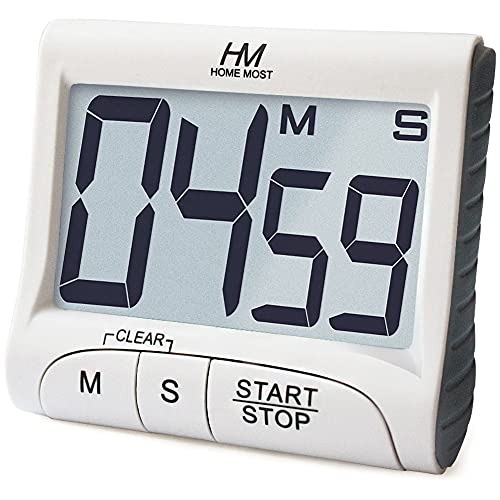
HOME MOST 3" Large Display Kitchen Timer – Digital Timer Magnetic Back Loud Alarm On A Rope- White Cooking Timers For Kitchen Teachers Students Games Kids Meetings- Sports Timers For Workouts Exercise
- Large LCD Display: 3-inch screen with big digits
- Loud Beeper Alarm: Clear, loud, non-deafening sound
- Sleek Modern Design: Matte white exterior, stylish look
As an affiliate, we earn on qualifying purchases.
As an affiliate, we earn on qualifying purchases.
Conclusion
Smart speakers and voice assistants are changing how we manage kitchen time — offering hands-free convenience and multitasking power. But they complement, rather than replace, traditional timers for accuracy and reliability. The smartest move? Use both, tailored to your cooking style and needs.
Imagine a kitchen where your voice guides you, your screen shows the countdown, and your old timer sits quietly as backup. That’s the future of timing — simple, smart, and seamless.
College move-in / dorm season Picks
dorm essentials
As an affiliate, we earn on qualifying purchases.