
🔍 Read the full analysis: Guanciale, Pancetta, Lardo: Italy's Cured Pork Fat Family Explained on Mad Tasting

Get kitchen gear delivered free — and shop member deals
- Fast, free delivery on millions of items
- Access to Prime Big Deal Days deals on October 6–7
- Prime Video, Amazon Music and more included
TL;DR
Guanciale, pancetta, and lardo are all cured pork fat products, but each comes from a different cut: jowl, belly, and back fat respectively. That single difference determines how each is cooked — guanciale for Roman pastas, pancetta as an all-purpose cure, lardo sliced thin and eaten raw. Protected DOP and IGP labels govern what can be sold under each name.
Guanciale, pancetta, and lardo are all cured pork fat — but they come from three different cuts of the pig, and that single distinction determines everything about how each is used, according to a new explainer from Mad Tasting. Guanciale is pork jowl (cheek), pancetta is pork belly, and lardo is cured back fat. The guide details why swapping one for another changes a dish more than most cooks expect, and why a Roman salumi counter may push back if you ask for guanciale with the question, “Pancetta won’t do?”
The three products differ by cut, curing method, texture, and use — and according to Mad Tasting, the cut drives everything else. The jowl carries dense, firm fat threaded with streaks of muscle. The belly alternates ribbon-like layers of fat and lean. The back is nearly pure fat, soft enough to slice like butter. These structural differences explain their behavior in the pan: guanciale leaves behind golden, chewy strips swimming in rendered fat, pancetta leaves crisp-edged nuggets, and lardo would simply vanish if you tried to fry it.
The science behind the distinction, per the guide, is that fat is where flavor compounds concentrate during aging. A fattier cut like back fat becomes more aromatic and delicate, while a muscle-threaded cut like jowl develops a deeper, more savory character. In the pan, lean streaks brown and provide bite; pure fat melts away to almost nothing.
Each product has a defined role. Guanciale is the defining ingredient of Rome’s classic pastas — carbonara, amatriciana, and gricia — because its rendered fat is the sauce itself; carbonara contains no cream and no oil, relying on an emulsion of egg, pecorino, and pork fat. Pancetta, sold rolled (arrotolata) or flat (stesa), is diced for pasta, soups, sauces, and braises. Lardo is sliced paper-thin and eaten raw on warm bread, crostini, or vegetables rather than cooked.
Guanciale, Pancetta, Lardo: Italy’s Cured Pork Fat Family Explained
Three products, one pig. Each comes from a different cut — jowl, belly, and back fat — and that single distinction determines texture, flavor, price, and how each is used in the kitchen. Swapping one for another changes a dish more than most cooks expect.
“This is the difference between a dish that tastes of pork and a dish that merely contains it.”
— Mad Tasting GuideOne Pig, Three Cuts, Three Personalities
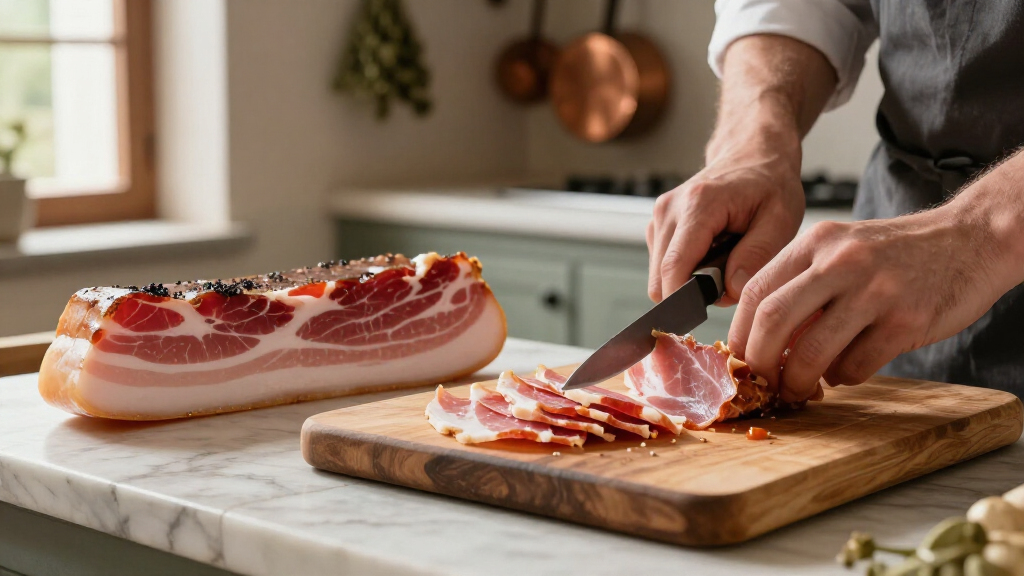
Guanciale is pork jowl (cheek) — the word derives from guancia, Italian for “cheek.” Pancetta is pork belly, the same cut as streaky bacon but cured, not smoked. Lardo is cured back fat, soft enough to slice like butter. The cut drives everything else.
Guanciale
Dense, firm fat threaded with streaks of muscle. Renders at a lower temperature than belly fat, with a deeper, almost sweet savoriness.
- In the pan: golden, chewy strips in rendered fat
- Role: Rome’s pastas — carbonara, amatriciana, gricia
- Supply: scarce, often priciest, hardest to find abroad
Pancetta
Ribbon-like alternating layers of fat and lean. Sold rolled (arrotolata) or flat (stesa); cured with salt and aromatics rather than smoked.
- In the pan: crisp-edged nuggets
- Role: all-purpose — pasta, soups, sauces, braises
- Supply: cheap and widely available, but leaner
Lardo
Nearly pure fat, delicate and aromatic — fat is where flavor compounds concentrate during aging, making fattier cuts more perfumed.
- In the pan: would simply vanish if you tried to fry it
- Role: sliced paper-thin, eaten raw on warm bread
- Supply: most delicate, “useless for cooking”
Why Structure Dictates Behavior in the Pan
Lean streaks brown and provide bite; pure fat melts away to almost nothing. Muscle-threaded cuts like jowl develop a deeper, more savory character, while pure back fat becomes more aromatic and delicate.
The Classic Guanciale Method
The technique is patient: a cold pan, low heat, and ten minutes or more. Fat renders gradually as temperature rises, while muscle fibers seize and brown. Starting hot produces greasy, rubbery strips and little fat to emulsify.
Source It
Seek guanciale at Italian delis or specialty salumi counters; check for DOP and IGP protected labels.
Cold Pan
Start guanciale in a cold pan over low heat — never hot — so fat renders before muscle seizes.
Render Slowly
Ten minutes or more on gentle heat; the rendered pork fat becomes the sauce itself.
Emulsify
True carbonara: egg, pecorino, and pork fat — no cream, no oil.
The Non-Interchangeable Three
| Attribute | Guanciale | Pancetta | Lardo |
|---|---|---|---|
| Cut | Jowl (cheek) | Belly | Back fat |
| Structure | Dense fat + muscle streaks | Fat/lean ribbons | Nearly pure fat |
| Curing | Salt & aromatics | Salt & aromatics (never smoked) | Salt & herbs |
| Best use | Carbonara, amatriciana, gricia | Pasta, soups, sauces, braises | Raw, paper-thin on warm bread |
| Can it be fried? | ✓ Renders golden strips | ✓ Crisp nuggets | ✗ Vanishes in the pan |
| Availability | ✗ Hardest to find abroad | ✓ Cheap, widespread | ~ Specialty counters |
| Price | ✗ Often the priciest | ✓ Most affordable | ~ Varies |
“Pancetta Won’t Do?”
A Roman salumi counter may push back if you ask for guanciale with exactly that question. Three passages that explain why the three are treated as non-interchangeable.
“This is the difference between a dish that tastes of pork and a dish that merely contains it.”
On substituting pancetta in carbonara“Guanciale is not bacon with an Italian accent. It’s a specific cut, cured a specific way, that melts instead of crisping into shards.”
On the guanciale–bacon confusion“Pancetta won’t do?”
The classic Roman counter question — and the answer, often, is noWhat Home Cooks Ask Most
What is the difference between the three?
The cut of the pig: guanciale is jowl, pancetta is belly, lardo is back fat. Everything else — texture, flavor, price, and cooking use — follows from those cuts.
Can I substitute pancetta for guanciale in carbonara?
You can, but the emulsion, while it still forms, yields a plate the guide describes as noticeably flatter — belly fat is less aromatic than jowl fat.
Why is lardo not used for cooking?
It is nearly pure fat and melts away to almost nothing. It is sliced paper-thin and eaten raw on warm bread, crostini, or vegetables, where its silky texture and herb-cured flavor are the point.
How is pancetta different from bacon?
Both come from pork belly, but pancetta is cured with salt and aromatics rather than smoked. Smoke is a “loud flavor” that changes how the fat performs in Italian dishes.
Why is guanciale harder to find and more expensive?
Each pig yields far less jowl than belly or back fat, making guanciale scarcer and often pricier — a tradeoff between authenticity and availability.
What does the guide leave open?
Specific DOP/IGP designations, curing times, salt ratios, storage durations, pricing figures, and nutrition are not enumerated; “useless for cooking” for lardo is the guide’s editorial judgment.
Why the Cut Changes Your Cooking
For home cooks, the distinction has direct practical consequences. Guanciale’s jowl fat renders at a lower temperature than belly fat and carries a deeper, almost sweet savoriness — Mad Tasting notes that substituting pancetta in carbonara yields an emulsion that comes together but a finished plate that “tastes noticeably flatter,” calling it “the difference between a dish that tastes of pork and a dish that merely contains it.”
The tradeoffs are economic as well as culinary. Guanciale gives the richest rendering fat but costs more and is the hardest of the three to find outside Italy, a reflection of how little jowl each pig yields compared to belly or back. Pancetta is cheap and widely available but leaner. Lardo is the most delicate of the three but, by the guide’s account, useless for cooking.
Top picks for "guanciale pancetta lardo"
As an affiliate, we earn on qualifying purchases.
Curing Traditions and Protected Labels
: “Two of the three carry strong regional identities. Amatriciana originates in Amatrice, a hill town in the Lazio region, and follows the same guanciale-first principle as gricia, then adds tomato and chili. The word guanciale itself derives from guancia, Italian for “cheek” — a memory trick the guide offers for never confusing it with pancetta at the counter.
Pancetta is the same cut as streaky bacon — pork belly — but cured with salt and aromatics rather than smoked, in the classic Italian style. Mad Tasting describes smoke as a “loud flavor” that distinguishes bacon from its Italian counterpart. The guide also advises shoppers to look for DOP and IGP protected-designation labels, which govern what can legitimately be sold under each name, though the source text does not enumerate the specific registered designations.
“Pancetta won’t do?”
— Mad Tasting guide
What the Guide Leaves Open
The source guide does not specify which DOP and IGP designations apply to each product, nor does it give exact curing times, salt ratios, or storage durations, despite referencing safe home storage. Specific pricing comparisons and availability by region are described only in general terms — guanciale is called “often the priciest” without figures. Nutritional differences among the three are not addressed, and the claim that lardo is “useless for cooking” is the guide’s editorial judgment rather than a universally held position.
Technique Tips for Home Cooks
For cooks acting on the guide, the immediate steps are sourcing and technique. Seek out guanciale at Italian delis or specialty salumi counters, checking for protected labels; use pancetta where availability or budget rules; and reserve lardo for raw, thinly sliced applications. The classic guanciale technique is patient: a cold pan, low heat, and ten minutes or more — fat renders gradually as temperature rises, while muscle fibers seize and brown quickly. Starting hot produces greasy, rubbery strips and little fat to emulsify. Mad Tasting also signals follow-up practical guidance on storage and safe handling once the products are home, which readers can watch for in future installments.
Key Questions
What is the difference between guanciale, pancetta, and lardo?
The cut of the pig: guanciale is pork jowl (cheek), pancetta is pork belly, and lardo is back fat. Everything else — texture, flavor, price, and cooking use — follows from those cuts, according to Mad Tasting.
Can I substitute pancetta for guanciale in carbonara?
You can, but the result will differ. Pancetta’s belly fat renders thinner and cleaner but is less aromatic; the egg-and-pecorino emulsion still forms, but the guide describes the finished plate as noticeably flatter than one made with guanciale.
Why is lardo not used for cooking?
Lardo is nearly pure fat, so it melts away to almost nothing in a pan. It is instead sliced paper-thin and eaten raw on warm bread, crostini, or vegetables, where its silky texture and delicate, herb-cured flavor are the point.
How is pancetta different from bacon?
Both come from pork belly, but pancetta is cured with salt and aromatics rather than smoked. The guide notes that smoke is a dominant flavor that changes how the fat performs in Italian dishes.
Why is guanciale harder to find and more expensive?
Each pig yields far less jowl than belly or back fat, making guanciale scarcer and often pricier than pancetta, particularly outside Italy. The guide frames this as a tradeoff between authenticity and availability.
Source: Mad Tasting
Fall Picks
fall essentials
As an affiliate, we earn on qualifying purchases.