
TL;DR
Open a free Amazon Business account
Business pricing, bulk buying and tax-exempt orders.
Create a free accountAs an affiliate, we earn on qualifying purchases.
Blanching in boiling water or steam inactivates enzymes that cause spoilage during freezing. Following specific times for each vegetable ensures the best quality. Over- or under-blanching can damage texture, color, and nutrients, so precision matters.
Imagine opening your freezer to find limp, dull-colored vegetables that lost their crunch and flavor. That’s what happens when you skip or misjudge blanching before freezing. Blanching isn’t about safety; it’s about locking in color, texture, and nutrients. Knowing the right timing for each vegetable makes all the difference between a vibrant side dish and a soggy disappointment.
In this guide, you’ll discover exactly how long to blanch common vegetables, with practical tips to keep your frozen produce tasting fresh for months. Whether you steam or boil, timing is key—miss it by a minute, and you risk dulling flavor or risking enzyme activity. Let’s get your freezer working for you, with crisp, flavorful vegetables every time.
Always follow vegetable-specific blanching times—don’t guess or eyeball it.
Steam blanching preserves more nutrients but takes longer—use it for delicate greens and vegetables.
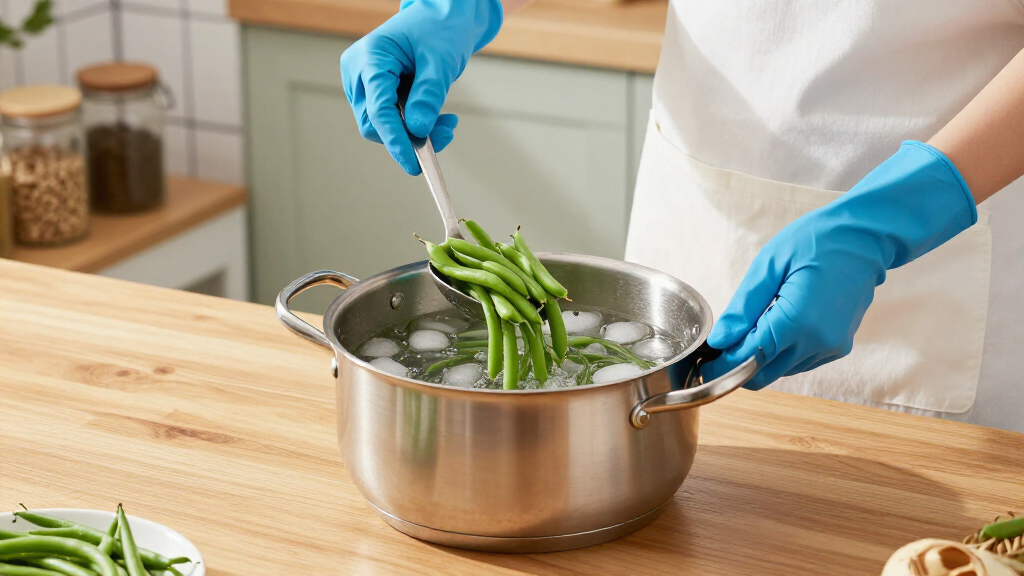
Cool vegetables immediately in ice water for the same time as blanching to stop enzyme activity.
Over-blanching damages texture and color; under-blanching risks spoilage.
Prep vegetables uniformly—size and shape affect blanching time and final quality.
Blanching Times for Common Vegetables Before Freezing
Blanching is not a safety step—it is a quality lock. A short burst of heat inactivates enzymes that steal color, texture, flavor, and nutrients during frozen storage. The difference between garden-bright and freezer-dull comes down to method, uniform preparation, and the clock.
Boiling-water blanching at a glance
Wash, trim, and cut each batch uniformly. Add vegetables to vigorously boiling water, cover, and start the timer only when the water returns to a boil—ideally within about one minute.
| Vegetable | Preparation | Blanch time |
|---|---|---|
| Asparagus | Stalks, sorted by thickness | 2–4 min |
| Green & wax beans | Whole or cut | 3 min |
| Broccoli | Florets, 1–1.5 inches | 3 min |
| Brussels sprouts | Sorted by head size | 3–5 min |
| Cabbage | Shredded / wedges | 1.5 / 3 min |
| Carrots | Diced or sliced / small whole | 2 / 5 min |
| Cauliflower | Florets, 1 inch | 3 min |
| Corn, on the cob | Whole ear, timed by size | 7–11 min |
| Corn kernels | Cut from cob | 4 min |
| Leafy greens | Spinach, kale, or chard | 2 min |
| Okra | Small / large pods | 3 / 4 min |
| Shelled green peas | Sorted and rinsed | 1.5–2 min |
| Sweet peppers | Strips / halves | 2 / 3 min |
| Zucchini | Sliced | 3 min |
| Eggplant | Sliced; acidulated water | 4 min |
| Celery | Cut uniformly | 3 min |
| Turnips & parsnips | Diced | 2 min |
Speed versus nutrient retention
Both methods inactivate quality-damaging enzymes. Water is faster and simple for larger batches; steam reduces contact with water and generally preserves more vitamin C and other water-soluble nutrients.
Fast & dependable
Best for straightforward timing and larger batches. Use plenty of rapidly boiling water and avoid crowding the pot.
Gentler on nutrients
Especially useful for broccoli and delicate vegetables. Work in small batches and allow roughly 50% more time.
Five linked moves from garden to freezer
Equal size means equal heat penetration and consistent texture.
Use the vegetable-specific time; never guess by appearance alone.
Begin only after the water returns to a vigorous boil.
Stop residual cooking with an equal-duration ice-water bath.
Remove excess water to limit ice crystals and freezer burn.
What happens when timing drifts
Blanching has a narrow purpose: inactivate enzymes without cooking the vegetable. Partial heating may stimulate enzyme activity, while excessive heating accelerates nutrient loss and destroys structure.
Under-blanched
Residual enzymes continue degrading flavor, color, nutrients, and texture—sometimes within weeks.
Precisely blanched
Bright color, clean flavor, firm texture, and better nutrient retention through frozen storage.
Over-blanched
Limp texture, dull color, cooked flavor, and unnecessary leaching of vitamin C and B vitamins.
Flash-freeze before bagging
Spread drained vegetables on a tray, freeze until firm, then package to keep pieces separate.
Some vegetables can skip it
Onions, tomatoes, most herbs, and sweet or hot peppers may be frozen without a standard blanch.
Do not microwave-blanch
Uneven heating may leave enzymes active, making it unreliable for preserving frozen quality.
The clock is your best freezer tool
Perfect blanching is a short, repeatable system: prepare evenly, use the correct time, cool without delay, drain thoroughly, and package tightly. Precision now protects months of flavor later.
Quick-Start: The Exact Blanching Times You Need to Know
Blanching times differ based on vegetable and method, but here’s a quick overview. For boiling water, most times range from 1.5 to 7 minutes. For steam, add about 50% to each time. Use these as your starting point, adjusting for vegetable size and thickness.
For example, small green beans need about 3 minutes in boiling water, while large broccoli florets take around 5 minutes. If you’re working with whole corn on the cob, expect 9 to 11 minutes. Keep a printed chart handy—these times are your best bet for quality.
As an affiliate, we earn on qualifying purchases.
Vegetable-by-Vegetable Breakdown: Exact Blanching Times for Common Veggies
Here’s the core of the guide—precise times for your favorites, based on USDA/NCHFP standards. Remember: preparation matters. Wash, trim, and cut vegetables into uniform sizes for even blanching. Use a large pot, plenty of boiling water or steam, and a timer.
| Vegetable | Preparation | Blanching Time |
|---|---|---|
| Asparagus | Stalks, by thickness | 2–4 min |
| Green & wax beans | Whole or cut | 3 min |
| Broccoli | Florets, 1–1.5″ | 3 min |
| Brussels sprouts | Halved, small head | 3–5 min |
| Cabbage | Shredded or wedges | 1.5–3 min |
| Carrots | Small whole or sliced | 2–5 min |
| Cauliflower | Florets, 1″ | 3 min |
| Corn, on the cob | Whole ear | 9–11 min |
| Leafy greens | Chopped or whole | 2 min |
| Okra | Small pods | 3–4 min |
| Shelled peas | — | 1.5–2 min |
| Peppers | Halves or strips | 2–3 min |
| Zucchini | Sliced | 3 min |
| Eggplant | Sliced | 4 min |
| Celery | Cut | 3 min |
| Turnips, parsnips | Diced | 2 min |
These times are based on vegetables cut into uniform pieces—bigger chunks need longer, smaller pieces less. Always cool quickly in ice water for the same duration as blanching, to halt enzyme activity and lock in freshness. This rapid cooling process is crucial because it stops enzyme activity immediately, preventing deterioration in color, flavor, and texture. Skipping or delaying cooling allows enzymes to continue degrading the produce, which can result in mushy, discolored vegetables even after freezing. The tradeoff here is that while longer cooling can sometimes cause slight moisture loss, the benefits of halting enzyme activity far outweigh the minimal weight loss, ensuring your vegetables stay as fresh and vibrant as possible.
freezer-safe vegetable storage containers
As an affiliate, we earn on qualifying purchases.
As an affiliate, we earn on qualifying purchases.
Steam vs. Boiling Water: Which Blanching Method Preserves More Nutrients?
Steam blanching takes about 1.5 times longer than boiling water but better preserves water-soluble nutrients like vitamin C. For example, broccoli steamed for 5 minutes retains more vitamin C than boiling for the same time. If nutrient preservation is your priority, steam is the way to go—especially for delicate vegetables like spinach or zucchini.
Here’s a quick comparison:
| Method | Blanching Time | Nutrient Retention |
|---|---|---|
| Boiling water | As listed above | Lower, due to leaching |
| Steam | Approx. 1.5× longer | Higher, especially water-soluble vitamins |
While steaming generally preserves more nutrients, it’s important to recognize the tradeoff: longer exposure to heat can lead to slight nutrient degradation if not carefully timed. For vegetables with delicate textures or high water-soluble vitamin content, steaming provides a significant advantage by reducing nutrient loss. However, longer steaming times also mean more heat exposure, which can slightly diminish heat-sensitive nutrients if not monitored carefully. The choice between methods depends on your priorities—maximizing nutrient retention versus speed and convenience. Remember, the key is to balance timing and method to preserve both flavor and nutrition effectively.
As an affiliate, we earn on qualifying purchases.
Frequently Asked Questions
Do I really need to blanch before freezing?
Yes—blanching inactivates enzymes that cause spoilage, color loss, and texture changes. Without it, vegetables may taste dull and become limp within weeks, even if they are safe to eat.How long should I blanch [specific vegetable]?
Check the vegetable’s recommended blanching time—like 3 minutes for green beans or 5 minutes for carrots. Adjust slightly for size, and always cool immediately afterward.Can I blanch in the microwave?
No. Microwave blanching is no longer recommended because it heats unevenly and may not fully deactivate enzymes, risking quality loss.How do I know if I’ve blanched enough?
Vegetables should be heated through, bright in color, and slightly tender. Under-blanched veggies may turn mushy quickly, while over-blanched ones become limp and dull. Proper timing ensures enzymes are inactivated without overcooking, which is crucial for maintaining texture and flavor during freezing.How long will frozen vegetables stay fresh?
For best quality, aim to use them within 8–12 months at 0°F. They remain safe indefinitely, but flavor and texture decline over time.vegetable blanching steamer basket
As an affiliate, we earn on qualifying purchases.
As an affiliate, we earn on qualifying purchases.
Conclusion
Getting blanching right transforms your freezer into a treasure trove of fresh, vibrant vegetables. It’s a small step—timing precisely, cooling fast—that makes a big difference in flavor and nutrition. Next time you prep for freezing, remember: the clock is your best kitchen tool.
Imagine opening your freezer months later, pulling out bright, crisp carrots or emerald broccoli—just like they came from the garden. That’s the power of perfect blanching. Keep it precise, and your vegetables will thank you every time.
NFL season / tailgating Picks
team gear
As an affiliate, we earn on qualifying purchases.