
TL;DR

Get kitchen gear delivered free with Prime
- Fast, free delivery on millions of items
- Prime Video, Amazon Music and more included
- Member-only deals all year
Resting meat after cooking helps juices redistribute, improving flavor and tenderness. The recommended time depends on the cut, typically 5-20 minutes, with techniques like tenting enhancing results.
Rest meat for 5-10 minutes for steaks, and 10-20 minutes for larger roasts.
Cover meat loosely with foil during resting to keep it warm without steaming.
Resting allows juices to redistribute, making meat juicier and more flavorful.
Use a thermometer to monitor internal temperature and avoid over-resting or under-resting.
Timing is key—too little or too much resting can harm texture and flavor.
Why Resting Meat Turns Good into Great
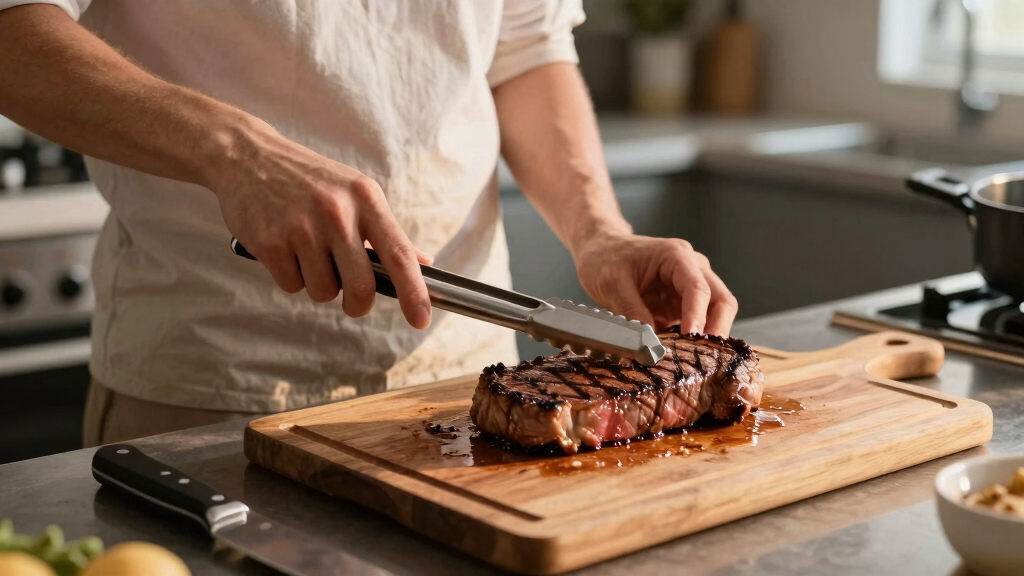
Resting lets the juices inside the meat settle back into the fibers, making each bite juicy and tender. When you cut into hot meat immediately, those juices run out, leaving it dry and less flavorful. Think of it like letting a sponge soak up water—if you squeeze it too soon, most of the liquid escapes.
Resting is crucial because it allows the muscle fibers to reabsorb moisture that was pushed out during cooking. If you cut too early, you lose these flavorful juices, resulting in a drier, less satisfying bite. Conversely, proper resting ensures the meat retains its natural moisture, enhancing overall flavor and mouthfeel. This step can mean the difference between a juicy steak and a dry one, especially with thicker cuts where juices have more distance to travel. The tradeoff is a slight wait, but the payoff is a significantly more flavorful, moist piece of meat that makes your effort worthwhile.
As an affiliate, we earn on qualifying purchases.
How Long to Rest Different Types of Meat for Best Results
Resting times vary depending on the size and type of meat. Here’s a quick guide:
| Meat Type | Size/Thickness | Resting Time |
|---|---|---|
| Steak | 1-2 inches thick | 5-10 minutes |
| Roast | 4-6 pounds | 10-20 minutes |
| Whole Poultry | Standard whole chicken or turkey | 10-15 minutes |
The rule of thumb: larger and thicker cuts need longer resting times because they contain more moisture and require additional time for heat to distribute evenly throughout the meat. For example, a large beef roast benefits from a full 20-minute rest to ensure juices are evenly reabsorbed, preventing dry patches. Smaller cuts like steaks are quicker to equilibrate, so a 5-minute rest often suffices. Understanding this helps you avoid the common mistake of cutting into meat too soon, which can cause juices to escape prematurely, leading to dryness and loss of flavor. Proper resting times are a balance—too short, and you miss out on flavor; too long, and the meat cools excessively or dries out. The tradeoff involves timing your rest to match the cut’s size and your desired serving temperature.
As an affiliate, we earn on qualifying purchases.
The Science Behind Resting and How It Affects Temperature
Resting causes a slight temperature increase—called carryover cooking—by about 5-10°F (3-6°C). This phenomenon occurs because residual heat continues to distribute within the meat even after removing it from the heat source. If you ignore this, you might inadvertently serve meat that’s overcooked or undercooked relative to your target. For instance, aiming for a medium-rare steak at 135°F requires you to remove it from the heat around 130°F, allowing it to rest and reach the perfect temperature. This careful timing prevents overcooking, which can lead to tougher, less appetizing meat. Using a meat thermometer during resting is essential because it provides real-time data on internal temperature, helping you make precise decisions. Advanced techniques involve probes that monitor temperature continuously, offering even more control. Recognizing how temperature shifts during resting helps you avoid common pitfalls like overcooking or undercooking, ensuring your meat hits the ideal doneness and preserves its tenderness and juiciness.
As an affiliate, we earn on qualifying purchases.
Practical Tips to Rest Meat Like a Pro
- Use a clean plate or tray to rest meat on, avoiding direct contact with cold surfaces. This prevents rapid cooling and helps maintain optimal temperature for a juicier result.
- Cover loosely with foil—tenting—to retain heat without steaming the surface. This gentle insulation promotes even temperature distribution and prevents moisture loss.
- For larger roasts, a wire rack inside a pan helps air circulate around the meat, which prevents the bottom from becoming soggy and promotes a uniform rest.
- Timing is key: start resting once your meat hits the target temperature, not just when you remove it from heat. This ensures juices have time to redistribute and the meat reaches the ideal temperature without overcooking.
- For best results, use a digital thermometer to monitor internal temperature during resting. This allows you to time your rest precisely, avoiding the common mistake of under- or over-resting.
As an affiliate, we earn on qualifying purchases.
What Happens If You Rest Too Long or Not Enough
If you rest too long—beyond 30 minutes—the meat cools down significantly, losing its ideal warmth and sometimes drying out. This cooling can be especially problematic if you plan to serve the meat immediately, as it diminishes the optimal eating experience. On the other hand, rushing to cut into hot meat right away often results in the loss of flavorful juices, which escape before they have a chance to be reabsorbed. This not only affects juiciness but also reduces the overall flavor profile, making the meat seem less tender and less satisfying. Timing is everything because it’s a balancing act: too short, and you risk dry, less flavorful meat; too long, and it becomes cold and unappetizing. The sweet spot is a carefully managed rest—long enough for juices to redistribute evenly, but not so long that the meat cools excessively or dries out. Understanding this tradeoff helps you achieve the perfect balance for every cut, ensuring your meat remains warm, juicy, and flavorful upon serving.
Frequently Asked Questions
How long should I rest a large roast?
For a 4-6 pound roast, aim for 10-20 minutes. Larger roasts like prime rib may need closer to 20 minutes for juices to redistribute properly.Can I rest meat for too long?
Yes. Resting beyond 30 minutes can cause the meat to cool too much, making it less enjoyable to eat. Use a timer and keep it within recommended time frames.Should I cover meat while resting?
Yes, tenting with foil helps retain heat without trapping moisture, preventing the surface from steaming and becoming soggy.Does resting meat increase internal temperature?
It can cause a slight rise—about 5-10°F—due to carryover cooking. That’s why timing your rest based on internal temp is a smart move.Is resting necessary for all meats?
Most larger cuts like steaks, roasts, and whole poultry benefit from resting. Smaller cuts like burgers or sliced deli meats usually don’t require it.Conclusion
Remember, resting isn’t just a waiting game—it’s the secret to juicy, tender meat. Think of it as giving your meat a moment to relax and settle, ensuring every bite is packed with flavor. Next time you cook, give your meat those extra few minutes—your taste buds will thank you.Fall Picks
fall essentials
As an affiliate, we earn on qualifying purchases.