
TL;DR
Open a free Amazon Business account
Business pricing, bulk buying and tax-exempt orders.
Create a free accountAs an affiliate, we earn on qualifying purchases.
Most nuts and seeds toast in 5-8 minutes; spices need only 2-4 minutes. Keep heat moderate, stir often, and watch for a golden hue and fragrant aroma. Proper timing boosts flavor and prevents burning.
Ever toasted nuts too long and ended up with a bitter, scorched mess? Or under-toasted, missing out on that nutty aroma? Toasting is an art, not a science, but with a few clear guidelines, you can master it. Knowing the right timing makes all the difference — flavor, aroma, and that satisfying crunch.
This guide breaks down exactly how long to toast different nuts, seeds, and spices without risking a burn. You’ll learn the visual and smell cues to watch for, plus practical tips to keep your kitchen smelling divine and your ingredients perfect every time.
Most nuts and seeds toast in 5-8 minutes at moderate heat; spices need only 2-4 minutes.
Color and aroma are your best cues — aim for a light golden hue and fragrant smell.
Stir frequently to prevent hot spots and burning, especially on stovetop.
Remove from heat early; they will crisp as they cool, avoiding over-toasting.
Use a timer or set alarms to keep track of toasting time precisely.
How Long to Toast Nuts, Seeds, and Spices Without Burning
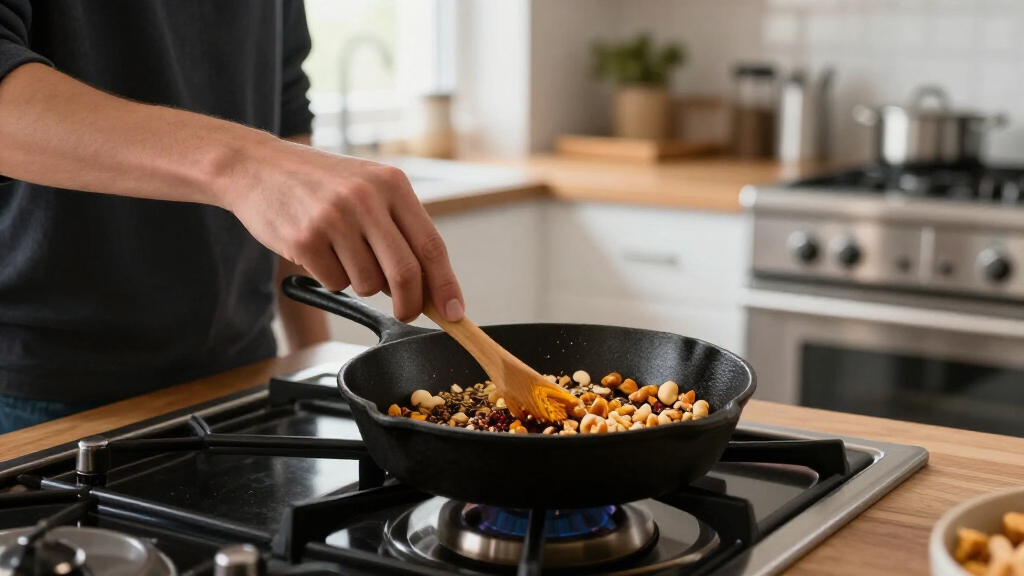
The sweet spot is brief: moderate heat, frequent stirring, and an early exit. Watch for a light golden hue and a warm, fragrant aroma—then remove the batch before it looks completely done.
Three cues signal the flavor peak
Timing is a guide, not a finish line. Ingredient size, pan weight, burner strength, and batch volume all affect the exact moment of doneness.
Fragrant aroma
The first reliable signal is a warm smell reminiscent of toasted bread. For spices, the aroma becomes earthy and vivid almost immediately.
Light golden color
Aim for pale gold to medium brown. If the ingredient darkens rapidly, reduce the heat and transfer it out of the hot pan.
Crisp after cooling
Nuts and seeds continue to firm as they cool. Pulling them slightly early prevents carryover heat from creating bitter, scorched notes.
Start checking before the timer ends
Small seeds and whole spices can move from aromatic to acrid in seconds. Larger nuts tolerate a longer, steadier toast.
| Ingredient | Time | Best method | Attention |
|---|---|---|---|
| Almonds | 6–8 min | Stovetop, medium | ✓ Stir often |
| Walnuts | 5–7 min | Oven, 350°F | ~ Check at 5 |
| Sesame seeds | 2–3 min | Skillet, low-medium | ✗ Never leave |
| Cumin seeds | 2–4 min | Stovetop | ✓ Constant stir |
| Black peppercorns | 3–4 min | Skillet, low | ~ Aroma first |
Times are approximate. Begin checking one to two minutes early.
Relative toast window
Bars compare the upper end of each recommended range.
A five-step controlled toast
Dry-toast separate ingredients in small batches. Different sizes and oil levels mean mixed batches rarely finish together.
Preheat
Warm a dry skillet or set the oven to 350°F for even heat.
Spread
Use one thin layer. Crowding traps moisture and slows browning.
Stir
Move the batch frequently—about every 30 seconds on the stove.
Pull early
Stop when the aroma peaks and the first light-golden color appears.
Cool
Transfer to a plate or rack so the hot pan cannot keep cooking it.
Moderate heat buys control
High heat browns the surface before the center develops flavor. A steady 300–350°F range encourages even color and reduces scorching.
Perfect can become burnt in seconds
Over-toasting creates bitter flavor and may increase undesirable heat-formed compounds such as acrylamide. Controlled heat and an early finish protect both taste and texture.
Stay beside the heat
Toasting is short enough that multitasking is rarely worth the risk.
Use a timer
Set an alert early, then judge the final minute by aroma and color.
Skip oil when dry-toasting
A clean, dry pan gives direct feedback and keeps the method simple.
Store only when cool
Warm ingredients create condensation that softens crunch and shortens freshness.
Common toasting questions
Can I toast nuts and spices in a microwave?
Yes, but uneven heating makes burning more likely. A skillet or oven provides better visibility and control.
How long do toasted nuts and seeds stay fresh?
Store fully cooled ingredients in an airtight container for about one to two weeks at room temperature, or longer when refrigerated or frozen.
Can different ingredients toast together?
Usually not. Toast them separately because size, moisture, oil content, and ideal timing vary significantly.
What if I am unsure whether they are done?
Remove them slightly early. Residual heat continues the process, while a burnt batch cannot be rescued.
How to Recognize When Nuts and Seeds Are Perfectly Toasted
In just 5-8 minutes, nuts and seeds reach their flavor peak — if you watch closely. The first sign? A warm, inviting aroma that fills your kitchen like toasted bread. The color shifts from pale to a light golden or medium brown. Texture should be crisp and crunchy, not soggy or greasy.
For example, almonds go from bland to beautifully fragrant and golden in about 6 minutes on medium heat. If they darken too fast or smell burnt, you’ve gone too far.
Remember: they will continue to crisp up as they cool. So, pull them off early, before they look fully browned.
Understanding these cues is crucial because over-toasting can quickly turn that delicious nutty flavor into a bitter, burnt taste. Conversely, under-toasted nuts lack depth, aroma, and crunch. Striking the right balance ensures the flavor develops fully while avoiding the risk of bitterness or burnt notes.
As an affiliate, we earn on qualifying purchases.
The Exact Timing for Toasting Nuts, Seeds, and Spices
| Ingredient | Toasting Time | Best Method |
|---|---|---|
| Almonds | 6-8 minutes | Stovetop, medium heat |
| Walnuts | 5-7 minutes | Oven at 350°F |
| Sesame Seeds | 2-3 minutes | Skillet, low-medium heat |
| Cumin Seeds | 2-4 minutes | Stovetop, stirring constantly |
| Black Peppercorns | 3-4 minutes | Skillet, low heat |
Timing is key because each ingredient’s flavor and aroma develop at different rates, and these differences influence the final dish’s character. For example, almonds and walnuts require longer to develop a rich, toasted flavor, but over-toasting can cause bitterness and acrylamide formation, which is a health concern. Delicate spices like cumin or pepper need less time; over-toasting can lead to overpowering bitterness and loss of nuanced flavors. Starting to check early prevents overcooking, especially with smaller or thinner ingredients, which can go from perfect to burnt rapidly. Recognizing these timeframes helps you balance flavor development with safety and health considerations, ensuring your toasted ingredients contribute their best to your dish.
As an affiliate, we earn on qualifying purchases.
Why Moderate Heat and Frequent Stirring Save Your Batch
High heat can turn a perfect toasted batch into a bitter, burnt disaster in seconds. Moderate heat — around 300-350°F — allows even browning without risking scorching. Stirring often distributes heat evenly, preventing hot spots that cause burning. This is especially important because uneven heat can lead to some parts of the nuts or spices burning while others remain underdone, compromising both flavor and safety.
Imagine roasting sunflower seeds in a skillet. If you don’t stir, the ones in direct contact with the hot pan turn dark while others stay pale. Stirring every 30 seconds keeps everything uniform. It’s like giving each seed a turn in the spotlight, ensuring consistent flavor development.
This simple step prevents uneven roasting, which not only affects taste but can also produce acrylamide, a potential carcinogen formed at high temperatures. Consistent stirring and moderate heat help you achieve a perfectly toasted batch that’s flavorful, safe, and visually appealing.
digital kitchen timer for toasting nuts
As an affiliate, we earn on qualifying purchases.
As an affiliate, we earn on qualifying purchases.
How to Avoid Burning When Toasting Nuts, Seeds, and Spices
- Use moderate heat — don’t crank it up.
- Keep a close eye and stay nearby. Burnt ingredients happen fast, and vigilance is essential to catch the moment of perfection.
- Stir frequently, especially for small or thin items, to promote even heat distribution and prevent hot spots that can quickly turn bitter or charred.
- Remove from heat as soon as aroma peaks and color turns golden. Recognizing this point is crucial because waiting too long leads to burnt, bitter flavors and potential health concerns from over-toasting.
- Let cool before storing to maintain crunch and flavor. Cooling stabilizes the texture and prevents moisture from condensing, which could compromise shelf life.
For example, when roasting cumin seeds, the moment they release a strong, earthy aroma and turn from pale to golden, it’s time to pull them off. If you wait too long, they’ll turn dark and bitter, and you risk over-toasting, which diminishes their delicate flavor profile and can produce acrylamide. Better to under-toast slightly than risk burning, as burnt spices are not only bitter but also potentially harmful. The tradeoff is between achieving optimal flavor and avoiding health risks, making careful timing essential for the best results.
As an affiliate, we earn on qualifying purchases.
Smart Tips for Perfect Toasting Every Time
- Use a dry skillet or baking sheet — no oil needed for dry toasting. This prevents added moisture that can interfere with browning and flavor development.
- Preheat your pan or oven for even heat distribution, reducing the risk of hot spots that cause uneven toasting or burning.
- Toast in small batches to prevent overcrowding, which can trap moisture and lead to uneven browning.
- Set timers or alarms if needed to track time, especially when working with ingredients that require precise timing.
- Always cool toasted items on a plate or rack before storing to lock in flavor and maintain crunch. Cooling prevents moisture buildup that could lead to sogginess or mold.
For instance, when toasting pumpkin seeds, spreading them in a thin, even layer on a baking sheet and stirring every few minutes ensures a uniform, golden crunch. This technique minimizes the risk of burning and guarantees a flavorful, crispy result that enhances your dish.
Frequently Asked Questions
How do I know when nuts or seeds are toasted enough?
Look for a light golden color, a fragrant aroma, and a crunchy texture. They will continue to crisp slightly as they cool, so pull them off just before they reach full golden-brown.
Can I toast nuts and spices in the microwave?
Microwave toasting is possible but tricky. It can cause uneven heating and is more prone to burning. For consistent results, stovetop or oven methods work better because they offer more control.
How long do toasted nuts and seeds last?
In an airtight container, they stay fresh for about 1-2 weeks at room temperature. For longer storage, keep them in the refrigerator or freezer to maintain crunch and flavor.
What’s the best way to prevent burning?
Use moderate heat, stir often, and remove from heat early — as soon as you see a golden hue and smell a rich aroma. Keep a close watch; it’s easy to go from perfect to burnt in seconds.
Can I toast different ingredients together?
It’s best to toast different nuts, seeds, and spices separately. They have varying cooking times and flavor profiles, so toasting separately ensures each gets just right without over- or under-cooking.
Conclusion
Toasting nuts, seeds, and spices is a simple step that can make your dishes taste richer and smell irresistible. The trick is paying attention — watch for color, smell, and texture. With moderate heat and frequent stirring, you’ll never burn a batch again.
Next time you reach for your favorite nuts or spices, remember: the perfect toast is just a few minutes away. Keep a close eye, trust your nose, and enjoy the fragrant reward of a job well done.
Flea & tick season Picks
flea and tick prevention
As an affiliate, we earn on qualifying purchases.