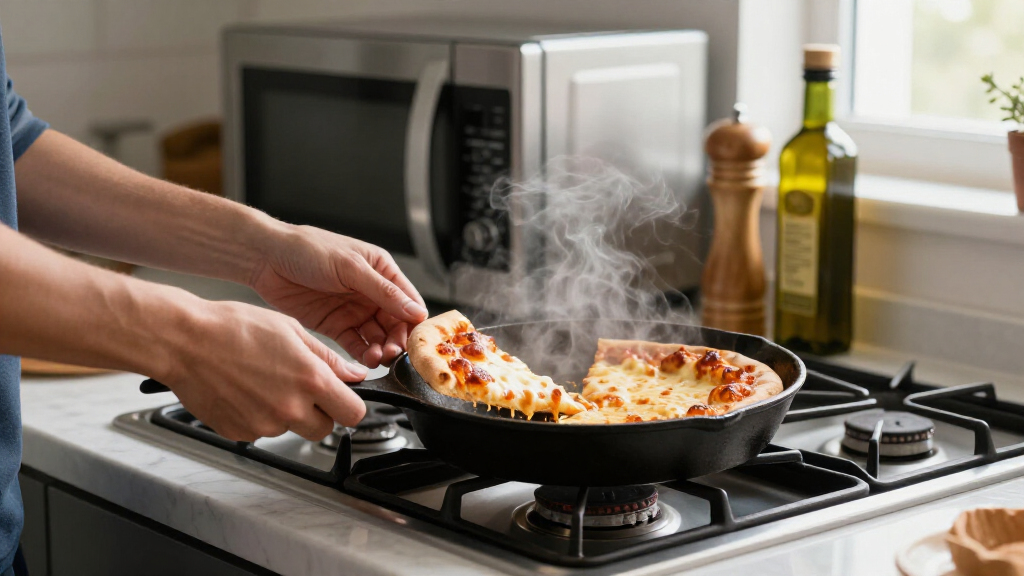

TL;DR
Search or coverage interest is spiking around ways to reheat pizza, including a headline that advises against using a microwave. The available source does not identify what prompted the attention or verify which reheating methods are best.
Interest is spiking around how to reheat pizza, with a circulating headline urging readers to avoid the microwave. The available source is only a trend signal: it does not confirm a new announcement, identify who published the headline, or establish what prompted the attention.

Get kitchen gear delivered free with Prime
- Fast, free delivery on millions of items
- Prime Video, Amazon Music and more included
- Member-only deals all year
The source labels the topic as food and says it came via RSS. It provides the headline, “Stop Reheating Pizza in the Microwave. These Are the Best Ways to Do It,” alongside a note that interest is spiking. It gives no publication date, author, article link, search figures, or coverage count.
The headline makes a recommendation, but the source does not provide evidence for it or specify any alternative reheating methods. The claim that these are the “best ways” should therefore be treated as headline wording, not as a finding verified by the available material.
Reheating leftover pizza is a familiar household task. The source does not establish that readers have changed their habits, that any particular method is safer or produces better results, or that a new product or study is involved.
Why Pizza Reheating Is Trending
The spike points to renewed attention to a practical food question: how to warm leftover pizza. That may reflect readers looking for better texture or convenience, but those explanations are plausible context, not confirmed reasons for the trend.
Without a stated measurement window, baseline, or underlying data, the size and duration of the increase cannot be assessed. Readers can see that the topic is attracting attention according to the source, but cannot tell how widespread that interest is or whether it is driven by one article, a broader discussion, or another cause.
Products Worth Considering

Greenworks 40V Brushless Cordless Chainsaw Kit, 16-Inch Bar, 4.0Ah Battery and Charger

DEWALT 20V MAX Brushless 3-Tool Combo Kit with Drill, Impact Driver, Oscillating Multi-Tool, 3 Batteries and Charger

DEWALT DW618PK Fixed- and Plunge-Base Router Kit, 12-Amp, Variable Speed
As an affiliate, we earn on qualifying purchases.
A Familiar Leftover Question
Pizza can be reheated after it has been cooked and stored as leftovers; choosing a reheating approach is an everyday kitchen decision. The supplied material does not document a new development in food science, a change in kitchen guidance, or a specific test comparing methods.
The only verified framing is the combination of a microwave-focused headline and a report of rising interest. The headline suggests there are preferred alternatives, but the source contains no method details or results. Any fuller comparison would require the underlying article or separate, attributable evidence.
The Trend’s Trigger Is Unknown
The source does not say what caused the spike, when it began, how interest was measured, or what baseline was used. It also does not identify the outlet or author behind the headline. No specific reheating method, test result, expert comment, or safety guidance is included, so none can be confirmed from this material.
More Source Details Needed
The next useful information would be the original article and dated trend data showing the measure, time window, and comparison basis. Until those details are available, the trigger for the attention and the headline’s recommendation remain unverified.
Key Questions
What is the news about reheating pizza?
A trend signal reports rising interest in reheating pizza, alongside a headline that advises against using a microwave. It does not confirm a new event or announcement.
Why is interest in reheating pizza rising?
The source does not identify the trigger. Reader interest in convenience or texture could be possible context, but that explanation is unconfirmed.
Which reheating methods does the source recommend?
It does not name any. The headline refers to “best ways,” but the supplied material contains no methods or comparison results.
How large is the increase in interest?
No figures, measurement window, or baseline are provided, so the size of the increase cannot be determined.
Source: rss