TL;DR

Get kitchen gear delivered free — and shop member deals
- Fast, free delivery on millions of items
- Access to Prime Big Deal Days deals on October 6–7
- Prime Video, Amazon Music and more included
A digital kitchen timer with a loud alarm can prevent overcooking and missed tasks. Focus on alarm volume, display readability, and placement options for best results.
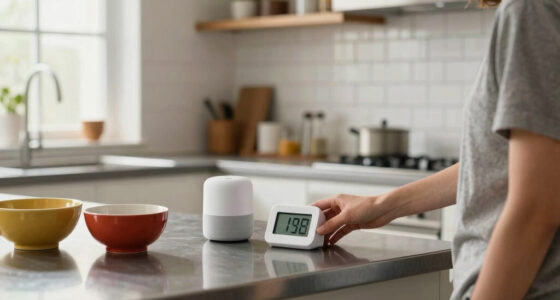
Imagine this: you’re juggling multiple pots on the stove, the blender is humming, and kids are running around. You set a timer, but the alarm is muffled behind the clatter. Frustrating, right? That’s where a digital kitchen timer with a loud alarm comes in. It’s a small device that can save your dinner and your sanity.
Whether you’re baking, exercising, or managing medication schedules, a timer that’s heard above the chaos is a game-changer. In this article, you’ll learn what features to look for, how to pick a timer that truly rings loud enough, and tips to get the most out of your purchase. Ready to find your perfect kitchen companion? Let’s dive in.
Look for timers with a stated maximum volume of at least 85 decibels for loud environments.
Test alarm sounds if possible, focusing on pitch and clarity, not just volume figures.
Placement is key — position your timer within earshot, using magnets, stands, or hanging loops.
Consider additional alerts like flashing lights or vibrations if hearing loud alarms isn’t enough.
Choose a model with easy controls and a clear display to avoid missing your countdown.
What Makes a Timer’s Alarm Loud Enough? Here’s the Key
The first step is understanding what ‘loud’ really means. Most digital kitchen timers with loud alarms produce sounds over 80 decibels — roughly as loud as city traffic or a food processor. But volume isn’t everything. The tone and pitch matter just as much, especially if your kitchen has background noise or you’re far from the timer.
For example, a high-pitched, shrill alarm can cut through the dishwasher’s hum better than a deep, dull sound. The pitch can influence how quickly your brain registers the alert, especially in environments with persistent background noise. Some models feature adjustable volume controls, allowing you to tailor the sound to your space. This flexibility is vital because what’s loud enough in a small apartment might be insufficient in a large, open-concept kitchen. A loud, piercing alarm can be disruptive in quiet settings, so balancing volume and tone is key. If your environment is particularly noisy—say, with a range hood or busy workshop—opting for a timer with a customizable or test alarm helps ensure it will be effective when needed. In essence, understanding the interplay between volume, pitch, and environment helps you select a timer that truly gets your attention without causing unnecessary disturbance.
In real life, a timer with a 90-decibel alarm will be heard clearly from across a large kitchen, even over boiling water and sizzling pans, while one at 70 decibels might get lost amid the noise. According to [1], a 10-decibel increase roughly doubles the perceived loudness, so don’t settle for anything under 80 decibels if loudness is your priority. Choosing the right loudness level involves considering both the environment and personal sensitivity—what is loud enough for one person might be overwhelming for another. The goal is a sound that commands attention without causing discomfort or alarm fatigue over time.
digital kitchen timer with loud alarm
As an affiliate, we earn on qualifying purchases.
As an affiliate, we earn on qualifying purchases.
How to Choose a Digital Timer That’s Truly Loud and Clear
- Check the decibel rating. Look for models that specify their maximum volume — ideally above 85 dB for noisy kitchens. But remember, the decibel number alone doesn’t tell the full story. The perceived loudness also depends on the tone and how easily it cuts through other sounds. A higher pitch can often be more effective than just increasing volume because it stands out against background noise. Additionally, consider whether the timer offers an adjustable volume feature, as this allows you to customize the alert based on your specific environment and personal hearing sensitivity. This prevents over- or under-estimating the necessary loudness, which can either cause missed alerts or unnecessary noise pollution.
- Test the alarm if possible. Visit a store or read reviews where users mention sound levels. Some online sellers allow you to hear a demo. Listening to actual sound samples helps you gauge whether the tone and volume will be effective in your space. Keep in mind that descriptions can be subjective; what sounds loud enough to one person may not be to another. Therefore, seeking out user reviews or testing the device in your environment ensures that the alarm will perform as expected, reducing the risk of missed alerts and frustration.
- Consider the tone and pitch. High-pitched beeps usually cut through background noise better. Avoid dull or muffled sounds. The tone’s clarity can make a significant difference—sharp, shrill sounds tend to be more attention-grabbing than deep or dull tones, especially in noisy kitchens. However, overly shrill alarms might be uncomfortable over long periods, so finding a balance is important. Some timers let you choose or customize the tone, providing flexibility to match your environment and personal preference.
- Look for adjustable volume controls. Many timers let you turn up the volume, which is useful if your space is particularly loud or if you frequently cook in different environments. Having this control allows you to adapt quickly without replacing the device. It also helps prevent the alarm from being excessively loud in quiet settings, maintaining a balance between effectiveness and comfort.
- Think about placement options. A timer with a magnet, clip, or stand helps you position it within earshot, especially if you’re moving around. Placement influences whether you’ll actually hear the alarm—placing it in a strategic spot near your work zone maximizes the chances of catching the alert. For example, sticking it on the fridge or attaching it to a metal surface near your workspace ensures it stays within your auditory reach. Consider whether the timer has features like a stand or magnet, which facilitate optimal placement, and test different locations to find where it’s most effective.
For example, if you often cook with the range hood on, a timer with a loud, piercing alarm and a strong magnet that sticks to the fridge is a lifesaver. You’ll hear it even if you’re outside the kitchen or busy washing dishes. Remember, the best timer isn’t just loud — it’s also easy to operate and understand at a glance. A clear display and simple controls prevent missed alarms or accidental resets, ensuring you can rely on it in busy moments.
loud alarm kitchen timer for noisy environments
As an affiliate, we earn on qualifying purchases.
As an affiliate, we earn on qualifying purchases.
Understanding the Importance of Timer Visibility and Ease of Use
In addition to loud alarms, the visibility of your timer’s display plays a crucial role in ensuring you don’t miss the alert, especially in busy or cluttered kitchens. A clear, large display with high contrast makes it easier to read from a distance or in poor lighting conditions. Features like backlit screens or large digits can significantly improve usability, reducing the chance of misreading the remaining time or resetting the timer unintentionally.
Furthermore, simplicity in controls enhances the overall user experience. Timers with intuitive buttons, minimal settings, and quick-start features allow you to set and start your countdown efficiently, even when multitasking. This ease of use is vital in high-pressure situations, ensuring you can rely on the timer without fumbling or confusion. Combining a loud alarm with clear visibility and straightforward operation creates a dependable tool that keeps your cooking safe and stress-free.
digital timer with adjustable volume and clear display
As an affiliate, we earn on qualifying purchases.
As an affiliate, we earn on qualifying purchases.
Frequently Asked Questions
How loud does a digital kitchen timer need to be to be effective?
A timer producing around 85-90 decibels is generally loud enough to be heard across a noisy kitchen or from another room. Look for models that specify their maximum volume and consider testing if possible. The effectiveness depends not only on volume but also on tone, pitch, and placement. A higher decibel rating increases the likelihood that the alarm will stand out amid background noise, but the tone’s clarity and the timer’s position are equally critical. For instance, a high-pitched, shrill sound can penetrate ambient noise more effectively than a dull, deep tone. Therefore, choosing a timer with a combination of sufficient volume and a sharp, attention-grabbing tone maximizes its effectiveness.Can I adjust the alarm volume on most timers?
Many models come with adjustable volume controls, allowing you to turn the alarm up or down based on your environment. Check product specs or reviews to confirm this feature. The ability to customize volume is important because it provides flexibility to adapt to different kitchen sizes, background noises, and personal hearing preferences. For example, in a quiet kitchen, a lower volume prevents unnecessary noise pollution, while in a bustling environment, a higher volume ensures the alarm isn’t missed. This feature enhances the timer’s versatility, making it suitable for various situations without needing multiple devices.What if I can’t hear the alarm? Are there alternatives?
Yes, timers with flashing lights or vibrating alerts are great backups if you have hearing challenges or loud surroundings. Combining visual and tactile cues ensures you never miss your reminder. These supplementary alerts are especially valuable in environments where noise levels are unpredictable or in households with hearing impairments. For example, a timer with a bright flashing light can be easily seen from across the room, while a vibrating feature can be felt through your pocket or wrist. Using multiple alert types creates a failsafe system, reducing the risk of missed signals and allowing you to focus on your tasks without worry.Will a loud timer work from another room?
If positioned correctly and with a high enough volume, most timers can be heard from another room, especially if placed near your usual activity zone. Placement near ears or on magnetic surfaces helps too. The effectiveness depends on the environment’s acoustics, background noise, and the timer’s loudness level. For instance, placing the timer on a metal surface close to your workspace or hanging it from a hook where sound can travel unobstructed improves the chances of hearing it. Testing different locations and ensuring the alarm is sufficiently loud and sharp will maximize its reach. Remember, even the loudest timer needs proper placement to be truly effective in a busy or noisy setting.Are phone or smart speaker timers better than standalone timers?
Smart devices are convenient but depend on power and can be drowned out by other notifications. A dedicated loud timer offers a physical, always-ready alert — often more reliable in the kitchen. While smart timers offer features like remote alerts and integration with other devices, they rely on Wi-Fi or Bluetooth connectivity and can be muted or overlooked amidst multiple alerts. A standalone timer with a loud alarm provides a tactile, immediate signal that doesn’t depend on apps or internet connections. Its physical presence and straightforward operation make it more dependable in noisy or chaotic situations where digital distractions are common. The choice depends on your preferences, but for reliability and immediacy, a dedicated loud timer remains a practical kitchen essential.kitchen timer with flashing lights and vibration alerts
As an affiliate, we earn on qualifying purchases.
As an affiliate, we earn on qualifying purchases.
Conclusion
A loud digital kitchen timer isn’t just a gadget — it’s a safety net for your busy kitchen life. The right one will cut through noise, sit where you can hear it, and give you peace of mind. Remember, a timer that rings loud and clear can turn chaos into calm.
Next time you set a timer, imagine it as your personal kitchen guard — alert, loud, and always on duty. With the right choice, you’ll never miss a beat, even in the loudest, busiest moments.
Fall Picks
fall essentials
As an affiliate, we earn on qualifying purchases.