TL;DR

Get kitchen gear delivered free with Prime
- Fast, free delivery on millions of items
- Prime Video, Amazon Music and more included
- Member-only deals all year
A kitchen scale provides more accurate, consistent measurements than measuring cups, especially for baking. Modern digital scales are easy to use and versatile, making them a valuable kitchen tool.
Imagine baking bread or cookies that turn out perfectly every time. No more guesswork, no more inconsistencies. The secret? A kitchen scale. It’s a simple tool that can dramatically change how you cook and bake, making your results more predictable and your process more efficient.
If you’re still relying on measuring cups, it’s time to consider the power of weight. This guide will show you why weighing beats measuring cups, how to choose a good scale, and practical tips to get started.
A kitchen scale measures weight, which is far more precise than volume-based measuring cups.
Using a scale reduces measurement errors by up to 30%, especially important for baking.
Modern digital scales are easy to use, with features like tare, unit conversion, and sleek designs.
Weighing ingredients leads to consistent results, saving time and ingredients over multiple batches.
Switching from cups to a scale is simple: pick a good model, learn the tare function, and start converting recipes.
Why a kitchen scale is more accurate than measuring cups
Measuring cups are designed for volume, but ingredients aren’t always uniform. Flour, for example, can be loosely packed or sifted, leading to big variations in weight. This variability can cause your baked goods to turn out differently each time, which is frustrating if you’re aiming for consistency. A scale measures the actual weight, giving you precise control over your ingredients. This precision is crucial because small differences can significantly impact the outcome of your baking or cooking.
For instance, 1 cup of flour can weigh anywhere from 120 to 150 grams depending on how you scoop or pack it. Using a scale, you get a consistent number every time, reducing guesswork. This consistency helps you replicate successful results and avoid the common pitfalls of over- or under-measuring. Over time, this leads to better texture, flavor, and appearance in your dishes.
According to an anonymous researcher, weighing ingredients can reduce measurement errors by up to 30%. This isn’t just about accuracy; it’s about efficiency—less trial and error, fewer ruined batches, and less waste. The tradeoff is minimal: a scale might be an extra device on your counter, but its benefits in precision and reproducibility often outweigh the inconvenience, especially for serious home cooks and bakers.
digital kitchen scale with tare function
As an affiliate, we earn on qualifying purchases.
As an affiliate, we earn on qualifying purchases.
How to switch from cups to a kitchen scale in 3 easy steps
- Pick your scale: choose a digital one with a tare function, unit conversion options, and a clear display. Think about your typical ingredients and whether you want features like a large surface area or portability.
- Learn the tare button: this feature allows you to zero out the weight of your container, so you only measure the ingredient. Mastering this function ensures quick, clean measurements without needing to subtract weights manually.
- Convert your recipes: start by measuring ingredients in grams or ounces, and adjust your recipes accordingly. Keep a cheat sheet or digital app nearby for common conversions. This step is about understanding the relationship between volume and weight, which varies with ingredient type, and gaining confidence in scaling recipes up or down accurately.
For example, instead of scooping flour into a cup, weigh out 150 grams. Recognize that this shift in measurement approach can feel unfamiliar at first, but it leads to more consistent results across batches. Over time, you’ll develop an intuition for how much of each ingredient to use, making your cooking more precise and reliable.
As an affiliate, we earn on qualifying purchases.
Comparison table: measuring cups vs kitchen scales
| Feature | Measuring Cups | Kitchen Scales |
|---|---|---|
| Accuracy | Varies with packing and scooping, leading to inconsistent results | High, based on precise weight measurement, reducing variability |
| Ease of use | Simple, but requires skill to scoop accurately and level | Requires understanding of tare function but straightforward once learned |
| Versatility | Limited to volume measurements, which can be inaccurate depending on ingredient density | Measures in grams, ounces, milliliters, and more—adaptable for different ingredients and recipes |
| Speed | Slower for multiple ingredients due to scooping and leveling | Faster, especially with tare function and digital display |
| Reproducibility | Low, heavily dependent on technique and consistency of scooping | High, results are consistent batch after batch when used properly |
best kitchen scale for accurate measurements
As an affiliate, we earn on qualifying purchases.
As an affiliate, we earn on qualifying purchases.
Why weighing ingredients makes a difference in baking
Baking is a science that depends on precise ratios. Small deviations in ingredient amounts can have outsized effects on the final product—think of cookies that are too dry or bread that doesn’t rise properly. Using a scale ensures you stick to the recipe’s exact ratios, which is vital for achieving the intended texture and flavor. For example, a slight excess of flour can make cookies crumbly, while too little sugar can result in blandness. The implications are clear: accuracy in measurement directly correlates to quality.
When you weigh ingredients, you account for differences in ingredient density, moisture content, and packing methods—all of which influence the outcome. One baker might use 200 grams of sugar, while another uses 220 grams; this difference can alter sweetness, moisture, and browning. With a scale, you eliminate guesswork, ensuring each batch matches the last. This consistency is especially important when baking for special occasions or producing multiple batches for sale or gifting.
According to timer tools, precision in baking not only improves results but also reduces waste since you avoid over-measuring or mismeasuring ingredients. The tradeoff is investing a little extra time upfront to weigh ingredients accurately, but the payoff is a more predictable, professional-quality product every time.
compact digital food scale with unit conversion
As an affiliate, we earn on qualifying purchases.
As an affiliate, we earn on qualifying purchases.
Modern features that make kitchen scales a must-have
Today’s digital scales are packed with features that make cooking easier and more precise. Many include tare buttons, which allow you to zero out the weight of any container, making sequential measurements quick and clean. Unit conversion features enable you to switch effortlessly between grams, ounces, or milliliters, eliminating the need for manual calculations. These features not only save time but also reduce errors—crucial when scaling recipes or working with unfamiliar ingredients.
Some scales connect to smartphone apps for recipe tracking or nutritional analysis, adding another layer of convenience and insight. Others have sleek, tempered glass surfaces that are easy to wipe clean and resistant to stains or scratches. Eco-friendly models use less power or operate without batteries, aligning with sustainable practices. The combination of these features means your kitchen scale becomes an intuitive, versatile tool that enhances your cooking precision and overall experience.
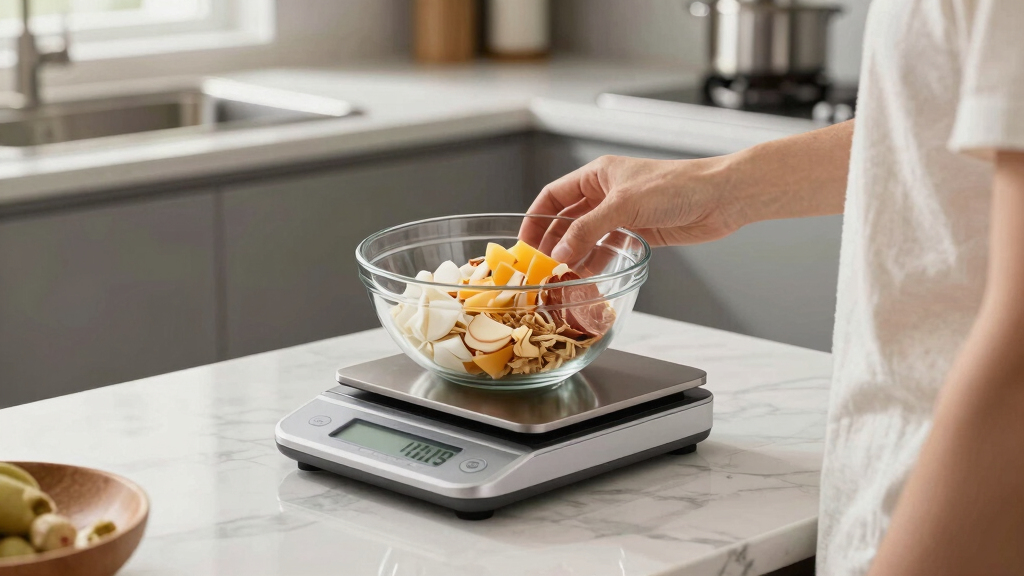
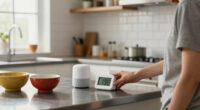
Imagine weighing your ingredients directly on a stylish, glass surface, watching the numbers change instantly. It’s a clean, precise experience that elevates your kitchen game and encourages more confident cooking and baking.
Practical tips to get started with weighing ingredients
- Start with a good digital scale—look for a model with tare and unit conversion features, and read reviews to ensure accuracy and durability.
- Always place your container on the scale first, then zero it out before adding ingredients. This avoids miscalculations caused by container weight and helps you measure precisely.
- Use a conversion chart or app to adjust recipes from volume to weight, especially when following unfamiliar recipes or international cuisines. Understanding the relationship between volume and weight can improve your flexibility in the kitchen.
- Measure ingredients in grams or ounces for best accuracy, especially in baking where precision impacts texture and rise. This habit also makes scaling recipes easier and more reliable.
- Keep your scale clean—wipe with a damp cloth after each use, avoiding submersion or harsh cleaners that could damage sensitive electronics. Proper maintenance ensures long-term accuracy and performance.
For example, weigh 100 grams of butter instead of eyeballing a stick, and notice how your cookies turn out more evenly baked and consistent in texture. Over time, this practice becomes second nature, transforming your approach to cooking from approximate to precise.
Frequently Asked Questions
Why should I switch from measuring cups to a kitchen scale?
Because a scale provides exact measurements, reducing variability and errors. Especially in baking, this leads to more consistent results and less waste.
What is the best type of kitchen scale for home use?
Digital scales are generally preferred for home cooking because they are precise, easy to read, and offer features like tare and unit conversions.
How do I calibrate my kitchen scale?
Most digital scales have a calibration function. Typically, you place the scale on a flat surface, press the calibration button, and follow the manufacturer’s instructions—often involving placing a known weight on the scale.
Can I measure liquids with a kitchen scale?
Yes, but you need to know the density or use a scale that measures in milliliters or fluid ounces. Many scales now have a ‘liquid’ mode for straightforward measurement.
Are kitchen scales necessary for everyday cooking?
Not always, but they’re invaluable for baking, precise dietary tracking, or when you want reliable, repeatable results every time.
Conclusion
Switching to a kitchen scale isn’t just about fancy gadgets; it’s about bringing precision and reliability into your cooking. With a little practice, you’ll notice your baked goods become more consistent, your recipes more foolproof.
Next time you bake, reach for the scale first. It’s the secret weapon that turns good results into great ones—and makes the kitchen a little more satisfying every day.
Fall Picks
fall essentials
As an affiliate, we earn on qualifying purchases.