TL;DR

Get kitchen gear delivered free with Prime
- Fast, free delivery on millions of items
- Prime Video, Amazon Music and more included
- Member-only deals all year
Proper thermometer probe placement directly impacts accuracy. For precise readings, insert the probe in the right spot, at the right depth, with correct technique—whether in food or on the body.
Ever taken a temperature and wondered if it was really right? The secret lies in where and how you insert that thermometer probe. A tiny misstep can give you a false reading—leading to unnecessary worry or missed illness. Whether you’re cooking a perfect roast or checking a fever at home, knowing exactly where to place the probe makes all the difference.
This guide cuts through the confusion and shows you the best spots, proper techniques, and tips for reliable measurements. Get ready to master the art of precise temperature reading—no matter what you’re measuring.
Rectal measurements provide the most accurate core temperature readings—about 0.5°C higher than oral ones.
Proper insertion depth is critical: about 1.5 inches for adults rectally, less for children, just under the tongue for oral tests.
Always sterilize probes and follow manufacturer instructions for best results.
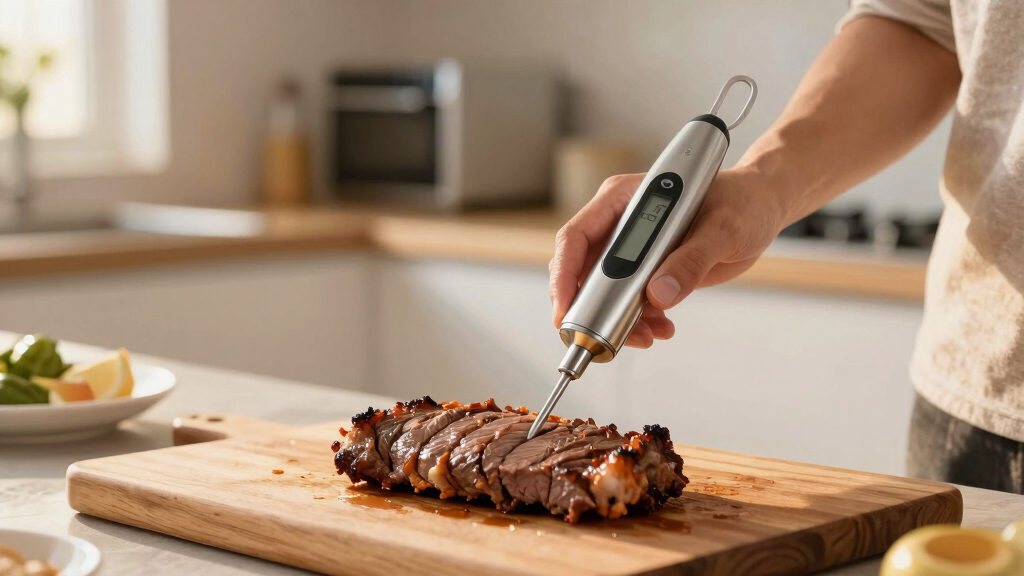
In cooking, insert the probe into the thickest, center part of meat, avoiding fat or bones, for an accurate temperature.
Consistent technique and site selection are key to reliable readings—stick to the same method each time.
What’s the Right Spot to Measure Body Temperature and Why?
When it comes to body temperature, the goal is to get as close to your core temperature as possible. Rectal measurements are considered most accurate because they reflect internal body heat, often about 0.5°C higher than oral readings. For example, if your oral temp reads 98.6°F, a rectal reading might be around 99.1°F.
In contrast, oral and axillary (armpit) readings are surface temperatures that can vary with recent activity, food, or clothing. Infrared forehead thermometers are convenient but can be thrown off by sweat or improper technique. Knowing where to insert and how deep makes all the difference in accuracy.
digital thermometer for body temperature
As an affiliate, we earn on qualifying purchases.
As an affiliate, we earn on qualifying purchases.
Step-by-Step: How to Properly Insert a Thermometer for Accurate Readings
- Choose the right thermometer for your measurement site—digital, infrared, or traditional mercury.
- Wash your hands and sterilize the probe if reusable, following manufacturer instructions.
- Lubricate the tip with a water-based gel if inserting rectally—this makes the process smoother and more comfortable.
- Insert the probe gently to the recommended depth: about 1.5 inches for adults in the rectum, less for children, and just under the tongue for oral readings.
- Hold the probe steady until the device signals that the reading is complete—usually a few seconds.
- Remove, clean, and store the thermometer properly for next use.
For example, when taking a rectal temperature, gently insert the lubricated probe about 1.5 inches for an adult, aiming toward the belly button. Never force or rush the process—patience ensures accuracy and comfort.
As an affiliate, we earn on qualifying purchases.
Compare Typical Measurement Sites: Which Is Most Accurate?
| Site | Approximate Temperature (°F) | Pros | Cons |
|---|---|---|---|
| Rectal | 99.0–100.4 | Closest to core temperature, most accurate | Invasive, uncomfortable for some |
| Oral | 97.6–99.5 | Easy, quick | Affected by recent eating/drinking |
| Axillary | 96.5–98.5 | Non-invasive, simple | Less accurate, surface temperature |
| Forehead (Infrared) | 96.4–99.0 | Fast, no contact | Can be affected by sweat or skin conditions |
As an affiliate, we earn on qualifying purchases.
Top Tips to Ensure Your Thermometer Gives Accurate Readings
- Always wash and disinfect the probe before and after use.
- Follow manufacturer instructions precisely for insertion depth and position.
- Avoid measuring right after eating, drinking, or exercising—wait at least 15-30 minutes.
- Keep the thermometer steady until the reading stabilizes.
- Use the same site and method each time for consistency.
As an affiliate, we earn on qualifying purchases.
Why Placement Matters When Cooking Meat — Keep It Juicy & Safe
In cooking, probe placement isn’t just about accuracy—it’s about safety and juiciness. For example, when grilling a roast, inserting the thermometer into the thickest part avoids overcooking or undercooking. Aim for the center, avoiding fat pockets or bones, which can give false readings.
For a juicy steak, check the thickest part, about 1.5 inches deep, to gauge doneness. Insert the probe horizontally into the middle, avoiding the surface. Proper placement ensures your meat hits the perfect temperature—no more guesswork.
Safety First: Precautions When Using Thermometers
If you’re working with body thermometers, especially rectal ones, wash your hands thoroughly and sanitize the probe after each use. For cooking thermometers, avoid contact with raw meat juices to prevent cross-contamination. Never force a probe into a hard or resistant spot—gentle insertion prevents damage and inaccurate readings.
If you’re unsure about electrical or structural work involving thermometers (like embedded sensors in appliances), always call a licensed professional. Safety first—especially with sharp or electrical tools.
Frequently Asked Questions
What is the most accurate spot to measure body temperature?
Rectal measurements are the most accurate, reflecting core body temperature closely—about 0.5°C higher than oral readings. For quick, reliable results, especially in infants or sick patients, rectal is often preferred.
How deep should I insert a thermometer probe?
For rectal use, insert about 1.5 inches into adults, ensuring the tip is directed toward the belly button. This depth allows the probe to reach the rectal canal, which is close to internal core temperature. Inserting the probe at this depth ensures the reading accurately reflects internal heat rather than surface or ambient temperature. If inserted too shallowly, the reading may underestimate the true core temperature, leading to potential misdiagnosis or missed fever. Conversely, inserting too deep or with excessive force can cause discomfort or injury, especially in sensitive populations. Understanding and following the recommended depth—about 1.5 inches for adults—balances accuracy with safety, providing a reliable measure of internal temperature essential for proper health assessment.
Can I use one thermometer for both oral and rectal measurements?
It’s best to keep separate probes or thoroughly disinfect the thermometer between uses to avoid cross-contamination. Using the same probe without proper cleaning can transfer bacteria or other pathogens, especially from rectal to oral measurements. If you must use a single device, ensure you disinfect it thoroughly with alcohol wipes or follow manufacturer instructions for sterilization. Labeling or designating specific thermometers for each site can also help maintain hygiene and accuracy. Remember, safety and cleanliness are paramount when taking temperature measurements, especially in vulnerable populations like children or the elderly.
Why do readings vary between different sites?
Different sites reflect different temperatures—rectal is closest to core, oral is slightly lower, and axillary is even cooler. These variations are due to their proximity to internal organs and exposure to external factors. For example, rectal readings tend to be about 0.5°C higher because they measure internal heat directly, while axillary readings are influenced by skin temperature and environmental conditions. Factors such as recent physical activity, clothing, sweating, or recent eating and drinking can further influence surface or accessible site measurements, leading to discrepancies. Recognizing these differences helps interpret readings more accurately and decide which measurement site is most appropriate based on the situation.
How can I improve the accuracy of infrared forehead thermometers?
Ensure the forehead is clean and dry before measurement, as sweat, dirt, or skin oils can interfere with infrared sensors. Avoid taking readings immediately after physical activity, as increased blood flow or sweating can lead to falsely high readings. Position the thermometer correctly—usually about 1 to 2 inches from the forehead—and follow the manufacturer’s instructions carefully. Consistent technique, including proper distance and stable positioning, is key to obtaining reliable results. Additionally, avoid measurements in drafty or overly warm environments, as ambient temperature can affect the sensor’s accuracy. Regular calibration of the device according to the manufacturer’s guidelines also helps maintain precision over time.
Conclusion
Getting an accurate temperature isn’t just about the device—it’s about placement, technique, and patience. Whether checking a fever or perfecting a roast, knowing exactly where and how to insert your thermometer transforms guesswork into certainty.
Next time you take a reading, think of it as a tiny, precise handshake—if you place it right, it tells you exactly what you need to know. Your trusted guide to temperature mastery starts here. So, where will you measure next?
Halloween Picks
halloween
As an affiliate, we earn on qualifying purchases.