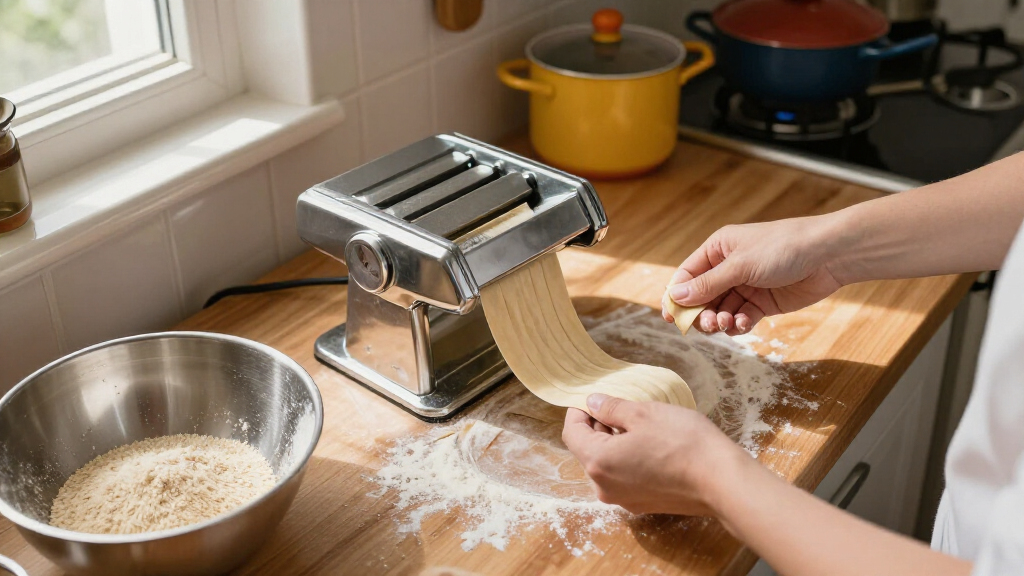

For most home cooks, I’d start with the Philips 7000 Series Automatic Pasta Maker, which makes fresh pasta with an automated mixing-and-extruding process. The Marcato Atlasmotor suits cooks who want motor-assisted rolling and cutting, while the 260W model with 13 interchangeable discs offers a broad range of extruded shapes. The main choice is between hands-off machines that mix dough and press it through shaping discs, and roller-style machines that require prepared dough but make familiar sheets and ribbons. Capacity, cleanup, counter space, and the amount of control you want all affect which style makes sense. Read on for the full comparison and recommendations by pasta-making needs.

Get kitchen gear delivered free with Prime
- Fast, free delivery on millions of items
- Prime Video, Amazon Music and more included
- Member-only deals all year
Complete the kit


Key Takeaways
- Machine style matters more than wattage alone: Philips automatic models mix and extrude dough, while the Marcato Atlasmotor and other roller-and-cutter designs work with dough you prepare separately.
- Shape variety favors extrusion: the 260W machine lists 13 interchangeable discs, while the VEVOR 150W models list eight; more shapes are useful only if you expect to make them and can store the discs.
- Roller machines offer a different kind of control: the Marcato Atlasmotor and 3-in-1 roller-and-cutter options focus on sheets and cut noodles rather than a large library of extruded shapes.
- Two listings describe the same VEVOR configuration: the 150W, eight-shape models appear twice, so buyers should compare listing details and included accessories rather than assume distinct performance.
- Compact and stainless-steel labels do not settle the fit: the Philips Viva Compact and Newhai stainless-steel model point toward different priorities, but kitchen space, cleaning access, and batch size still need checking.


| electric pasta maker | Weight | Power | Dimensions |
|---|---|---|---|
| 260W Electric Pasta Maker with | 9 lb | 260 W | 16 × 13 × 7 in |
| WICHEMI Electric Pasta Maker 4 | 22 lb (10 kg) | 135 W | — |
| WICHEMI 3-in-1 Electric Pasta | 17.6 lb (8 kg) | 135 W | 8.66 × 6.88 × 8.66 in |
| VEVOR 150W Automatic Electric | 11 lb | 150 W | 13.4 × 7.1 × 11 in |
| YIMOHOME Commercial Electric P | 46 lb | — | 13 × 12 × 14 in |
| GVODE Electric Pasta Maker wit | 5.2 lb | 700 W maximum | — |
| VEVOR Automatic Electric Pasta | 11 lb | 150 W | 13.4 × 7.1 × 11 in |
| Newhai Electric Pasta Maker | 17.6 lb | 135 W | 11.3 × 9.5 × 9.6 in |
| Philips 7000 Series Automatic | 20 lb | 150 W | 12.87 × 9.02 × 12.68 in |
| LEONEBEBE Electric Pasta Maker | 15 lb | 135 W | — |
| Marcato Atlasmotor 110V Electr | — | — | — |
| PHITTIS Electric Pasta Machine | 7.7 lb | — | 16.09 × 11.85 × 7.72 in |
| GVODE Electric Pasta Maker wit | — | 700W Pmax | 11.4 × 10.3 × 6.53 in |
| Philips Viva Compact Automatic | 4700 g | — | 15.5 × 13 × 11.9 in |
More Details on Our Top Picks
260W Electric Pasta Maker with 13 Interchangeable Discs
The Aptovpvp earns its place for buyers who want one-touch mixing, kneading, and extrusion rather than a separate roller-and-cutter workflow. Its 13 shaping discs offer more pasta styles than the VEVOR 150W Automatic Electric Pasta Maker with 8 Shapes, while its 500 g flour capacity suits a small-to-medium family batch. Measuring cups and detachable food-contact parts also make portioning and routine cleanup more approachable for first-time pasta makers. The tradeoff is construction: its food-contact components are plastic, unlike the stainless-steel body of the WICHEMI 3-in-1 Electric Pasta Maker. At 9 pounds, it is also substantial enough that frequent cupboard storage may be inconvenient. I’d choose it for variety and automated prep, not for metal-heavy construction or a particularly compact footprint.
Pros:- Combines mixing, kneading, and extrusion in one machine.
- Thirteen discs provide more shape options than the VEVOR 8-disc model.
- One-touch operation and measuring tools make batch preparation accessible to beginners.
- Detachable food-contact parts support easier cleanup.
Cons:- Plastic food-contact components may feel less durable than the WICHEMI stainless-steel construction.
- At 9 pounds and 16 inches long, it takes some effort and space to store.
- The 500 g flour limit is geared to family-sized batches rather than high-volume use.
Best for: Home cooks who want one-touch pasta making and a broad choice of shapes for family meals.
Not ideal for: Buyers who prioritize stainless-steel food-contact construction or need a light machine to move in and out of storage.
- Power:260 W
- Shaping discs:13
- Flour capacity:500 g
- Weight:9 lb
- Dimensions:16 × 13 × 7 in
- Brand:Aptovpvp
- Model:QZD-0206
- Included accessories:Flour cup, water cup, cleaning spatula
Our verdict“Choose the Aptovpvp if you want an approachable automatic machine with many pasta shapes, and skip it if metal construction is a priority.”
WICHEMI Electric Pasta Maker 4-in-1 Pasta Roller & Noodle Press
The WICHEMI 4-in-1 is aimed at cooks who need a roller-and-cutter workflow with high stated throughput, rather than the all-in-one flour-to-pasta extrusion approach of the Aptovpvp. Its 304 food-grade stainless-steel body and blades are a more metal-forward build, and the listed output of up to 22 lb per hour points toward repeated batches or small-scale food service. Four functions cover dough rolling, round noodles, and three flat noodle widths; a 0.3–3 mm sheet range also gives it a role in making thin dumpling skins. That capacity comes with a serious space and handling cost: at 22 pounds, it is far heavier than the 9-pound Aptovpvp. It uses a 110V US plug, too, so regional compatibility is limited. I’d favor it for volume and steel construction, not easy storage.
Pros:- 304 food-grade stainless-steel body and blades provide a metal-focused build.
- Four listed functions cover dough rolling and several noodle formats.
- Stated production rate reaches up to 22 lb per hour.
- Adjustable sheet thickness from 0.3 to 3 mm supports thin dough applications.
Cons:- At 22 pounds, it is much harder to move and store than the Aptovpvp.
- The 110V US plug limits suitability in other electrical regions.
- Its roller-and-cutter workflow requires prepared dough rather than automating flour-to-pasta extrusion.
Best for: Small food businesses or home cooks making large, frequent batches who want a stainless-steel roller and cutter.
Not ideal for: Occasional pasta makers with limited counter or storage space, or buyers outside regions compatible with a 110V US plug.
- Power:135 W
- Voltage:110 V US plug
- Material:304 food-grade stainless steel
- Weight:22 lb (10 kg)
- Production rate:Up to 22 lb/h
- Round blade size:2.5 mm
- Flat blade sizes:2 mm, 4 mm, and 9 mm
- Sheet thickness range:0.3–3 mm
Our verdict“Pick this WICHEMI for frequent, higher-volume rolling and stainless-steel construction if its weight and 110V supply fit your kitchen.”
WICHEMI 3-in-1 Electric Pasta Maker Machine – Automatic Dough and Noodle Roller
Compared with the heavier WICHEMI 4-in-1, this 3-in-1 model keeps the same 135 W motor and stated 22 lb/h output in a smaller listed footprint of 8.66 × 6.88 × 8.66 inches. Its 304 stainless-steel body suits buyers who prefer a metal roller-and-cutter machine, and automatic dough pressing, noodle cutting, and dumpling-skin functions cover the core tasks without a large menu of extras. The simpler setup has a limit: there are only three listed blade formats—2.5 mm round and 4 mm and 9 mm flat—so it offers less noodle-width choice than its 4-in-1 sibling. Although the dimensions look compact, the listed 17.6-pound weight is still significant for a countertop appliance. I’d choose it over the larger WICHEMI when footprint matters more than format flexibility.
Pros:- Listed dimensions are smaller than those of the WICHEMI 4-in-1.
- 304 food-grade stainless-steel construction.
- Automatic pressing, cutting, and dumpling-skin functions cover several core tasks.
- Stated production efficiency reaches up to 22 lb/h.
Cons:- Three preset noodle sizes give less choice than the WICHEMI 4-in-1.
- At 17.6 pounds, it is not especially easy to lift or store.
- The 110V US plug restricts use in regions with different electrical supplies.
Best for: Pasta makers who want a compact-footprint stainless-steel roller for regular noodle and dumpling-skin preparation.
Not ideal for: Buyers who need many cutter widths, a lightweight machine, or electrical compatibility beyond a 110V US plug.
- Power:135 W
- Voltage:110 V US plug
- Weight:17.6 lb (8 kg)
- Dimensions:8.66 × 6.88 × 8.66 in
- Material:304 food-grade stainless steel
- Production efficiency:Up to 22 lb/h
- Blade types:2.5 mm round, 4 mm flat, 9 mm flat
- Sheet thickness range:1.5–4 mm
Our verdict“Choose this model if you want a smaller-footprint stainless-steel roller and can work with three preset noodle sizes.”
VEVOR 150W Automatic Electric Pasta Maker with 8 Shapes
The VEVOR is a family-oriented automatic extruder: its 500 g flour capacity is intended for a batch of about four people, and the listed preparation time is about 14 minutes. Four automatic modes and eight shaping discs make it simpler to vary pasta than the WICHEMI 3-in-1, which rolls and cuts dough in just three preset sizes. Removable dishwasher-safe parts and included cleaning tools also suit households that want less hand-cleaning after dinner. The tradeoff is that extrusion depends on getting the flour-to-water ratio right; a poor dough balance can cause sticking or failed extrusion, so it is not as forgiving as a machine that simply rolls prepared dough. Its 11-pound weight and 13.4-inch length also take up storage room. I’d pick it for family-size automatic batches, not highly flexible dough handling.
Pros:- 500 g flour capacity is suited to a family-sized batch.
- Eight discs offer more shape variety than the WICHEMI 3-in-1’s three blade formats.
- Four automatic modes simplify operation.
- Removable dishwasher-safe parts and included cleaning tools support easier cleanup.
Cons:- Incorrect flour-to-water ratios can cause sticking or prevent extrusion.
- At 11 pounds, it takes space and effort to move into storage.
- Its 150 W motor and automatic extrusion workflow are not presented as a high-volume commercial setup.
Best for: Families seeking an automatic pasta maker with a useful batch size, several shapes, and dishwasher-safe removable parts.
Not ideal for: Buyers who want a roller for prepared dough or prefer a machine that is less sensitive to flour-and-water ratios.
- Power:150 W
- Operation:Automatic
- Modes:4
- Pasta shapes:8
- Flour capacity:500 g
- Preparation time:About 14 minutes
- Weight:11 lb
- Dimensions:13.4 × 7.1 × 11 in
Our verdict“Choose the VEVOR for family-sized automatic extrusion and easier cleanup if you are willing to manage dough ratios carefully.”
YIMOHOME Commercial Electric Pasta Maker and Dough Sheeter
The YIMOHOME serves a different buyer from the batch-sized Aptovpvp and VEVOR: it combines kneading, sheeting, and cutting with a 750 W motor and a stated output of 45–66 lb per hour. Its adjustable 0.1–20 mm dough thickness gives more control over sheet preparation than the WICHEMI rollers’ narrower stated ranges, while 3 mm and 9 mm cutters cover two noodle widths. Stainless-steel rollers and cutters suit repeated use, but the machine’s 46-pound weight makes it a poor fit for kitchens where appliances need to be put away after each session. Its throughput and broad thickness adjustment may be excessive for occasional household cooking, especially compared with the 500 g batch capacities of the VEVOR and Aptovpvp. I’d reserve this for frequent large-batch production where a fixed, substantial machine is practical.
Pros:- 750 W all-copper motor and stated capacity of 45–66 lb per hour suit high-volume work.
- Combines kneading, rolling, and cutting in one machine.
- Adjustable dough thickness from 0.1 to 20 mm offers a broad sheeting range.
- 304 stainless-steel construction includes the rollers and cutters.
Cons:- At 46 pounds, it is substantially heavier than the VEVOR or Aptovpvp and difficult to store between uses.
- Its stated output and commercial-oriented build may be excessive for ordinary household batches.
- Only 3 mm and 9 mm cutter widths are listed.
Best for: Small commercial kitchens or serious home producers making large quantities of noodles and dough on a regular schedule.
Not ideal for: Occasional home cooks, renters, or anyone who needs a pasta maker that can be moved and stored easily.
- Motor:750 W all-copper motor
- Voltage:110 V
- Material:304 food-grade stainless steel
- Weight:46 lb
- Dimensions:13 × 12 × 14 in
- Dough thickness:Adjustable, 0.1–20 mm
- Noodle capacity:45–66 lb/h
- Included cutter widths:3 mm and 9 mm
Our verdict“Choose the YIMOHOME for frequent high-volume production and adjustable sheeting, but not for a compact or occasional-use home setup.”
GVODE Electric Pasta Maker with 3-in-1 Roller and Cutter, White
The GVODE is the better fit for buyers who want to roll and cut their own dough without making room for a heavier countertop appliance. At 5.2 pounds, it is much easier to store than the 20-pound Philips 7000 Series, though it does not automate dough mixing or offer that model’s range of shaping discs. Its eight thickness settings, two speeds, and reverse give you control over sheet thickness and a way to respond when dough needs adjustment. The tradeoff is a 15-minute run limit followed by a five-minute cool-down, so large batches take more planning. Its plastic housing keeps the unit light, but may not feel as substantial as the all-stainless-steel Newhai. I’d choose it for occasional, hands-on pasta making rather than sustained batch production.
Pros:- Eight thickness settings cover a range of pasta sheets
- Two speeds and reverse offer more control while feeding dough
- Light 5.2-pound design is easy to store
- Stainless steel blades and metal drive gears
Cons:- Needs a five-minute cool-down after every 15 minutes of operation
- Plastic housing may be less durable than an all-metal machine
Best for: Home cooks with limited storage who want an electric roller and cutter for small, hands-on pasta sessions.
Not ideal for: People making long or frequent batches who want uninterrupted operation or an all-metal housing.
- Power:700 W maximum
- Thickness settings:8
- Sheet thickness:0.4–2 mm
- Speeds:2, plus reverse
- Operation:Automatic
- Housing:Plastic
- Weight:5.2 lb
- Included components:3-in-1 pasta attachment, electric drive unit
Our verdict“Choose the GVODE if compact storage and hands-on rolling matter more than long, uninterrupted sessions or automatic pasta shaping.”
VEVOR Automatic Electric Pasta Maker, 150W, 8 Shapes
The VEVOR suits households that want an automatic, disc-based pasta maker with enough capacity for a shared meal. Its 500 g flour capacity and eight discs offer more batch volume and shape variety than the LEONEBEBE, which rolls dough and cuts a single 2.5 mm noodle width. Four modes and an approximate 14-minute preparation time make the process less hands-on, while the included measuring cups and cleaning tools help with setup. The main condition is accurate hydration: the supplied flour-to-water ratios matter, since poorly measured dough can stick or fail to extrude. The Philips 7000 Series is the stronger choice for faster preparation and up to eight portions, but the VEVOR’s stated capacity and included accessories make it a practical pick for family-sized home batches. Its 11-pound body is not especially light.
Pros:- 500 g flour capacity suits a family-sized batch
- Eight discs provide a choice of pasta shapes
- Four automatic modes simplify operation
- Includes measuring cups and cleaning tools, with dishwasher-safe parts
Cons:- Water measurement must follow the supplied ratios to reduce sticking and extrusion problems
- At 11 lb, it is less convenient to move and store than the GVODE roller
Best for: Families or shared households who want several pasta shapes and a 500 g flour capacity in an automatic machine.
Not ideal for: Cooks who prefer flexible, improvised dough recipes or want a lightweight appliance that is easy to move often.
- Power:150 W
- Operation:Automatic
- Modes:4
- Flour capacity:500 g
- Pasta discs:8
- Approximate preparation time:14 minutes
- Weight:11 lb
- Dimensions:13.4 × 7.1 × 11 in
Our verdict“Pick the VEVOR for automatic, multi-shape family batches if you are comfortable measuring water carefully.”
Newhai Electric Pasta Maker, 135W Stainless Steel
The Newhai stands apart for buyers who value a stainless-steel body and food-contact parts over a wide menu of pasta shapes. It presses dough and cuts either 1.5 mm thin noodles or 4 mm flat noodles, with adjustable sheet thickness from 0.5 to 3 mm. That makes it more focused than the Philips 7000 Series, which includes eight shaping discs, and less flexible in finished noodle styles. Its 5.5-inch sheet width is suited to home preparation, but the listed 11 lb-per-hour capacity should not be mistaken for commercial duty; the product is specified for home use. At 17.6 pounds, it is also heavier than the compact GVODE, despite being intended for a home countertop. I’d choose it for material preference and simple noodle formats, not for shape variety or easy lifting.
Pros:- 430 stainless-steel construction
- Adjustable dough thickness from 0.5 to 3 mm
- One machine presses dough and cuts two noodle sizes
- 5.5-inch sheet width is suited to home pasta preparation
Cons:- Limited to two finished noodle sizes
- 17.6-pound weight makes it cumbersome to move
- Not intended for commercial use
Best for: Home cooks who prefer stainless-steel construction and mainly make thin noodles or flat noodles.
Not ideal for: Buyers seeking many pasta shapes, a lightweight appliance, or a machine intended for commercial production.
- Power:135 W
- Voltage:110 V
- Material:430 stainless steel
- Noodle sizes:1.5 mm and 4 mm
- Dough thickness:0.5–3 mm
- Dough sheet width:5.5 in
- Weight:17.6 lb
- Dimensions:11.3 × 9.5 × 9.6 in
Our verdict“Choose the Newhai if stainless-steel construction and two familiar noodle styles matter more than a broad range of shapes.”
Philips 7000 Series Automatic Pasta Maker, 150W, White (HR2660/03)
The Philips 7000 Series is the lineup’s strongest match for cooks who want fast automatic pasta making at higher volume. It can prepare up to eight portions in under 10 minutes, a combination of speed and stated serving capacity that sets it apart from the VEVOR, which takes about 14 minutes for its 500 g flour batch. Eight shaping discs add variety, and the mixing function can also help prepare dough for pizza, bread, and cookies, giving the machine uses beyond pasta. Dishwasher-safe, non-stick parts and app-based recipes support a more guided routine. The cost of that convenience is physical: at 20 pounds, it is the heaviest option here and needs a committed countertop or storage spot. Its listed sheet thickness range is narrower than the LEONEBEBE’s. I’d favor Philips for speed and volume, not compactness.
Pros:- Prepares up to eight portions in under 10 minutes
- Eight shaping discs offer multiple pasta formats
- Mixing function can support pizza, bread, and cookie dough
- Non-stick parts are dishwasher-safe
Cons:- 20-pound weight makes frequent moving and storage difficult
- Listed sheet thickness range is only 1–1.5 mm
- Requires more dedicated counter or storage space than the GVODE
Best for: Busy households that want quick automatic batches for several people, with multiple pasta shapes and other dough uses.
Not ideal for: Small-kitchen users who need to lift and store the machine often, or cooks who want a broad adjustable sheet-thickness range.
- Power:150 W
- Operation mode:Automatic
- Number of discs:8
- Portions:Up to 8
- Preparation time:Under 10 minutes
- Sheet thickness:1–1.5 mm
- Weight:20 lb
- Dimensions:12.87 × 9.02 × 12.68 in
Our verdict“Choose the Philips if speed, larger batches, and automatic shaping outweigh the burden of a heavy countertop appliance.”
LEONEBEBE Electric Pasta Maker, 135W, 2.5mm Cutter
The LEONEBEBE is for cooks who want one machine to roll dough for more than pasta. Its nine thickness settings span 0.3 to 4 mm, so the sheets can be adjusted for noodles, dumpling skins, or wonton wrappers; that range is broader than the Philips 7000 Series’ listed 1–1.5 mm sheet thickness. Its built-in 2.5 mm cutter keeps the pasta function straightforward, but it does not provide the eight shape discs found on Philips or VEVOR automatic models. This is a semi-automatic roller, so expect to guide dough rather than load ingredients and select a fully automatic program. The stainless-steel build is substantial at 15 pounds, and cleanup requires a dry approach: do not rinse it with water. For hands-on cooks who value adjustable sheets and wrapper prep, that is a sensible compromise.
Pros:- Nine thickness settings span 0.3–4 mm
- Roller can prepare sheets for pasta, dumplings, and wontons
- Built-in 2.5 mm cutter provides a defined noodle width
- Stainless-steel construction
Cons:- Semi-automatic operation requires hands-on dough feeding
- Best results call for relatively firm, dry dough
- Must not be rinsed directly with water
Best for: Hands-on home cooks who make pasta as well as dumpling skins or wonton wrappers and want fine control over sheet thickness.
Not ideal for: People who want automatic mixing and extrusion, several pasta shapes, or parts that can be rinsed under water.
- Power:135 W
- Thickness settings:9
- Sheet thickness:0.3–4 mm
- Roller width:5.5 in (140 mm)
- Cutter width:2.5 mm
- Operation mode:Semi-automatic
- Material:Stainless steel
- Weight:15 lb
Our verdict“Choose the LEONEBEBE if adjustable dough sheets and wrapper-making matter more than automatic operation or multiple pasta shapes.”
Marcato Atlasmotor 110V Electric Pasta Machine, Chrome Steel
The Atlasmotor suits cooks who want electric assistance while keeping control over rolling and cutting. Its motor works with the Atlas 150 to roll sheets up to 6 inches wide, and ten thickness settings give more adjustment than the GVODE Electric Pasta Maker with 3-in-1 Roller and Cutter, which has eight. The included hand crank is useful if you prefer manual operation or want to keep going without the motor. This is a roller-style machine, not an automatic kneading-and-extruding appliance like the Philips Viva Compact, so you need to prepare the dough and feed it through yourself. Its chrome-steel construction and separately available Marcato accessories support a more expandable setup, but added pasta shapes require separate purchases. Cleanup also takes more care: the machine is not dishwasher safe.
Pros:- Includes both a Pastadrive motor and a hand crank for electric or manual rolling
- Ten thickness settings and sheets up to 6 inches wide
- Compatible with 11 separately available Marcato pasta accessories
- Chrome-steel machine with anodized-aluminum rollers
Cons:- Does not automatically knead dough or extrude finished noodles
- Machine is not dishwasher safe
- Additional pasta accessories must be purchased separately
Best for: Home cooks who make pasta dough themselves and want motor-assisted sheet rolling, adjustable thickness, and the option to use a hand crank.
Not ideal for: Buyers who want a machine to knead and extrude pasta automatically, or who need dishwasher-safe parts and included specialty cutters.
- Brand:Marcato
- Model:MCATMOT110VUL
- Voltage:110V
- Maximum sheet width:150 mm (6 in)
- Thickness settings:10
- Minimum sheet thickness:1.5 mm
- Materials:Chrome steel; anodized-aluminum rollers
- Included components:Atlas 150 pasta machine, hand crank, clamp, Pastadrive motor, instruction manual
- Warranty:2 years against manufacturing defects
Our verdict“Choose the Atlasmotor if you want adjustable, motor-assisted pasta sheets and manual backup rather than an automatic dough-to-noodle machine.”
PHITTIS Electric Pasta Machine – Black
The PHITTIS H9 is the hands-off pick here: it kneads and extrudes dough automatically, with a stated preparation time of about ten minutes for 2–3 servings. That makes it a different kind of tool from the Marcato Atlasmotor, which rolls dough you have already made, and from the GVODE, which focuses on powered sheeting and cutting. Eight shaping discs give PHITTIS a broader range of noodle forms than the Philips Viva Compact’s three included discs, while its removable parts can go in the dishwasher. The tradeoff is batch size: the initial recipe uses only two cups of flour, so cooks preparing pasta for a larger group may need to work in rounds. The base still needs hand cleaning, and the supplied details do not establish a larger tested capacity.
Pros:- Automatically kneads and extrudes dough in about ten minutes
- Eight interchangeable shaping discs offer more shapes than the Philips Viva Compact’s three
- Removable parts are dishwasher safe
- Compact 7.7-lb countertop format
Cons:- Initial recipe uses two cups of flour, limiting the stated batch size
- Base unit is not dishwasher safe
- A 2–3-serving output may mean repeated batches for larger households
Best for: Small households and weeknight cooks who want automatic kneading and extrusion, several noodle shapes, and dishwasher-safe removable components.
Not ideal for: Large families or batch-prep cooks who need a clearly established high-volume capacity, or buyers who want every part to be dishwasher safe.
- Brand:PHITTIS
- Model:H9
- Operation mode:Automatic
- Number of settings:4
- Shaping discs:8
- Preparation time:About 10 minutes
- Stated yield:2–3 servings
- Weight:7.7 lb
- Dimensions:16.09 × 11.85 × 7.72 in
Our verdict“Pick PHITTIS for quick automatic pasta and a broad set of discs in small batches, but look elsewhere for larger-volume production.”
GVODE Electric Pasta Maker with 3-in-1 Roller and Cutter
The GVODE 3-in-1 is the better fit for cooks who want powered sheet rolling plus familiar long-noodle cutters, without moving to a fully automatic extruder. Its attachment handles sheets, fettuccine, and spaghetti, and eight thickness settings let you adjust dough from 0.4 to 2 mm. Compared with the Marcato Atlasmotor, it specifies two speeds and a reverse function, which can give more control over powered operation; the Marcato, by contrast, includes a hand crank and access to separately sold accessories. GVODE’s stainless-steel housing and rollers make it a substantial roller-style option, but it still does not mix or knead dough for you. Its recommended 15-minute run limit, followed by a five-minute cool-down, also interrupts longer sessions, so it is less suited to continuous batch work.
Pros:- Three-in-one attachment rolls sheets and cuts spaghetti and fettuccine
- Eight thickness settings spanning 0.4–2 mm
- Two speeds and a reverse function
- Stainless-steel housing and rollers
Cons:- Requires dough to be prepared separately
- Recommended to cool down for five minutes after each 15-minute run
- Does not include a hand-crank option like the Marcato Atlasmotor
Best for: Pasta makers who prepare their own dough and want a powered roller with included spaghetti and fettuccine cutters, adjustable thickness, and speed control.
Not ideal for: Buyers seeking automatic dough mixing and extrusion, manual-crank fallback, or uninterrupted long production runs.
- Brand:GVODE
- Model:G2503-5
- Power:700W Pmax
- Operation mode:Semi-automatic
- Thickness settings:8
- Sheet thickness:0.4–2 mm
- Speeds:2
- Recommended run time:15 minutes, followed by a 5-minute cool-down
- Dimensions:11.4 × 10.3 × 6.53 in
Our verdict“Choose GVODE if you want a powered roller-and-cutter setup for prepared dough and can work within its run-and-cool cycle.”
Philips Viva Compact Automatic Pasta and Noodle Maker (HR2370/05)
The Philips Viva Compact takes over the full process—mixing, kneading, and extruding—so it suits cooks who want fresh pasta without rolling sheets by hand or using a separate dough maker. It prepares 2–3 servings in about 18 minutes, making it a straightforward match for small meals. The PHITTIS H9 is the stronger choice if disc variety matters, with eight shaping discs against Philips’s three; Philips keeps the setup simpler with spaghetti, penne, and fettuccini discs plus built-in disc storage. It can accept ingredients such as herbs, spinach, or carrot juice, offering an easy route to flavored dough. The limits are clear: batches stay small, and the plastic-bodied machine includes fewer pasta shapes than PHITTIS. Choose it for simple automatic production, not broad shape experimentation.
Pros:- Automatically mixes, kneads, and extrudes pasta
- Makes 2–3 servings in about 18 minutes
- Includes spaghetti, penne, and fettuccini shaping discs
- Built-in disc storage and capacity for added ingredients such as herbs or vegetable juices
Cons:- Limited to 2–3 servings per batch
- Includes only three shaping discs, fewer than the PHITTIS H9
- Plastic construction may not suit buyers seeking an all-metal machine
Best for: Couples and small households who want automatic fresh pasta for a meal, prefer a straightforward set of common shapes, and value built-in disc storage.
Not ideal for: Large families, cooks who need bigger batches, or buyers seeking a wide selection of included shaping discs.
- Brand:Philips
- Model:HR2370/05
- Operation mode:Automatic
- Pasta capacity:2–3 servings (7–14 oz)
- Preparation time:About 18 minutes
- Included shaping discs:3: spaghetti, penne, and fettuccini
- Materials:Plastic body; stainless-steel blade
- Weight:4700 g
- Dimensions:15.5 × 13 × 11.9 in
Our verdict“Choose the Philips Viva Compact for convenient automatic pasta in small batches, but pick PHITTIS if you want more included noodle shapes.”

How We Picked
I organized the lineup by the kind of pasta-making work each machine handles: automatic mixing and extrusion, motor-assisted rolling and cutting, or a combination of roller and press functions. I weighed the stated power, shaping or cutting options, materials, automation, and named use cases, while treating wattage as one clue rather than a direct measure of pasta quality. A larger disc assortment can broaden shape choices, but it also adds storage and cleanup demands; a roller design may offer more control over sheets while asking the cook to prepare and manage dough.
The ranking gives priority to clear, useful distinctions for home buyers: how much work the machine removes, how readily its functions match common pasta styles, and how well its stated design supports a defined user. Philips’ 7000 Series leads for its automatic workflow, while the Marcato Atlasmotor stands out for motor-assisted rolling. Options with less detail or overlapping configurations rank lower because buyers have fewer confirmed points for comparison. The two VEVOR entries are treated as near-duplicates based on their shared 150W and eight-shape description; I would verify the exact listing and included parts before choosing either.
Factors to Consider When Choosing Electric Pasta Makers
Before choosing among electric pasta makers, decide what you want the machine to do for you. The biggest practical difference is not the brand name or a single power figure; it is whether you want the machine to make dough and extrude shapes, or help roll and cut dough you have already prepared. The sections below cover the decisions that most often affect daily use, kitchen fit, and whether a machine gets used beyond its first batch.
Choose Between Extrusion and Rolling
Extrusion machines combine dough mixing with pressing dough through shaping discs, which can reduce hands-on work and produce shapes beyond flat sheets. Roller machines flatten dough and may cut it into ribbons, so they suit cooks who prefer lasagna sheets, fettuccine-style noodles, or hands-on control over thickness. These methods use different dough handling, so a recipe that works well for one machine may not transfer directly to another. A common mistake is buying by the phrase “electric pasta maker” without checking which method the product actually uses. Decide on the pasta you make most often first, then treat extra shapes or attachments as a bonus rather than the main reason to buy.
Match Automation to Your Routine
Automatic mixing and extrusion can save effort when you want the machine to handle more of the process, but it still takes measuring ingredients correctly and following the machine’s dough guidance. Motorized rollers reduce the need to turn a hand crank, yet the cook generally remains responsible for preparing, portioning, and feeding dough. If you cook pasta occasionally, a simpler workflow may be easier to learn and store; frequent batch-making can make automation more useful. Avoid assuming that “automatic” means no supervision or no cleanup. Think about which part of pasta-making you find tedious, and pay for automation that removes that specific task.
Treat Shape Counts as a Practical Tradeoff
A machine with many discs or cutters can make a wider range of pasta, but each accessory needs storage and may add time to setup and cleanup. Check whether the shapes listed match meals you actually cook, and whether the package clearly names the included pieces. More options do not automatically mean better results across every dough style. Buyers who mainly make two or three familiar shapes may be better served by a capable roller and cutter than by a large disc collection. If variety is the priority, confirm how accessories attach and whether replacements or additional shapes are available before committing.
Plan for Cleaning Before You Buy
Dough can cling to mixing chambers, rollers, cutters, and extrusion discs, so cleaning access matters as much as the machine’s feature list. Ask whether parts detach and whether the instructions specify hand cleaning or other restrictions; do not assume an accessory is dishwasher-safe. Narrow openings and small shaping parts can take longer to clear than broad roller surfaces. A machine that is awkward to clean may discourage frequent use even if it offers many functions. Leave room for parts to dry and store, and check the manufacturer’s cleaning guidance before using water or tools on the mechanism.
Check Counter Space, Batch Size, and Storage
Compact designs can fit smaller kitchens, but a small footprint does not tell you how much pasta a machine can make per batch or how much room its accessories need. Larger machines may be more suitable for repeated batches, though they can be harder to leave out or store. Compare the machine’s dimensions with the space needed to feed dough, catch noodles, and set aside finished pasta. Look for capacity details in the product listing or manual rather than inferring them from motor wattage. If you expect to cook for a group, batch capacity and the time required for repeat runs matter more than a compact label.
Pay More for a Better Match, Not More Features
A higher-cost model is most compelling when it adds a feature you will use regularly, such as automatic mixing, a motor for frequent rolling, or a build suited to repeated batches. A long accessory list is poor value if most shapes will sit unused, and a premium finish alone does not solve a workflow mismatch. On the other hand, a basic machine can be frustrating if you want hands-off dough preparation but it only rolls dough you make yourself. Compare included functions, materials, maintenance needs, and replacement-part information together. Choose the simplest machine that covers your regular pasta routine, with room for one or two special uses you genuinely expect.
Frequently Asked Questions
Should I buy an automatic extruder or an electric roller?
Choose an extruder if you want a machine to mix and press dough into shapes through discs, and choose a roller if you prefer making dough separately and rolling it into sheets or ribbons. Extrusion can reduce hands-on mixing and open up more shape options, while rolling gives you direct control over sheet thickness and is well suited to familiar flat pasta. Neither style is a universal substitute for the other. Consider the dishes you make most often and the part of the process you want to simplify. If you want both methods, verify that a specific model genuinely supports both rather than relying on a broad product title.
Does a higher wattage mean the machine will make better pasta?
Not on its own. Wattage describes the motor’s stated power, but it does not tell you how well a machine mixes dough, feeds it consistently, shapes pasta, or handles the batch size you need. A 260W model may offer a different set of functions from a 135W or 150W machine, yet that does not make it the right choice for every cook. Compare motor power alongside the machine type, capacity, included attachments, and operating instructions. Treat wattage as one specification to check, not a stand-in for overall performance.
Are two listings with the same model description necessarily the same machine?
Not always. In this lineup, two VEVOR entries share a 150W rating and eight-shape description, which suggests overlapping configurations, but listings can differ in included accessories, packaging, or model details. Check the manufacturer model number, photographs, attachment list, and warranty information before deciding between them. The same approach applies to products with similar names, such as the two GVODE roller-and-cutter entries. If the listing does not make its configuration clear, contact the seller or manufacturer rather than assuming the contents match.
Will an electric pasta maker work with any dough recipe?
No single recipe is guaranteed to suit every machine. Extruders often need dough with a consistency that can be pressed through their shaping discs, while roller machines need dough that can be flattened and fed through rollers. Too wet or too dry a mixture can affect handling, shaping, and cleanup. Start with the recipe and ingredient guidance supplied for the machine, then make small adjustments only as its instructions allow. Before buying, check whether the manufacturer provides clear recipes or dough guidance for the pasta styles you plan to make.
What should I check if easy cleanup is my main priority?
Check how the dough-contact parts come apart, whether the machine includes cleaning tools, and what the manual says about water and dishwasher use. Extrusion discs can have openings that need careful cleaning, while rollers and cutters can collect dough along their edges. A machine with more attachments can mean more pieces to clean and store, even when it offers greater shape variety. Look for clear cleaning instructions before purchase instead of assuming removable parts are dishwasher-safe. If the information is missing, treat maintenance as an unknown rather than expecting cleanup to be simple.
Conclusion
For the best overall, I’d choose the Philips 7000 Series if an automated mixing-and-extruding workflow matches the pasta you want to make. The best value for shape variety is the 260W model with 13 interchangeable discs, provided you will use and store its attachments. For a best premium roller-style pick, the Marcato Atlasmotor is the clearest fit for cooks who want motor-assisted rolling and cutting rather than dough extrusion. The best option for beginners seeking automation is the Philips Viva Compact, though buyers should check its capacity and cleaning requirements against their kitchen routine. For specific needs, compare the VEVOR eight-shape models or the Newhai stainless-steel option only after confirming the exact configuration and care details; choose a 3-in-1 roller-and-cutter model if sheets and cut noodles matter more than extruded shapes. The right choice is the machine whose method, batch needs, and cleanup demands fit the pasta you will actually make.
Halloween Picks

Halloween Pumpkin Fog Machine with 12-Color LEDs, Bluetooth Speaker, and Remote

Vexalify 11-Inch Halloween Pumpkin Fog Machine with 12-Color Lights

12.2 ft Halloween Inflatable Outdoor Decoration – Giant Pumpkin
As an affiliate, we earn on qualifying purchases.