
TL;DR
Most meats only need 15 minutes to a few hours of marinating for flavor and tenderness. Over-marinating, especially with acids, can ruin texture. Always refrigerate and use the right timing for each meat type.
Ever marinated meat for hours, only to find it mushy or flavorless? You’re not alone. Many home cooks overestimate how long marinating takes or believe longer always means better.
The truth is, timing matters. Too short, and you miss out on flavor. Too long, and you risk ruining the meat’s texture. In this guide, you’ll learn exactly how long to marinate for different meats, bust common myths, and get practical tips for perfect results every time.
Most meats only need 15 minutes to a few hours for proper flavor infusion.
Acids and enzymes work quickly—over-marinating can cause mushiness and tough textures.
Marinade penetration is shallow; surface flavor is what you get with longer marinating.
Always refrigerate meat while marinating to prevent bacteria growth.
Use the right timing for each meat type to avoid ruining the texture or wasting effort.
How Long to Marinate Meat
Minimums, maximums, and myths—explained. Most meats need only 15 minutes to a few hours. The right window builds surface flavor; the wrong one can turn dinner mushy, rubbery, or dry.
Match the clock to the meat
Delicate proteins need a quick soak. Dense cuts tolerate more time, but cooking technique—not marinade alone—does the heavy tenderizing.
Chicken
Enough for flavor and surface tenderizing. Highly acidic overnight marinades may create a mushy exterior.
Beef
Thin steaks need less time; larger, tougher cuts tolerate longer windows with lower-acid mixtures.
Pork
A versatile range for flavor and moisture. Avoid pushing acidic marinades beyond the recommended window.
Seafood
Citrus and vinegar act quickly and can partially “cook” seafood or make its texture soft and chalky.
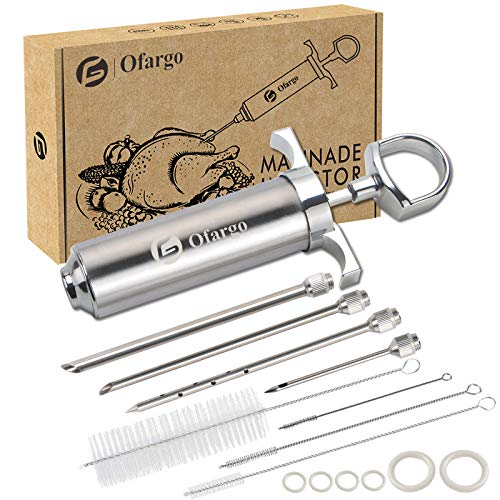
Ofargo Stainless Steel Meat Injector Syringe Kit with 4 Marinade Needles for BBQ Grill Smoker, Father Day Gifts for Dad Husband Men Him, 2-oz Large Capacity, Both Paper User Manual and E-Book Recipe
Safe Kitchen/BBQ Tool: stainless steel for meat injector barrel/syringe plunger/meat needles; silicone for O-ring seals; food safe for…
As an affiliate, we earn on qualifying purchases.
As an affiliate, we earn on qualifying purchases.
Minimum, ideal, maximum
Use the ideal range as your default. Maximums assume constant refrigeration and a marinade appropriate for the protein.
| Meat type | Ideal window | Best use | Acid risk | Past the limit |
|---|---|---|---|---|
| Chicken | 30 min–2 hrs | Flavor and surface tenderness | ~ Medium–high | ✗ Mushy or rubbery |
| Beef | 1–24 hrs | Surface flavor on steaks and roasts | ~ Cut-dependent | ✗ Soft exterior |
| Pork | 1–12 hrs | Flavor and moisture | ~ Moderate | ✗ Mealy texture |
| Seafood | 15–30 min | Quick, bright surface flavor | ✗ Very high | ✗ “Cooked” or mushy |
| Enzyme marinade | Up to 30 min | Rapid tenderizing | ✗ Very high | ✗ Protein breakdown |

Killer Hogs Heavy-Duty BBQ Zip Top Meat Bags, 20 x 24 in, 4 Pack
Set of four (4) Meat Bags
As an affiliate, we earn on qualifying purchases.
As an affiliate, we earn on qualifying purchases.
Flavor stays close to the surface
Marinades usually penetrate only about ¼ inch. An overnight soak may intensify the outer layer, but it rarely seasons the center of a thick steak.
For more uniform flavor, score the surface, pound the meat thinner, cut it into smaller pieces, or season the interior separately.
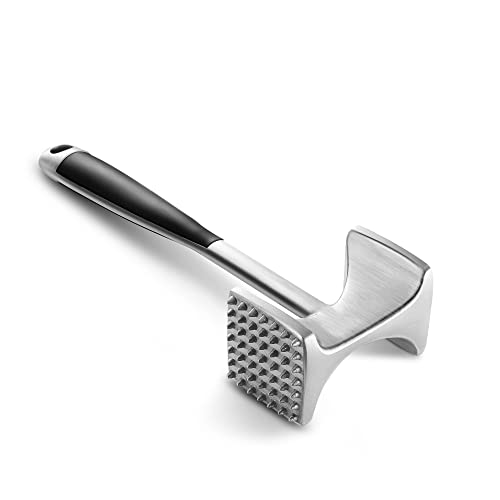
KITEXPERT Meat Tenderizer Hammer with Comfortable-Grip Handle, Dual-side Mallet for Kitchen, Heavy Duty Pounder For Tenderizing Steak, Beef and Fish
Ergonomic Design: We are always looking for a meat tenderizer with a comfortable handle that fits perfectly in…
As an affiliate, we earn on qualifying purchases.
As an affiliate, we earn on qualifying purchases.
Three beliefs to retire
Marinating is a flavor tool with limited tenderizing power—not a shortcut around food science or safe cooking.
Longer always means more tender
Acids and enzymes can break down surface proteins too far, producing mushiness outside while the center remains largely unchanged.
VERDICT: FALSEMarinating replaces proper cooking
It adds flavor and may soften the surface, but tough cuts still need the correct heat, time, and cooking method.
VERDICT: FALSERoom temperature speeds things up safely
Raw meat must marinate in the refrigerator. Countertop marinating encourages bacterial growth without improving penetration.
VERDICT: FALSE
ALLEGRO – The Marinate Everything Marinades | Perfect Marinades for Meat & Veggies | Marinade for Grilling, Roasting & Cooking | Kosher & Gluten Free | 12.7 Oz (Pack of 1) – Original
A Flavorful Upgrade: Originally created by Dave and Betsy Wilcox to enhance simple meals, this steak marinade transforms…
As an affiliate, we earn on qualifying purchases.
As an affiliate, we earn on qualifying purchases.
From marinade to perfect bite
Control the ingredient strength, the thickness of the meat, and the clock. Each choice affects the next.
Choose the base
Balance oil, seasoning, herbs, and a measured amount of acid.
Match the protein
Delicate seafood needs far less exposure than beef or pork.
Set the timer
Stay inside the ideal window; shorten it for strong acids or enzymes.
Keep it cold
Use a covered, non-reactive container in the refrigerator.
Cook correctly
Discard or boil used marinade, then cook the meat safely.
Better results, every time
Small process choices prevent metallic flavors, cross-contamination, and damaged texture.
Use non-reactive containers
Choose glass, food-safe plastic, or stainless steel. Avoid reactive metals with citrus or vinegar.
Go easy on fresh enzymes
Pineapple, papaya, and kiwi work rapidly. Limit exposure to about 30 minutes when possible.
Increase surface area
Score, slice, cube, or pound meat thin when you want more marinade contact without a longer soak.
Treat used marinade as raw
Discard it, or boil it thoroughly for at least one minute before using it as a sauce.
Frequently asked questions
When in doubt, use a shorter refrigerated marinade and choose a cooking method suited to the cut.
Can chicken marinate overnight?
Yes, if the mixture is low in acid. For most chicken, however, 30 minutes to 2 hours is already enough.
Is more than one day safe?
It is not recommended. Even under refrigeration, extended exposure can degrade texture and adds little benefit.
Can raw-meat marinade be reused?
Only after boiling it thoroughly for at least one minute. Otherwise, discard it to avoid cross-contamination.
Does marinating make meat healthier?
Not automatically. It can add flavor without extra fat, but some mixtures contain substantial sodium or sugar.
Less can be more—especially with acids.
Marinate for surface flavor, stay within the protein’s ideal window, and let proper cooking handle the rest. The payoff is meat that tastes seasoned without sacrificing its natural texture.
How Long Does It Really Take to Marinate Different Meats?
Here’s the straightforward answer: each meat type needs a different marinating window to maximize flavor without sacrificing texture.
Chicken and other poultry benefit from 30 minutes to 2 hours. Anything longer can dry out or over-soften the meat, especially with acidic marinades.
Beef and pork are more forgiving. They can marinate from 1 hour up to 24 hours, depending on cut and desired tenderness. Think of a brisket or pork shoulder—these need longer marination to soak in flavors but still need proper cooking afterward.
Seafood is delicate. A quick 15 to 30-minute soak is enough. Marinate seafood longer, and you’ll risk mushiness or partially “cooking” it with acids—like ceviche.
The Truth About Over-Marinating and Acidic Ingredients
Many believe marinating longer always equals more tender, but that’s a myth. Especially with acids—vinegar, citrus juice, wine—marinating too long can break down proteins excessively.
Imagine marinating chicken in lemon juice for 8 hours. The result? Mushy, almost “cooked” texture, similar to ceviche or lemony rubber. That’s because acids denature proteins rapidly. According to food science, most tenderizing from acids peaks around 2 hours.
For tougher cuts, acids can help, but only if you keep the marinating brief—about 1-2 hours for chicken, 4-6 for tougher steaks.
Marinade Penetration: How Deep Does the Flavor Go?
Here’s a key fact: marinades usually only penetrate about 1/4 inch into the meat. That’s roughly the thickness of a nickel. So, longer marinating times mostly coat the surface, not the entire cut.
Picture a thick steak—if you marinate it overnight, the flavor hits the outer layers but barely reaches the center. To get more uniform flavor, consider scoring the meat or pounding it thin before marinating.
For tenderizing purposes, shorter times are more effective because acids and enzymes work on surface proteins first.
Myths About Marinating: What’s True and What’s Not?
Myth 1: Longer marinating always means more flavor and tenderness.
Fact: Surface flavor increases, but deep penetration is limited. Over-marinating can spoil texture.
Myth 2: Marinating can replace proper cooking.
Fact: It’s an enhancer, not a substitute. Proper cooking is still essential for safety and texture.
Myth 3: You can marinate at room temperature.
Fact: Always marinate in the fridge to prevent bacterial growth and spoilage.
Practical Tips for Perfect Marinating Every Time
- Use non-reactive containers like glass or plastic—metal can react with acids.
- Always refrigerate—never marinate at room temperature.
- Don’t marinate tougher cuts longer than 24 hours.
- For quick flavor, aim for 30 minutes to 2 hours for chicken, 1-6 hours for beef/pork, and 15-30 minutes for seafood.
- If using enzymatic marinades (pineapple, papaya), limit to 30 minutes to prevent mushiness.
Comparison Table: Marinating Times & Best Uses
| Meat Type | Recommended Time | Best For |
|---|---|---|
| Chicken | 30 min – 2 hrs | Flavor enhancement, tenderizing |
| Beef | 1 – 24 hrs | Deep flavor, surface tenderness |
| Pork | 1 – 12 hrs | Flavor, moisture |
| Seafood | 15 – 30 min | Quick flavor, delicate texture |
Frequently Asked Questions
Can I marinate chicken overnight?
Yes, but only if your marinade isn’t highly acidic. Otherwise, the chicken can become mushy. A 2-hour marinate is often enough for flavor and tenderness.Is it safe to marinate meat for more than a day?
It’s not recommended. Longer marinating increases bacteria risk unless kept refrigerated. Also, acids can break down the meat’s texture if left too long.Can I reuse marinade after marinating raw meat?
Only if you boil it thoroughly for at least a minute. Otherwise, it can harbor bacteria from raw meat and should be discarded or used as a sauce after cooking.How do I know if I’ve marinated long enough?
Follow recommended times: 30 min for seafood, 1-2 hours for chicken, up to 24 hours for tougher cuts. Taste and texture are your best guides—if it’s flavorful and tender, you’re good.Does marinating make meat healthier?
Not necessarily. It can add flavor without added fat, but watch out for high sodium or sugar content in some marinades. It’s mainly about taste and tenderness.Conclusion
Marinating is a powerful tool, but timing is everything. Knowing the right window for each meat type means the difference between juicy, flavorful bites and a mushy mess.
Next time you prep, remember: less can be more—especially with acids. Keep your meat in the fridge, stick to the recommended times, and enjoy perfectly flavored dishes every time.