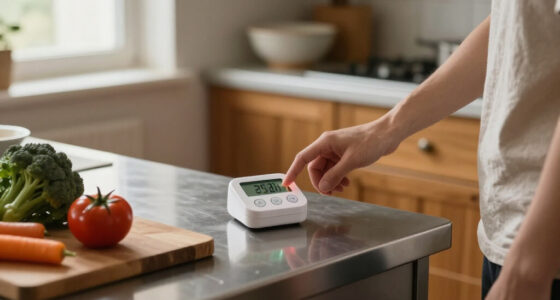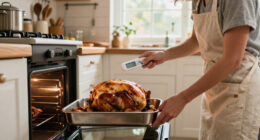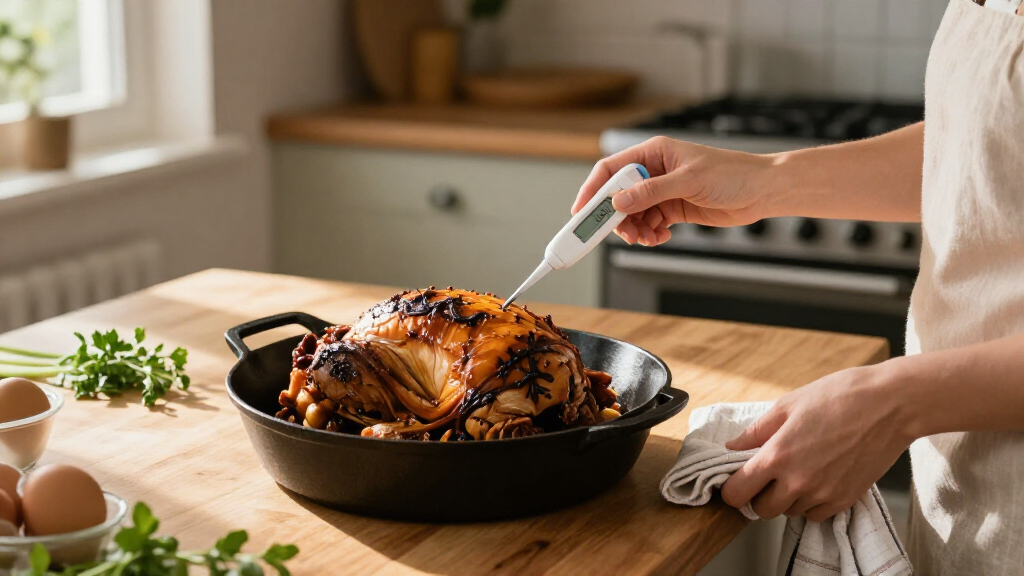

Choosing a digital kitchen thermometer is less about finding one device for every job and more about deciding how you want to monitor food. An instant-read model gives a quick spot reading, making it handy for checking several items or confirming doneness at the end. A leave-in probe stays in the food during cooking and tracks its temperature over time, which suits roasts, smoking, and other longer cooks.

Get kitchen gear delivered free with Prime
- Fast, free delivery on millions of items
- Prime Video, Amazon Music and more included
- Member-only deals all year
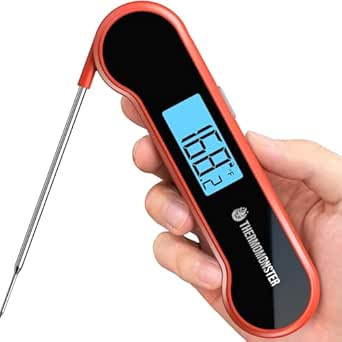
ThermoMonster Instant-Read Meat Thermometer, 0.5-Second, Red
- ✔ Response time: 0.5 seconds
- ✔ Stated accuracy: ±0.5°F, NIST-certified per product description
- ✔ Upper temperature range: 572°F

Digital Meat Thermometer – 1-2 sec Instant Read, Stocking Stuffer
- ✔ Temperature range: -58°F to 572°F (-50°C to 300°C)
- ✔ Stated accuracy: ±1°F
- ✔ Response time: 1–2 seconds

Alpha Grillers Digital Meat Thermometer
- ✔ Temperature range: 1°F to 300°F
- ✔ Response time: 1–2 seconds (2 seconds listed)
- ✔ Display: Digital blue backlit display
The tradeoff is convenience at the moment of checking versus continuous monitoring. Instant-read models are usually simpler and less expensive; leave-in models can reduce repeated oven or grill opening, though they take more setup and cost more. Choose an instant-read thermometer for flexible everyday checks. Choose a leave-in model when knowing the temperature throughout a long cook matters more.
At a Glance
| Criteria | Instant-read digital thermometer | Leave-in digital probe thermometer | Winner |
|---|---|---|---|
| Reading speed | Usually returns a spot reading within seconds; speed varies by model. | Provides readings over time rather than a single rapid check. | A |
| Monitoring during cooking | Requires you to insert the probe for each check. | Tracks food temperature while the probe remains inserted. | B |
| Best use | Thin foods, quick checks, and confirming doneness. | Roasts, barbecue, smoking, and other longer cooks. | Depends |
| Ease of use | Simple: insert, read, remove, and clean. | Requires probe placement and a compatible display or receiver setup. | A |
| Temperature accuracy | Depends on the model and calibration; fast readings do not automatically mean greater accuracy. | Depends on the model, probe placement, and calibration. | Tie |
| Versatility | Easy to move between foods and cooking methods. | Well suited to monitored cooks, less convenient for frequent checks of multiple foods. | A |
| Typical value | Often the lower-cost choice for general-purpose checking. | Higher cost can pay off when continuous monitoring is useful. | Depends |
ThermoMonster Instant-Read Meat Thermometer, 0.5-Second, Red
When speed and precision lead our checklist, the ThermoMonster makes the strongest case. Its stated 0.5-second response is quicker than the 1–2-second readings listed for the Digital Meat Thermometer and Alpha Grillers, and its ±0.5°F accuracy is tighter than the ±1°F figure given for the Digital Meat Thermometer. That combination is useful when we want to check several items in succession or limit how long the oven or grill stays open.The auto-flip LCD is designed to remain legible as we turn the thermometer in our hand, while the bright display and waterproof design suit checks outside or near splashes. A temperature lock can help us read the result after pulling the probe away from the food. Its four-inch stainless steel probe is a practical length for everyday cuts, but the Digital Meat Thermometer’s shorter 6.5-inch overall body is easier to store, and ThermoMonster’s supplied details warn that the probe may feel short for very large roasts.We should also keep the product’s role in perspective: this is an instant-read thermometer, not a leave-in probe for tracking a cook over time. It uses a replaceable AAA battery, and the housing is described as plastic rather than metal. Choose it for quick, careful spot checks; skip it if remote monitoring, an alarm, or a longer probe is central to your cooking routine.
Pros:
- Stated 0.5-second response is the fastest in this comparison.
- Listed ±0.5°F accuracy is tighter than the ±1°F figure supplied for the Digital Meat Thermometer.
- Bright auto-flip LCD and temperature lock support readable spot checks.
- Waterproof design and four-inch stainless steel probe suit everyday kitchen and outdoor use.
Cons:
- Four-inch probe may be short for very large roasts.
- Single AAA battery requires periodic replacement.
- Plastic housing may feel less premium than a metal-bodied model.
Best for: Cooks who want the quickest stated readings and tighter listed accuracy for frequent spot checks.
Not ideal for: Anyone who needs Bluetooth monitoring, a built-in alarm, a long probe for very large roasts, or a metal-bodied tool.
Bottom line: We’d choose ThermoMonster for the fastest, most precise listed readings, provided a four-inch probe and replaceable battery fit our cooking needs.
“We’d choose ThermoMonster for the fastest, most precise listed readings, provided a four-inch probe and replaceable battery fit our cooking needs.”
Digital Meat Thermometer – 1-2 sec Instant Read, Stocking Stuffer
The Digital Meat Thermometer is the balanced pick for cooks who want one quick-reading tool for several kitchen settings. Its stated range runs from -58°F to 572°F, the broadest low-end detail supplied among these three, and it pairs a 1–2-second response with ±1°F accuracy. ThermoMonster is the better fit when fractions of a degree and the shortest wait matter; this model’s appeal is its combination of broad range, familiar controls, and 4000+ hours of claimed battery life.A bright backlit LCD helps when checking food in dim cooking areas, and the magnetic storage feature makes it easy to keep within reach on a suitable metal surface. The IP67 rating and ABS plastic housing also make cleanup and outdoor use more convenient. At 6.5 inches long, it is compact enough for a drawer, though the supplied details do not specify a probe length, so we cannot compare its reach directly with ThermoMonster’s four-inch probe.There are clear limits. It has no built-in temperature alarm or Bluetooth, so we need to take readings ourselves rather than monitor a cook from a distance. Its stated ±1°F accuracy is less precise than ThermoMonster’s listed ±0.5°F. Compared with Alpha Grillers, however, its stated upper range reaches 572°F rather than 300°F, giving it more headroom for high-heat checks. We’d pick it when versatility and low battery maintenance matter more than maximum precision.
Pros:
- Broad stated range of -58°F to 572°F.
- 1–2-second response and ±1°F stated accuracy suit routine spot checks.
- Backlit display, IP67 rating, and magnetic storage add everyday convenience.
- Claimed battery life exceeds 4000 hours, with an auto-sleep feature.
Cons:
- No built-in temperature alarm or Bluetooth connectivity.
- Listed ±1°F accuracy is less precise than ThermoMonster’s ±0.5°F.
- Probe length is not specified in the supplied product details.
Best for: Home cooks who want a fast spot-check thermometer with a wide stated range, magnetic storage, and long claimed battery life.
Not ideal for: Cooks who need Bluetooth, an alarm, the tightest listed accuracy, or a clearly specified long probe.
Bottom line: We’d choose this model for broad-temperature versatility and fewer battery changes, while accepting less precision than ThermoMonster and no remote monitoring.
“We’d choose this model for broad-temperature versatility and fewer battery changes, while accepting less precision than ThermoMonster and no remote monitoring.”
Alpha Grillers Digital Meat Thermometer
Alpha Grillers is the uncomplicated option in this lineup: it is described as pre-calibrated, gives a 1–2-second reading, and has a blue backlit display for checking temperatures in low light. For ordinary meat, baking, frying, and liquid checks, that puts it in the same general speed tier as the Digital Meat Thermometer. The difference is range: Alpha Grillers lists an upper limit of 300°F, while the other two models list ceilings of 572°F.That ceiling shapes who should choose it. If our thermometer is mainly for checking doneness in everyday cooking, the simpler range may be adequate. But the product is also presented for candy making and deep frying, tasks where temperature can exceed its stated maximum; we should verify that our intended use stays within the listed range before relying on it. ThermoMonster offers faster readings and tighter stated accuracy, and the Digital Meat Thermometer gives more temperature headroom, so Alpha Grillers ranks third despite its useful waterproofing and display.Its IP67 rating supports easy cleaning, and the 6.3-inch plastic body is lightweight. It takes a CR2032 battery, which will need replacing over time, and the housing may feel less substantial than metal alternatives. Choose it for uncomplicated spot checks where its range is sufficient; skip it if high-heat versatility or precision is the deciding factor.
Pros:
- 1–2-second response suits routine spot checks.
- Blue backlit display is designed for low-light readability.
- IP67 waterproof rating supports convenient cleaning.
- Described as pre-calibrated and suitable for indoor and outdoor cooking.
Cons:
- Listed upper temperature limit of 300°F is lower than the other two models.
- Requires a CR2032 battery that will eventually need replacement.
- Plastic housing may feel less substantial than metal alternatives.
Best for: Cooks who want a basic, backlit instant-read thermometer for everyday food checks within its stated range.
Not ideal for: People who regularly check high-heat cooking above 300°F, want the tightest listed accuracy, or need connectivity and alarms.
Bottom line: We’d pick Alpha Grillers for simple everyday checks within 300°F, but choose either higher-range model for more headroom or ThermoMonster for greater stated precision.
“We’d pick Alpha Grillers for simple everyday checks within 300°F, but choose either higher-range model for more headroom or ThermoMonster for greater stated precision.”
As an Amazon Associate we earn from qualifying purchases.
Key Differences
The clearest difference is what happens between checks. With an instant-read thermometer, you decide when to measure: insert the probe, wait for the reading, then take it out. That makes it easy to check a steak, bread, custard, or several pieces of food in succession. A leave-in probe measures continuously while it stays in the food, so you can follow a roast or smoker cook without repeatedly opening the door or lid.
That monitoring is the main reason to pay more for a leave-in model. It can help you track a long cook and notice when food approaches your target temperature. It does not, by itself, guarantee a better result: placement matters, and the probe has to sit in the right part of the food. An instant-read check can be just as useful for confirming doneness, especially when cooking times are short or variable.
For most kitchens, an instant-read model is the more versatile starting point because it is quick to use across different foods and cooking methods. The leave-in option is a better fit for people who regularly roast, barbecue, or smoke food and value continuous tracking. A household that cooks both ways may find the tools complementary, but occasional cooks can usually choose based on which task causes more guesswork.
Detailed Comparison
Reading speed (Instant-read digital thermometer wins — moderate)
An instant-read model wins for getting a quick spot check: insert the tip and wait for its reading. A leave-in thermometer is designed to keep tracking over time, so it is less convenient when you only want to check a few items one after another. This is a moderate practical advantage for fast weeknight cooking, though actual response time varies by model.
Monitoring during cooking (Leave-in digital probe thermometer wins — major)
A leave-in probe wins clearly because it stays in the food and tracks its temperature as cooking continues. That can reduce the need to open an oven or grill repeatedly and gives you a clearer view of progress during a long roast or barbecue. The gap is major for slow cooking, but minor when you only need a final check.
Best use (major difference)
There is no universal winner here. Instant-read models suit brief checks and foods where you want to take measurements in several spots. Leave-in models suit larger cuts that cook for a long time and benefit from ongoing observation. The practical difference is substantial if you often smoke meat, but much smaller if your routine is mainly quick stovetop meals.
Ease of use (Instant-read digital thermometer wins — moderate)
Instant-read thermometers have the simpler routine: insert, read, remove, clean. A leave-in model adds probe placement and may involve a separate display or receiver. A cook who frequently watches a roast may find that setup worthwhile; for occasional checks, it is extra handling. This is a moderate ease-of-use win for A.
Temperature accuracy (minor difference)
Neither format wins on accuracy by category alone. Accuracy depends on the specific thermometer and its condition, while placement affects whether the reading represents the food’s center. A well-positioned, properly functioning leave-in probe can track a roast; a correctly used instant-read can confirm a spot. Check manufacturer accuracy specifications and calibration guidance when comparing models.
Versatility (Instant-read digital thermometer wins — moderate)
An instant-read thermometer is easier to move between foods and cooking methods, from a thin item on the stovetop to a bake that needs a quick doneness check. A leave-in probe is more specialized: it excels when food can be monitored with a probe in place. For a single everyday thermometer, A has a moderate versatility edge.
Typical value (moderate difference)
Instant-read models often cost less and cover a wider range of routine checks, so they tend to offer better value for general-purpose use. A leave-in model earns its higher price when continuous monitoring saves effort or supports regular long cooks. The value gap depends on cooking habits: paying more makes sense for frequent smokers and roast cooks, not simply for the promise of a more accurate result.
Instant-read digital thermometer: Pros and Cons
Pros:
- Quick spot checks across many foods.
- Simple to use and easy to move between cooking tasks.
- Often costs less as a general-purpose tool.
Cons:
- Does not track temperature between checks.
- You must open the oven or grill and insert it each time.
- The reading reflects the probe location, so placement still matters.
Leave-in digital probe thermometer: Pros and Cons
Pros:
- Tracks food temperature over the course of a cook.
- Useful for roasts, smoking, and other long cooks.
- Can reduce repeated opening to check progress.
Cons:
- Requires correct probe placement and setup.
- Less convenient for checking several separate foods quickly.
- Usually costs more, and that expense may not pay off for occasional cooks.
Who Should Choose What
Choose Instant-read digital thermometer if:
- You want one thermometer for weeknight meals, baking, and occasional doneness checks.
- You need to check several foods or multiple spots quickly.
- You prefer a straightforward tool and do not need continuous monitoring.
Choose Leave-in digital probe thermometer if:
- You regularly roast large cuts, barbecue, or smoke food for extended periods.
- You want to follow temperature as food cooks without repeatedly opening the oven or grill.
- You will use ongoing monitoring often enough to justify the added cost and setup.
Skip both if: Neither format is necessary if your cooking does not call for temperature checks and you are comfortable using other doneness cues; choose by the tasks you actually cook rather than buying features you rarely use.
Value for Money
For most home cooks, an instant-read thermometer is the better value because one relatively simple tool can check many kinds of food, and continuous tracking is not needed for every meal. A higher-priced leave-in thermometer is worth paying for when long cooks are a regular part of your routine: tracking the roast or barbecue as it cooks is the benefit you are buying. Do not pay extra on the assumption that the leave-in format is inherently more accurate; compare the individual model’s stated accuracy, probe design, and features.
Final Verdict
Choose an instant-read digital thermometer if you want the best everyday starting point: it is quick, flexible, and suited to checking food at the moment you need a reading. Choose a leave-in probe if you routinely cook large roasts or barbecue and want to monitor progress throughout the cook. The deciding factor is whether you need a temperature reading on demand or a continuous record as food cooks. For most kitchens, buy instant-read first; pay more for leave-in monitoring when long cooks make that feature useful week after week.
Frequently Asked Questions
Which type is better for everyday cooking?
An instant-read thermometer usually fits everyday cooking better because it is easy to use for quick checks across different foods. A leave-in model makes more sense when you often cook something for long enough to benefit from continuous tracking.
Is a leave-in thermometer more accurate?
Not because it is a leave-in model. Accuracy depends on the specific thermometer, and a useful reading also depends on placing the probe correctly. Compare the manufacturer’s accuracy specifications for the models you are considering.
Can I leave an instant-read thermometer in the oven?
Instant-read thermometers are generally intended for brief checks. Follow the manufacturer’s instructions for your specific model; a leave-in probe is designed for monitoring during cooking.
Is it worth owning both?
It can be worthwhile if you regularly cook long roasts or barbecue and also want quick readings for other foods. If those long cooks are occasional, a good instant-read thermometer may cover your needs without the extra cost.