
TL;DR

Get kitchen gear delivered free with Prime
- Fast, free delivery on millions of items
- Prime Video, Amazon Music and more included
- Member-only deals all year
A Good Housekeeping report advises against placing smoke alarms close to cooking appliances, bathrooms, extreme temperatures, drafts or obstructions. The guidance is intended to limit nuisance alarms and help smoke reach sensors, but homeowners should check local fire codes and the instructions for their specific alarms.
A Good Housekeeping report identifies five locations to avoid when installing smoke alarms: too close to cooking appliances, near bathrooms, in garages or unfinished attics, beside drafts or air vents, and where objects block airflow. The advice, attributed to fire-safety experts quoted by the publication, addresses both nuisance alarms and the possibility that smoke may not reach a detector promptly.
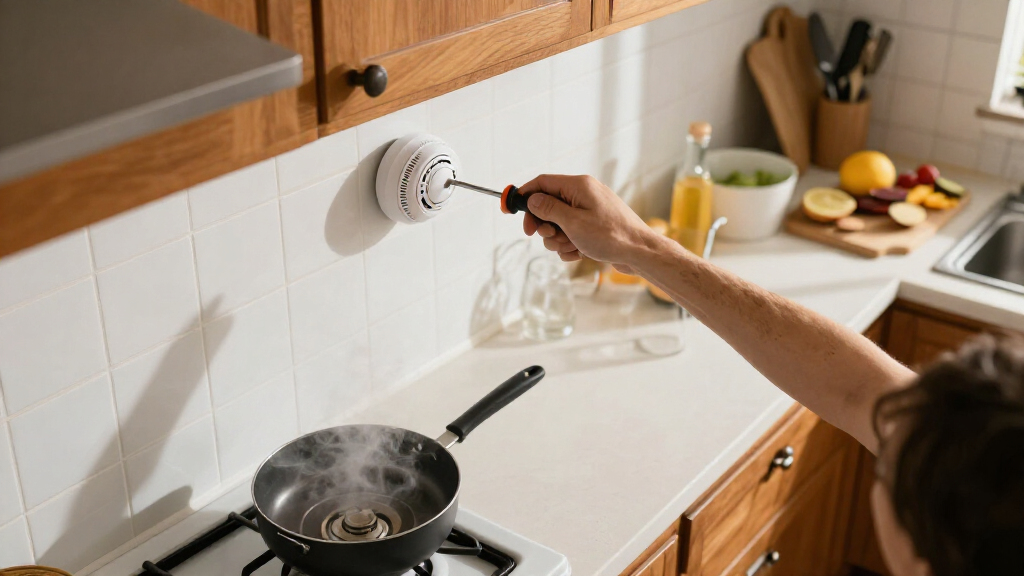
For kitchens, the report cites Sanders’ recommendation to keep alarms at least 10 feet from cooking appliances. Cooking smoke or steam can trigger unwanted alerts when a detector is too close. Repeated nuisance alarms may lead people to disable an alarm, the report warns; Sanders says newer technology may better distinguish cooking-related smoke from smoke caused by a fire.
In bathrooms, Sanders says shower steam and moisture from appliances such as hairdryers or laundry machines can trigger alarms. McKelvey recommends placing alarms at least three feet from bathrooms with showers or tubs. The report also advises against garages and unfinished attics, where dust and temperature swings may reduce reliability or cause unwanted alerts. McKelvey gives a rule of thumb to avoid locations below 40°F (4.4°C) or above 100°F (38°C).
Air movement is another concern. McKelvey advises avoiding windows and HVAC air supplies; Sanders also names ceiling fans, vents and air-conditioning registers. Drafts could keep smoke from reaching a sensor during a fire. Finally, the report says not to put alarms where fabric, beams, doors or tall shelves obstruct access to air. It says smoke should be able to reach a detector quickly.
Placement Can Affect Alarm Response
The guidance matters because an alarm’s usefulness depends not only on having one, but also on placing and maintaining it so it can detect smoke. A detector near cooking or bathroom steam may sound repeatedly during ordinary household activity. The report links frequent nuisance alerts to the risk that someone may disable an alarm, leaving the home without that warning until it is needed.
Placement near drafts or behind obstructions presents a different concern: smoke may not reach the sensor as quickly. The report does not quantify how much these locations affect detection time, but the practical takeaway is to avoid placing alarms where airflow, temperature extremes or barriers could interfere with operation. Local requirements and the alarm manufacturer’s instructions also matter when deciding where to install a device.
Products Worth Considering

EGO Power+ 16 Cordless Chainsaw (CS1611) with 56V 2.5Ah Battery and Charger

EGO Power+ 21” Self-Propelled Electric Lawn Mower with Touch Drive, 56V Battery & Rapid Charger

EGO Power+ LB8803-2 Cordless Leaf Blower with Two Batteries
As an affiliate, we earn on qualifying purchases.
The Five Locations in the Report
The source is a Good Housekeeping home-improvement report by Karla Pope. Its placement recommendations draw on comments from Sanders and McKelvey, whose full names, job titles and organizations are not provided in the supplied material. Their guidance is presented as expert advice rather than as a new rule or a change to building codes.
The five areas are not identical risks. Cooking and bathing are linked to nuisance alerts; garages and unfinished attics to dust and temperature variation; drafts to smoke being diverted from sensors; and physical barriers to blocked airflow. The report specifically says smoke alarms should be installed in basements, while distinguishing that recommendation from its advice to skip unfinished attics and garages.
The article does not set out a full home alarm plan or explain every local code requirement. Its distances and temperature range are the figures given by the quoted experts in the report, not a substitute for checking a particular device’s instructions or requirements that apply in a reader’s area.
“Smoke alarms should be installed at least 10 feet away from cooking appliances.”
— Sanders, quoted in Good Housekeeping
Code and Device Details Vary
The supplied report does not identify the experts’ full credentials, provide links to underlying technical research or compare alarm models. It also does not specify a jurisdiction, so it cannot establish which installation rules apply to every home. The stated distances and temperature limits should be read as the recommendations attributed to the experts in this report, not as universal code requirements.
The material does not say how much a particular draft or obstruction would delay an alarm, or which newer models distinguish cooking smoke from fire smoke most effectively. Homeowners should consult the manufacturer’s instructions and local fire-safety guidance for device-specific placement requirements.
Check the Alarm Instructions
The report does not announce a forthcoming policy change or scheduled follow-up. For readers applying its advice, the next step is to review each alarm’s installation instructions and check applicable local fire-safety requirements before choosing locations. The report’s recommendations can help identify potential problem spots, but they do not replace those sources.
After installation, residents should follow the manufacturer’s directions for testing and maintenance. If cooking or steam repeatedly triggers an alarm, the report suggests considering newer technology that can better distinguish those sources; it does not endorse a particular product or model.
Key Questions
How far should a smoke alarm be from cooking appliances?
The Good Housekeeping report quotes Sanders recommending at least 10 feet. Check the alarm’s instructions and local requirements for guidance that applies to your installation.
Can a smoke alarm go in a bathroom?
The report advises keeping alarms away from bathrooms with showers or tubs because steam can trigger unwanted alerts. McKelvey recommends a distance of at least three feet.
Should smoke alarms be installed in garages or unfinished attics?
The report says to avoid those locations because temperature extremes and dust may make alarms less reliable or cause nuisance alerts. It gives 40°F to 100°F as a rule-of-thumb operating range attributed to McKelvey; consult the device instructions for its specific limits.
Why avoid vents, windows and ceiling fans?
Drafts and moving air could interfere with smoke reaching a detector, according to the experts quoted by Good Housekeeping. The report advises avoiding air-supply points, windows, vents and ceiling fans.
What can block a smoke alarm?
The report names heavy fabric, beams, doors and tall shelves as possible obstructions. It advises positioning alarms where smoke can reach them quickly and air can reach the sensor.
Source: goodhousekeeping.com