TL;DR

Get kitchen gear delivered free — and shop member deals
- Fast, free delivery on millions of items
- Access to Prime Big Deal Days deals on October 6–7
- Prime Video, Amazon Music and more included
Stackable container systems can increase storage capacity by up to 50%, helping you organize your fridge and cabinets more efficiently. They reduce clutter, improve visibility, and make meal prep easier.
Stackable containers can increase storage capacity by up to 50%, making your fridge and cabinets much more efficient.
Choose containers based on size, material, and lid design to fit your specific needs and space constraints.
Labeling and grouping similar items streamline access and reduce food waste.
Most stackable systems are dishwasher safe, but check labels for cleaning tips.
Regular maintenance keeps your containers odor-free and leak-proof for long-term use.
Stack Up.
Clear Space.
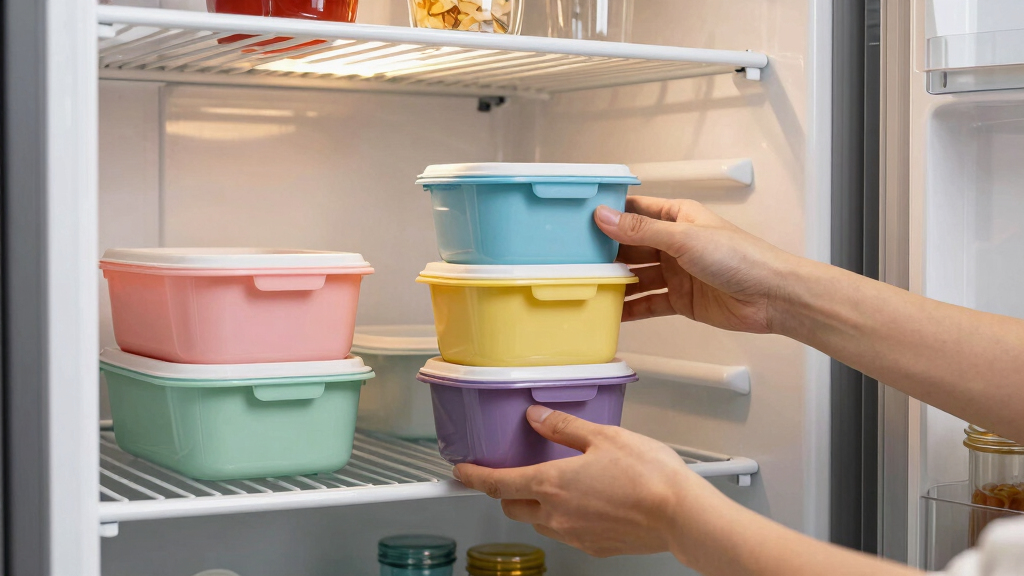
Stackable container systems turn unused vertical space into practical storage. The result is a fridge or cabinet with less clutter, better visibility, faster access and room for up to 50% more capacity in some configurations.
More usable volume through vertical stacking.
Transparent walls help prevent forgotten food.
Matching lids and bases reduce slips and topples.
Many systems are dishwasher safe; verify labels.
Turn airspace into storage space
Traditional containers spread across shelves and leave empty gaps above them. Modular systems use consistent footprints, secure connections and transparent walls to create stable vertical storage without expanding the kitchen.
Use every level
Stacking fills the space between a short container and the shelf above it, reducing dead zones in fridges and cabinets.
See what is stored
Clear containers and readable labels make leftovers, snacks and pantry staples easier to locate before they expire.
Prevent topples
Interlocking lids, shaped bases and non-slip surfaces keep compatible containers aligned during everyday use.
Small changes, visible gains
Space gains depend on shelf dimensions, container footprints and how consistently the system is used. The strongest results come from replacing mismatched packaging with a limited set of compatible sizes.
Space optimization indicators
Illustrative measures based on the supplied examples and system characteristics.
Five checks before you buy
The best system is not simply the largest set. It matches your shelf dimensions, food habits and reheating routine while keeping lids, seals and container footprints compatible.
Assess portions
Map the foods you store most often: snacks, leftovers, bulk staples or full meal-prep portions.
Avoid rarely used sizesCheck material
Compare BPA-free plastic, glass, silicone and lower-impact materials for durability and handling.
Verify heat + freezer useInspect lids
Look for airtight seals, leak resistance and shapes that connect securely to the container above.
Seal quality drives freshnessMeasure shelves
Record width, depth and usable height before choosing container footprints and stack counts.
Leave retrieval clearanceMatch food type
Use compact boxes for snacks, larger forms for leftovers and secure vessels for liquids.
Right-size every category| Feature | Stackable system | Standard containers | Decision signal |
|---|---|---|---|
| Space efficiency | ✓Up to 50% more capacity | ✗Often spreads across shelves | Choose repeatable footprints |
| Stack stability | ✓Interlocking lids or bases | ✗More prone to slipping | Check lid-to-base fit |
| Visual access | ✓Clear, grouped columns | ~Contents can become hidden | Prefer transparent walls |
| Cleaning | ✓Many dishwasher-safe options | ~Varies by material | Always check care labels |
| Initial effort | ~Requires measuring and setup | ✓No system change required | Weigh setup against long-term gain |
✓ Strong advantage ✗ Common limitation ~ Depends on product or use
From clutter to a working system
Organization lasts when each action supports the next. Measure first, select compatible containers, group and label the contents, then maintain seals and surfaces.
Measure
Capture shelf width, depth and height.
Match
Choose modular footprints and useful sizes.
Stack
Place heavy containers below lighter ones.
Label
Mark contents and dates for quick access.
Maintain
Clean, dry and inspect seals regularly.
Keep the system fresh
Five rules for better stacking
A well-fitted system makes daily storage calmer, safer and easier to maintain.
Why Stackable Containers Are a Kitchen Must-Have
Stackable containers are more than just neat—they’re a smart way to use vertical space. Imagine stacking half-empty yogurt cups or leftover containers without risking spills or topple-overs. An example? A family of four saved 30% of fridge space by switching to stackable systems, making room for fresh produce and drinks.
These containers are designed to nest or interlock, preventing slips and topples. They fit snugly in tight spots—between milk cartons, tucked behind jars—making every inch count. Plus, they keep your food visible, so you’re less likely to forget leftovers or pantry staples. Using vertical space efficiently is crucial because it allows you to maximize storage without expanding your kitchen footprint. This approach also minimizes the need for additional shelving or storage units, which can be costly or impractical in small kitchens. However, one tradeoff is that overly tall stacks can become unstable or hard to access, so choosing the right container height and design is essential to balance capacity and convenience.
As an affiliate, we earn on qualifying purchases.
How to Pick the Perfect Stackable Container System
- Assess your storage needs: Do you need small snack-sized containers or large meal prep boxes? Understanding your typical portion sizes and food types helps you select containers that truly fit your lifestyle, reducing the temptation to overstuff or underutilize space.
- Check material safety: Look for BPA-free plastics, glass options, and microwave/freezer compatibility. Prioritizing safe materials ensures your food remains uncontaminated and your containers last longer, but it may involve tradeoffs like higher costs or fragility.
- Consider lid design: Airtight, leak-proof lids prevent spills and keep food fresh longer. The choice of lid impacts how well your food is preserved and how easy it is to stack and access, with some designs offering better seals but potentially more difficulty in opening.
- Measure your spaces: Know your fridge and cabinet dimensions to choose containers that fit comfortably. Proper measurement prevents purchasing containers that are too large or small, which can lead to wasted space or stacking issues, ultimately affecting your organizational efficiency.
- Match your food types: Use smaller containers for snacks, larger ones for leftovers, and specialized options for liquids. This tailored approach minimizes space wastage and reduces the need to transfer food between containers, which can sometimes lead to spills or contamination.
modular fridge organization containers
As an affiliate, we earn on qualifying purchases.
As an affiliate, we earn on qualifying purchases.
Stackable vs. Non-Stackable: Which Saves More Space?
| Feature | Stackable Containers | Standard Containers |
|---|---|---|
| Space Efficiency | Up to 50% more capacity in same space | Limited, often spreads out |
| Stability | Interlocking lids/bases prevent slips | More prone to toppling |
| Organization | Easy stacking, visual access | Cluttered, harder to see contents |
| Cleaning | Dishwasher safe options available | Varies, often less convenient |
Choosing stackable containers can free up to 50% more space and make your kitchen feel less cramped. They’re especially handy for small kitchens or when you want quick access to your stored food.
However, it’s important to recognize that while stacking improves space efficiency, improper stacking or using incompatible containers can lead to instability or difficulty in retrieving items. Balancing the benefits of stacking with careful selection and placement ensures you maximize space without sacrificing accessibility or safety.
space-saving cabinet storage containers
As an affiliate, we earn on qualifying purchases.
As an affiliate, we earn on qualifying purchases.
Tips for Organizing Your Fridge and Cabinets with Stackables
- Use uniform sizes for stacking stability and a clean look. Consistent container sizes facilitate more stable stacks and a cohesive appearance, making your fridge or pantry easier to navigate and less cluttered.
- Label your containers—easy to identify leftovers and snacks at a glance. Clear labels reduce the time spent searching and help prevent food waste by reminding you of what’s inside.
- Place heavier, larger containers on the bottom for safety and stability. This prevents top-heavy stacks from tipping over, which could cause spills or breakage, especially when retrieving items.
- Group similar items together—fruits, veggies, leftovers—for quick access. Organized groups streamline your shopping and meal prep, but they also help you monitor expiration dates and reduce food waste.
- Utilize vertical space by stacking containers up to the fridge’s ceiling or cabinet height. Maximizing vertical space is particularly valuable in small kitchens, but be mindful of not creating inaccessible stacks that are difficult to reach or view.
For example, a home cook stacked snack containers on top of each other in a narrow cabinet, creating a dedicated spot for kids’ treats without cluttering the main pantry shelf. Proper organization not only saves space but also makes daily routines more efficient, reducing stress and time spent searching for items.
dishwasher safe stackable containers
As an affiliate, we earn on qualifying purchases.
As an affiliate, we earn on qualifying purchases.
How to Maintain and Clean Your Stackable Containers
Most stackable containers are dishwasher safe, but always check the label. For glass or silicone, a quick wash with warm soapy water keeps them looking new. Avoid abrasive scrubbing that could scratch surfaces.
To prevent odors, let containers dry completely before stacking. For stubborn smells, a baking soda paste or vinegar rinse works wonders. Regularly inspecting seals and lids ensures they stay leak-proof and fresh.
Investing time in proper cleaning and maintenance preserves the integrity of your containers, ensuring they continue to provide space-saving benefits and food safety. Neglecting this step can lead to lingering odors, mold, or compromised seals, which can undermine your organizational efforts and potentially introduce food safety concerns.
Real-World Example: Transforming a Cluttered Pantry
Jennifer’s small kitchen had a cluttered pantry, with mismatched jars and boxes. She switched to a set of clear, stackable containers for cereal, rice, and snacks. Within a week, her pantry looked twice as spacious—and she found everything faster. Leftovers no longer spilled or got lost behind cans. Her food stayed fresh longer, and she spent less time searching for what she needed.
This transformation was possible because Jennifer understood the importance of consistent container sizes and labeling, which helped her maintain order over time. The tradeoff was initial investment and effort in transferring items, but the long-term benefits of easier access and reduced waste proved worth it. Her experience highlights how strategic organization and proper container choice can dramatically improve kitchen efficiency, especially in small spaces where every inch counts.
Frequently Asked Questions
Are stackable containers safe for microwave and freezer use?
Most are designed to handle microwave and freezer conditions, but always double-check the manufacturer’s instructions. Glass options tend to be more durable for both, while plastics may vary.How do I prevent containers from slipping or toppling?
Look for containers with interlocking lids or bases and non-slip bottoms. Proper stacking and placing heavier items at the bottom also help maintain stability.Can I use stackable containers for liquids like soups and sauces?
Yes, especially those with secure, airtight lids. Just ensure the containers are labeled leak-proof to avoid spills in your fridge or bag.What’s the best way to organize a small pantry with stackable systems?
Group similar items together, use uniform containers for easy stacking, and utilize vertical space. Label everything clearly for quick access.Are eco-friendly or biodegradable options available?
Yes, some containers are made from sustainable plastics or biodegradable materials, but always check product labels to confirm eco credentials.Conclusion
A cluttered kitchen is a space-waster, but the right stackable containers turn chaos into order. They’re more than just tidy— they’re a smart investment in your kitchen’s efficiency. Start stacking and watch your space expand, making room for more of what you love.Fall Picks
fall essentials
As an affiliate, we earn on qualifying purchases.