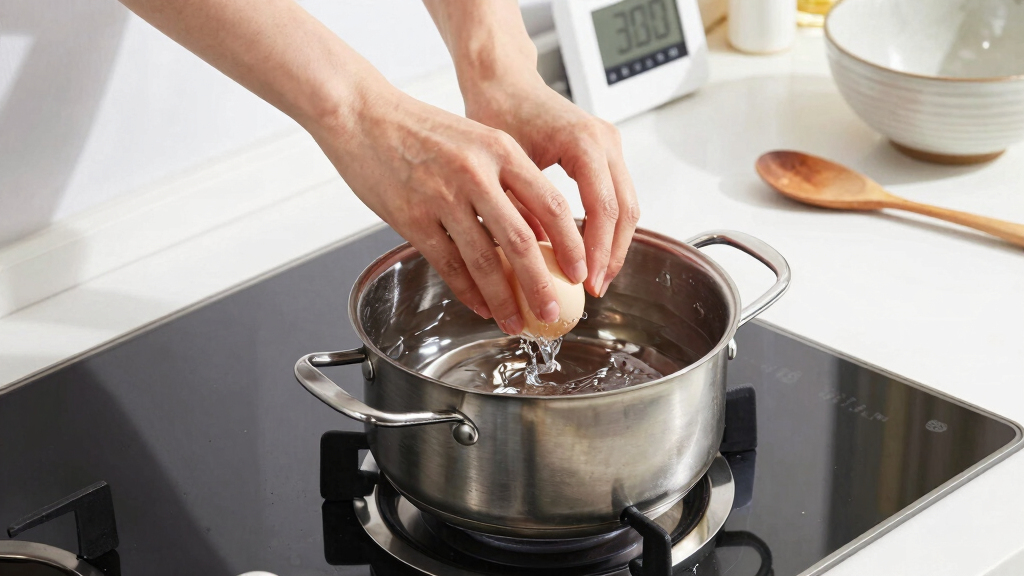

TL;DR
Listen free for 30 days with Audible
Thousands of audiobooks and originals — cancel anytime.
Start your free trialAs an affiliate, we earn on qualifying purchases.
Boiling eggs to your preferred texture is all about timing. For a runny yolk, cook for 4-6 minutes; for jammy, 6-8 minutes; and for firm, 9-12 minutes. Starting with cold water and cooling immediately after is key for consistent results.
Imagine peeling an egg that’s just the right amount of creamy, with a yolk that’s neither too runny nor too chalky. It’s a small detail that makes all the difference in breakfast, salads, or ramen bowls. The secret? Timing. Knowing exactly how long to boil an egg can turn a simple kitchen task into a small masterpiece.
Whether you love a silky soft-boiled egg, a slightly jammy center, or a completely firm yolk, this guide will give you the clear, specific timings you need. No guessing. No overcooking. Just perfectly cooked eggs every time.
Use a timer and start counting immediately once water reaches a rolling boil for best results.
Adjust boiling time based on egg size, starting temperature, and altitude for consistent outcomes.
Immediately cool eggs in an ice bath to stop cooking and make peeling easier.
Eggs get firmer as boiling time increases, so choose your timing based on your preferred yolk texture.
Older eggs peel more easily than fresh ones after boiling, despite common assumptions.
What Is a Soft-Boiled Egg — And How Long It Takes to Get That Silky Yolk
A soft-boiled egg typically has a warm, runny yolk that’s a little jelly-like in the center. To achieve this, you need to boil the egg for about 4 to 6 minutes. The whites are tender but fully set, creating a delicate contrast with the yolk’s silky texture.
Picture this: you gently lower an egg into boiling water, and in just a few minutes, you peel back the shell to reveal a luminous, slightly gooey yolk that spills out when you cut into it. This timing is perfect for a spoonful of eggs on toast or atop ramen.

Lasubst Egg Timer for Boiling Eggs that Changes Color When Done, Tricolor
- Precise Cooking Stages: Calculates egg doneness by temperature
- Easy to Use: Indicates soft, medium, hard boiled levels
- Safe Materials: Made of BPA-free, food-grade materials
As an affiliate, we earn on qualifying purchases.
As an affiliate, we earn on qualifying purchases.
How to Achieve Jammy Eggs — Perfectly Partially Set Yolk
A jammy egg strikes a balance between runny and fully firm. It’s slightly thicker but still retains a soft, creamy center. To get this, boil eggs for about 6 to 8 minutes. The yolk is starting to set but remains velvety and moist, creating a rich, custard-like consistency that is highly prized for its flavor and texture.
This slightly undercooked yolk offers a unique sensory experience—creamy, slightly gooey, yet holding shape. It’s the ideal compromise for those who want a yolk that’s rich and luscious but not entirely liquid. Serving jammy eggs on salads or ramen toppings enhances the dish with a depth of flavor and a pleasing mouthfeel. The key is understanding that even a minute or two can shift the texture from silky to firm, so precise timing and attention are crucial for consistent results.

Dash Rapid Egg Cooker, 7 Hard Boiled Eggs, Aqua
- Versatile Egg Cooking Options: Hard, soft, poached, scrambled, omelets
- Fast Cooking Performance: Cook eggs within minutes
- Precise Temperature Control: Built-in thermal sensor for perfect results
As an affiliate, we earn on qualifying purchases.
As an affiliate, we earn on qualifying purchases.
The Exact Time for Hard-Boiled Eggs — Fully Set Yolk Every Time
For a yolk that’s completely firm and chalky, you need to boil eggs for about 9 to 12 minutes. The whites are fully cooked, and the yolk is solid all the way through. This is the classic egg used for salads, deviled eggs, or snacks. However, overcooking can lead to a greenish ring around the yolk, which indicates a chemical reaction between iron and sulfur, resulting in a slightly metallic taste and less appealing appearance. To avoid this, maintaining a gentle, steady boil and timing carefully is essential. The tradeoff here is between convenience and texture; longer boiling ensures firmness but risks overcooking if not monitored. Perfectly timed, these eggs are reliable for slicing and stuffing, with a uniform texture that holds up well in various dishes.
Think of a classic grocery-store boiled egg: sturdy shell, firm white, and a bright yellow center. The key is to keep the water at a gentle boil and avoid overcooking, which can cause a greenish ring around the yolk.

2 in 1 Egg Peeler with Piercer, Hard Boiled Egg Shell Remover Tool with Rotary Lock & Leak-Proof Design, Clear Egg Peeler for Meal Prep, Fitness, Camping & Deviled Eggs, Easy to Use & Clean (White)
- Fast and Efficient Peeling: Peels eggs 3X faster with 22 bumps
- Built-in Egg Piercer: Prevents shell cracking and leakage
- Hidden Rotary Lock: Safely stores piercer when not in use
As an affiliate, we earn on qualifying purchases.
As an affiliate, we earn on qualifying purchases.
Compare Egg Textures & Timing at a Glance — Quick Reference Chart
| Desired Texture | Boiling Time | Yolk Appearance | Best Use |
|---|---|---|---|
| Soft and Runny | 4-6 min | Liquid, gooey | Eggs on toast, ramen |
| Jammy and Creamy | 6-8 min | Partially set, velvety | Salads, ramen toppings |
| Fully Hard | 9-12 min | Solid, firm | Salads, deviled eggs |
This chart simplifies your timing choices, making it easier to pick the perfect egg for your dish.
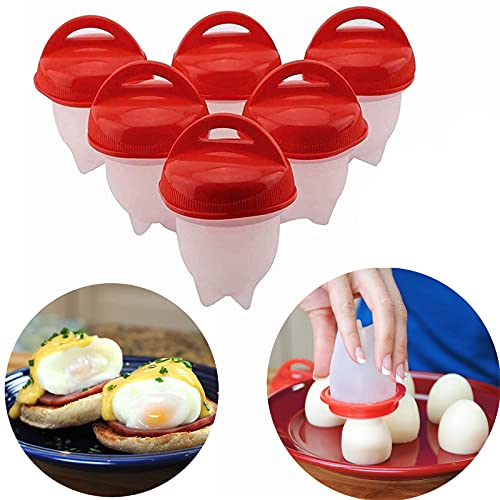
LANJILIFE Egg Cooker – Hard Boiled Eggs without the Shell, 6PCS/Set Egg Poachers Cooker Silicone Non-stick Egg Boiler Cookers,Silicone Boiled Steamer Eggies, BPA Free
- High-Quality Material: Durable and safe construction
As an affiliate, we earn on qualifying purchases.
As an affiliate, we earn on qualifying purchases.
How to Nail the Perfect Boiled Egg Every Time — Step-by-Step
- Place eggs in a single layer at the bottom of a saucepan.
- Add enough cold water to cover eggs by about an inch.
- Heat the water over medium-high and bring to a rolling boil.
- Once boiling, start your timer according to your desired texture.
- Immediately transfer eggs to an ice bath to stop cooking.
- Let cool for at least 5 minutes before peeling.
This method ensures consistency, and the ice bath prevents overcooking, preserving that perfect yolk.
Tips for Consistent Results — From Egg Size to Starting Temperature
- Use large eggs for more predictable timing. Jumbos may need an extra minute.
- Start with eggs at room temperature for even cooking. Cold eggs from the fridge can crack or cook unevenly.
- Adding a splash of vinegar or salt in boiling water helps prevent cracks and makes peeling easier.
- Adjust times slightly at high altitudes — water boils at lower temps, so add an extra minute or two.
- For best peeling, use eggs that are a week or two old. Fresh eggs tend to be harder to peel.
Why Timing Is Key — And How Small Changes Make a Big Difference
Even a 30-second difference can change a soft yolk into a runny mess or a jammy center into a chalky one. The heat penetrates at a steady rate, so your timing must be precise. Overcooking leads to a greenish ring around the yolk, which indicates a chemical reaction between iron in the yolk and sulfur in the whites, resulting in a metallic taste and unappealing appearance. This means that small variations in boiling time can significantly alter your egg’s final texture and flavor. For instance, a 30-second overcooking might turn a perfect runny yolk into one that’s too firm, losing that delicate, silky quality. Conversely, a slight undercooking can leave the yolk too runny for certain dishes, risking a mess or presentation issues. The key takeaway is that precision is crucial: tiny adjustments in timing can be the difference between a flawless egg and one that’s disappointing. Using a reliable timer and paying close attention during the process ensures you consistently produce eggs with your desired texture and appearance, avoiding the tradeoffs of over- or under-cooking.
Frequently Asked Questions
How do I get the yolk just the way I like it?
Match your boiling time to your preferred yolk texture. For runny yolks, aim for 4-6 minutes; for jammy, 6-8 minutes; and for fully set, 9-12 minutes. Using a timer is the best way to be precise.Why do my eggs crack when boiling?
Rapid temperature changes cause cracking. To prevent this, start with eggs at room temperature, add eggs gently to simmering water, and avoid boiling too vigorously. Adding a splash of vinegar or salt can also help.Can I tell if an egg is cooked just by spinning it?
Yes. Gently spin the egg; a fully cooked one will spin smoothly, while an undercooked or raw egg wobbles. This quick test helps you check doneness without cracking it open.How do I peel eggs easily?
Use eggs that are a week or two old. Peel under running water or gently tap and roll to loosen the shell. Cooling eggs rapidly in an ice bath also helps separate the shell from the membrane.Does altitude affect boiling time?
Absolutely. At higher elevations, water boils at lower temperatures, so you’ll need to add about 1-2 minutes to your boiling time for perfectly cooked eggs.Conclusion
Perfect eggs come down to a simple rule: timing is everything. With just a few seconds’ difference, your yolk can go from silky to chalky. Keep a precise timer, start with cold water, and shock in ice. Soon, peeling and serving become effortless, and your eggs look and taste just right every time.
Next time you cook eggs, visualize that creamy center or firm yellow, and remember — a few seconds can make all the difference. Your perfect egg is waiting.
Back to school Picks
back to school
As an affiliate, we earn on qualifying purchases.