TL;DR
Listen free for 30 days with Audible
Thousands of audiobooks and originals — cancel anytime.
Start your free trialAs an affiliate, we earn on qualifying purchases.
Candy thermometers are built for high-temp sugar work, measuring up to 400°F, while meat thermometers focus on lower internal temperatures for safety. Using the right one ensures perfect confections or safe, delicious meats.
Ever grab a thermometer from your drawer, only to realize it’s not quite suited for what you’re making? It’s a common mistake. The difference between a candy thermometer and a meat thermometer isn’t just a matter of price or brand — it’s about what they’re built to do.
Choosing the right one can mean the difference between perfectly glossy caramel or a dangerously undercooked chicken. In this guide, you’ll learn exactly how these two types of thermometers differ in design, range, and purpose — so you always get the precision you need in the kitchen.
Candy thermometers are designed for high temperatures, often up to 400°F, to handle sugar stages like boiling and caramelization.
Meat thermometers focus on lower internal temperatures, typically between 120°F and 200°F, for food safety and doneness.
Digital thermometers offer quick readings, but traditional glass candy thermometers give stable, high-temp accuracy — just handle carefully.
Never use a meat thermometer for candy, as they can’t measure the extreme heat needed and may give false readings.
Calibrate your thermometer regularly—boiling water works for candy thermometers, ice water for meat thermometers—to keep your cooking precise.
What Are Candy and Meat Thermometers Really Designed For?
Candy thermometers are made to handle high heat — think boiling sugar or caramel reaching 300°F to 400°F. They’re built to withstand those extreme temps without breaking or losing accuracy. On the flip side, meat thermometers focus on internal temperatures of cooked meats, usually between 120°F and 200°F, to ensure safety and doneness.
Imagine trying to measure boiling sugar — a meat thermometer might not get hot enough or respond quickly enough, making your caramel either overcooked or undercooked. Conversely, a candy thermometer would be useless for checking if your roast hits 145°F for perfect medium-rare.
Why this matters: using the wrong thermometer can lead to food safety issues or ruined recipes. For example, underestimating sugar temperature can cause candy to fail to reach the desired stage, resulting in sticky or burnt textures. Using a meat thermometer for high-temperature sugar work might give false low readings due to its limited range, risking burnt sugar or inconsistent results. Conversely, relying on a candy thermometer to check meat temperature can lead to undercooked poultry or beef, posing health risks. Knowing these differences helps you choose the right tool, avoid costly mistakes, and achieve culinary precision.

Digital Candy Thermometer with Pot Clip, 10" Long Stainless Steel Probe, Instant Read Kitchen Thermometer for Cooking, Baking, and Candy Making
- Pot Clip for Safe Handling: Securely attaches to pots for safety
- Clear LCD Temperature Display: Easy-to-read digital screen
- Waterproof and Easy to Clean: IP65 rated, safe for rinsing
As an affiliate, we earn on qualifying purchases.
As an affiliate, we earn on qualifying purchases.
Design and Construction: How They Handle Heat Differently
| Candy Thermometers | Meat Thermometers |
|---|---|
| Usually made of glass or metal, with a dial or digital display. Often has a clip to attach to pots or pans. Designed to survive very high heat. | Typically digital or dial, with probes that can be inserted into meat. Built for durability and quick readings, some are designed to stay in the oven. |
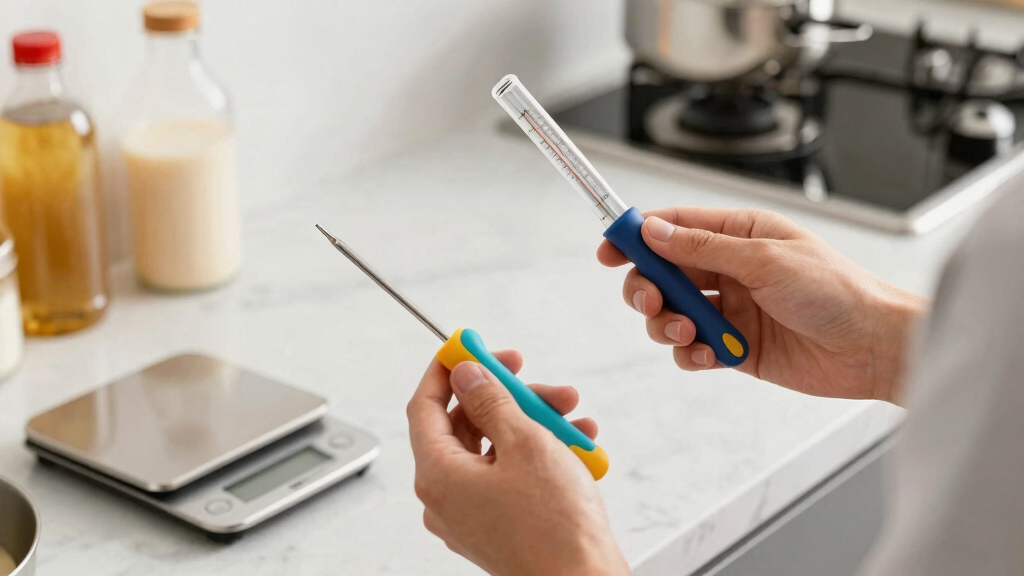
Picture a glass candy thermometer clamped onto a boiling pot of sugar — its thick, heat-resistant glass with a metal backing keeps it steady. Meanwhile, a digital meat thermometer’s probe gets pushed into a steak or roast, with a display showing the internal temp in seconds.
Understanding these design differences reveals their practical implications: candy thermometers are often fragile and designed for static use in boiling sugar, meaning they need to withstand sudden temperature spikes and prolonged high heat. Meat thermometers, especially digital probes, are built for durability and mobility, allowing quick insertion and removal, which is essential for checking internal temperatures without disrupting the cooking process. Choosing the right design reduces the risk of breakage or inaccurate readings, ensuring safety and precision.

Alpha Grillers Instant Read Meat Thermometer Digital, Cooking, Food, Grill
- Instant Read Response: 2-second temperature reading
- Versatile Use: Suitable for grilling, baking, and more
- Easy-to-Read Display: Bright backlit digital screen
As an affiliate, we earn on qualifying purchases.
As an affiliate, we earn on qualifying purchases.
Temperature Ranges and Accuracy: Why They Matter
Candy thermometers measure from around 100°F to 400°F or more. They’re calibrated to be precise at those high temperatures, so your sugar reaches the right stage without burning.
Meat thermometers focus on 120°F to 200°F, helping you hit exact safety thresholds — like 165°F for poultry. Using the wrong thermometer outside its range can give false readings, risking either undercooked meat or ruined candy.
Why this matters: knowing the temperature ranges ensures you’re using the right tool for the job. For instance, trying to monitor boiling syrup with a meat thermometer might be futile because it won’t register temperatures above its limit, leading to inaccurate readings and potential recipe failure. Conversely, a candy thermometer’s limited lower range makes it unsuitable for checking the internal temperature of cooked meat, which could cause you to underestimate doneness and serve undercooked food. Recognizing these ranges and their importance helps you avoid costly mistakes and guarantees food safety and quality.

TempPro TempDip 1 Sec Candy Thermometer Digital with Pot Clip & Large LCD
- Fast, Accurate Readings: Precise in 1 second with ±0.9°F accuracy
- Large Rotating Display: 1.5-inch LCD with 90-degree rotation
- Durable Construction: Made of sturdy plastic and stainless steel
As an affiliate, we earn on qualifying purchases.
As an affiliate, we earn on qualifying purchases.
Response Time and How Quickly They Tell You the Truth
Digital meat thermometers often give instant readings — seconds count when you’re timing a steak or checking a roast. Candy thermometers, especially the traditional glass type, respond more slowly but are calibrated for accuracy at high temps.
Understanding response time impacts your cooking: quick readings allow for precise timing, especially in meat cooking where over- or undercooking can be costly. Slow but accurate readings from candy thermometers are acceptable because sugar stages don’t require immediate feedback; instead, they benefit from steady, reliable measurements over a few seconds to minutes. Choosing the right response time reduces guesswork, helps prevent overcooking or burning, and ensures your recipes turn out as intended.
Alpha Grillers Instant Read Meat Thermometer Digital, Cooking, Food, Grill
- Instant Read Response: 2-second temperature reading
- Versatile Use: Suitable for grilling, baking, and more
- Easy-to-Read Display: Bright backlit digital screen
As an affiliate, we earn on qualifying purchases.
As an affiliate, we earn on qualifying purchases.
Calibration and Maintenance: Keeping Your Thermometers Accurate
Both types need calibration for accuracy. Candy thermometers can be checked by boiling water — it should read around 212°F at sea level. If not, you might need to adjust or replace it.
Meat thermometers can be calibrated in ice water (32°F) or boiling water. Regular calibration ensures safety and precision, especially if you’re making candy often or cooking meats regularly.
Why this matters: regular calibration is essential because thermometers can drift over time due to wear or damage, leading to inaccurate readings. For candy thermometers, a calibration check in boiling water confirms they still register the correct high temperatures critical for sugar stages. For meat thermometers, calibration in ice water ensures accurate low-end readings for doneness checks. Maintaining calibration routines prevents costly mistakes, ensures safety, and guarantees consistent results in your culinary endeavors.
Latest Tech and Modern Features Making Life Easier
Digital, Bluetooth-enabled thermometers now send data straight to your phone, letting you monitor temperatures remotely. Some models switch between candy and meat modes, adding convenience.
Materials are also improving — heat-resistant plastics and metals make thermometers more durable, especially for frequent use in high-temperature candy making or oven roasting.
Manufacturers focus on faster response times and higher accuracy, making it easier to nail that perfect caramel or roast.
These technological advances mean less guesswork and more reliable results. For example, Bluetooth connectivity allows you to monitor candy or meat temperature from a distance, reducing the need to constantly check and risk opening the oven or stirring prematurely. Durable materials extend the lifespan of your tools, saving money long-term. Faster response times mean you can react quickly to temperature changes, avoiding undercooked meat or failed candy stages. Embracing these features can elevate your cooking precision and confidence.
Can You Use a Meat Thermometer for Candy? Why or Why Not?
Using a meat thermometer for candy making isn’t a good idea. Meat thermometers usually top out around 200°F or 220°F, while sugar work can go up to 400°F. They simply can’t handle or accurately measure those high temps.
For example, trying to make caramel with a meat thermometer might result in inaccurate readings, leading to burnt or undercooked sugar. Always use a thermometer designed for high temperatures when working with candy.
Additionally, using a meat thermometer for candy can be risky because it might not only be inaccurate at high temperatures but also damaged by the extreme heat. The probe or display could fail, leading to unsafe or unreliable measurements. This mismatch can compromise your recipe and safety, so always choose a thermometer suited for high-temp sugar work to ensure precise, safe results.
Choosing the Right Thermometer for Your Kitchen
- Decide if you need high-temperature range (candy) or lower (meat).
- Consider digital vs. analog — digital offers quicker readings, analog is more durable.
- Check if it’s easy to calibrate and clean.
- Think about whether you want a multi-purpose tool or a specialized one.
- Read reviews about response time and accuracy from other home cooks.
For example, if you often make caramel, a good candy thermometer with a clip and fast response time will serve you better than a basic meat thermometer. Investing in the right tool tailored to your cooking style saves time, reduces frustration, and improves your results, whether you’re making sugar confections or roasting meats.
Frequently Asked Questions
Can I use a meat thermometer to make candy?
It’s not recommended. Meat thermometers usually max out around 200°F, while candy making can require temperatures up to 400°F. Using a meat thermometer might give inaccurate readings, leading to failed candy batches or burnt sugar. Moreover, the limited temperature range and potential damage from high heat mean it simply isn’t designed for such high-temperature applications, risking safety and precision. Always opt for a thermometer specifically designed for high-temperature sugar work to ensure your candy reaches the right stage safely and accurately.
Are digital thermometers better than analog for kitchen use?
Digital thermometers typically provide faster, more precise readings, which is helpful for quick decisions and reducing guesswork. They often have features like instant readings and easy-to-read displays, making them ideal for busy kitchens. However, analog thermometers are generally more durable, less prone to technical failure, and don’t require batteries, making them reliable for long-term use. The choice depends on your priorities: speed and convenience versus durability and simplicity. For most home cooks, digital thermometers offer a significant advantage in accuracy and ease of use, especially when monitoring sugar stages or meat doneness.
How do I calibrate my candy thermometer?
To calibrate your candy thermometer, place it in a pot of boiling water at sea level — it should read 212°F. If it doesn’t, note the discrepancy and adjust your expectations accordingly. Some thermometers have a calibration screw or dial that allows you to fine-tune the reading; if yours doesn’t, you can mark the correct reading on the thermometer for future reference. Regular calibration ensures that your sugar stages are accurate, preventing undercooking or burning. For added precision, compare the thermometer’s reading with a trusted reference thermometer periodically, especially if you make candy frequently or notice inconsistent results.
What’s the best thermometer for beginners?
An instant-read digital thermometer is often the best choice for beginners. It provides quick, clear readings, making it easy to learn how to monitor internal meat temperatures or sugar stages without guesswork. Its user-friendly interface and fast response time help build confidence in cooking and candy making. Additionally, many models are affordable and durable, making them suitable for everyday use. Starting with a reliable digital thermometer simplifies the learning curve and ensures consistent, safe results in your culinary adventures.
Can I leave a meat thermometer in the oven?
Some leave-in meat thermometers are specifically designed for oven use and can be left in during cooking. These are typically heat-resistant probes with a display outside the oven. However, traditional instant-read models are not meant to stay inside; they are designed for quick temperature checks and should be removed after use. Always check your thermometer’s instructions before leaving it in the oven to avoid damage or inaccurate readings. Proper use ensures safety, prolongs the lifespan of your tool, and maintains measurement accuracy.
Conclusion
Choosing the right thermometer isn’t just about accuracy — it’s about safety, confidence, and perfect results. A candy thermometer will never work well for checking your roast’s internal temp, just as a meat thermometer falls short in candy making. Match the tool to the task, and your kitchen will stay safe, efficient, and productive.
Remember, a thermometer is your silent partner in the kitchen — treat it well, calibrate it regularly, and let it guide your culinary creations to perfection. Your next batch of caramel or perfectly cooked steak depends on it.
Flea & tick season Picks
flea and tick prevention
As an affiliate, we earn on qualifying purchases.