TL;DR

Get kitchen gear delivered free with Prime
- Fast, free delivery on millions of items
- Prime Video, Amazon Music and more included
- Member-only deals all year
Digital timers drift mainly because of oscillator inaccuracies affected by temperature, aging, and power fluctuations. Modern tech like temperature-compensated crystals and synchronization can greatly improve their precision.
Ever notice how your digital timer seems to run a little fast or slow after a few days? That’s because no timer is perfectly stable over time. They all face tiny yet persistent inaccuracies that cause drift—losing or gaining seconds as days go by. Understanding what makes timers drift isn’t just tech nerd stuff. It’s the key to picking better gadgets and keeping your timing precise, especially in critical tasks like cooking, scientific experiments, or industrial processes.
In this guide, I’ll explain what causes timer drift, how modern advancements are fighting back against inaccuracies, and practical tips to keep your timers on point. Knowledge like this saves you from surprises—like burnt meals or misaligned measurements—and helps you choose the right timer for every need.
Quartz crystals cause drift due to temperature, aging, and power fluctuations, commonly leading to 1-2 seconds of error daily.
High-end timers with TCXOs or OCXOs drastically reduce drift, staying accurate within fractions of a second per day.
Regular calibration or synchronization with external time sources can keep your timer on track, even with basic models.
Environmental stability—like keeping timers in a consistent, cool, dry place—helps maintain accuracy.
Future tech, such as miniature atomic clocks, promises even better precision, but current practical solutions rely on advanced oscillators and syncing.
What makes digital timers lose their grip on perfect time?
Digital timers rely on tiny crystals called quartz oscillators, which vibrate at a specific frequency when powered. Think of it like a metronome for your timer—vibrations set the pace. But these crystals aren’t perfect. They’re sensitive to temperature swings, voltage changes, and even the passage of time itself.
For example, a quartz crystal might vibrate slightly faster or slower if your kitchen’s oven runs hot or cold. Over days or weeks, those tiny shifts add up. An inexpensive timer might drift by a few seconds daily, while high-end models with advanced crystals stay accurate much longer. The main culprits? Temperature variations, power supply fluctuations, and component aging, all of which cause tiny deviations in the crystal’s vibration rate. It’s like trying to keep perfect rhythm on a drum with a slightly out-of-tune skin.
digital timer with temperature compensation
As an affiliate, we earn on qualifying purchases.
As an affiliate, we earn on qualifying purchases.
How environmental factors mess with your timer’s accuracy
Timer drift isn’t just a nerdy technical issue. It’s a real-world problem that kicks in because of what’s around you. Temperature swings are the biggest culprit. If your timer is in a hot kitchen or near a heating vent, the crystal’s vibration frequency shifts. Cool environments can cause similar issues, just in the opposite direction.
Imagine you’re baking bread on a cold winter day. Your digital timer might lose a few seconds over a week because the crystal’s oscillation slows down. Conversely, a hot oven can speed it up slightly. Power fluctuations also play a role—if your batteries are weak or voltage dips, the circuit’s stability drops, nudging the timer off course. Even small vibrations or shocks can affect sensitive components, similar to how a coin dropped on a table might jostle a clock’s delicate parts.
As an affiliate, we earn on qualifying purchases.
What’s the difference between cheap and pricey timers? The tech inside
| Feature | Budget Timers | High-End Timers |
|---|---|---|
| Oscillator Type | Standard quartz crystal | Temperature-compensated crystal (TCXO) or oven-controlled (OCXO) |
| Accuracy | ±20 to ±50 ppm (~1-2 seconds/day) | ±0.5 ppm or better (~0.04 seconds/day) |
| Environmental Stability | Limited; affected by temp & power | Much more stable, with built-in compensation circuits |
| Cost | Low | Higher, due to advanced components |
High-quality oscillators stay accurate longer because they actively adjust for temperature and aging. A $10 timer might drift dozens of seconds in a week, while a $100 professional model with a TCXO stays within a fraction of a second. It’s a tradeoff—pay more for precision.
As an affiliate, we earn on qualifying purchases.
Can you fix or improve your timer’s accuracy? Yes, sometimes.
Many timers, especially those with digital displays, can be calibrated or synchronized to stay accurate. Here’s what you can do:
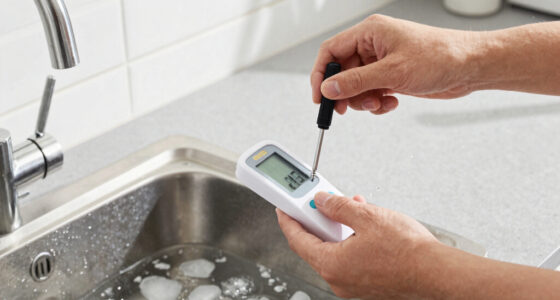
- Check if your timer has a calibration or reset feature. Follow the manual to fine-tune it against a known accurate time source.
- Sync your timer regularly with a reliable external clock—like your smartphone or internet time. Many smart timers connect via Wi-Fi or Bluetooth for this purpose.
- Keep your timer in a stable environment—away from direct sunlight, heat sources, or drafts—to minimize environmental drift.
- If your timer is critical—say, for scientific experiments—consider investing in a model with temperature compensation or professional-grade oscillators.
For example, a home baker might set their oven timer at the start of baking using their phone’s clock, then periodically verify if it’s still on track. Over time, small adjustments keep the timing precise.
As an affiliate, we earn on qualifying purchases.
Will future tech make timers perfectly accurate? Probably not yet.
Current technology can push digital timers to incredible accuracy, but a perfect, drift-free clock still isn’t here. Atomic clocks are the gold standard—used in GPS satellites and timekeeping stations—but they’re huge and expensive.
Emerging chip-scale oscillators, like miniature atomic clocks, promise to bring near-perfect accuracy to everyday devices someday. For now, they’re mainly in critical applications. Meanwhile, smart synchronization via internet or GPS signals is the best practical way to keep your timers on track.
Key facts about timer drift you need to know
- Standard quartz oscillators drift about 20 to 50 ppm, meaning up to 2 seconds per day.
- High-quality TCXOs can achieve accuracy within ±0.5 ppm, or about 0.04 seconds/day.
- Over months, even good oscillators can drift by minutes if unchecked.
- Regular calibration or synchronization can keep drift below a second per day.
Your most common questions about timer drift answered
Q1: Why does my digital timer lose or gain time over days? Because of tiny frequency shifts in its oscillator caused by temperature, aging, or power issues.
Q2: How often should I calibrate my timer? If you need high precision, every few months is good. For casual use, annual calibration or periodic synchronization with a reliable clock works well.
Q3: Are all digital timers equally accurate? No. Budget timers with basic quartz crystals drift more. High-end models with advanced oscillators stay precise longer.
Q4: Can I fix a drifting timer? Yes, if it has calibration options or can sync with an external clock. Otherwise, replacing it with a better model is the easiest fix.
Q5: What’s the best timer for critical timing tasks? Those with temperature compensation, oven-controlled oscillators, or synchronization features—like GPS or internet-connected timers.
Frequently Asked Questions
How does temperature affect my digital timer?
Temperature changes cause quartz crystals to vibrate slightly faster or slower, leading to drift. Keeping your timer in a stable environment minimizes this effect.What’s the difference between a cheap and a high-end timer regarding accuracy?
Cheap timers often use standard crystals with no compensation, drifting several seconds daily. High-end models with temperature-compensated crystals stay accurate within a fraction of a second per day.Can I calibrate my existing timer to reduce drift?
If your timer has a calibration feature, you can adjust it periodically against a reliable time source. Otherwise, replacing it with a higher-quality model is the best solution.Will syncing my timer with the internet make it perfectly accurate?
Syncing helps correct drift over time, but environmental factors and hardware limitations still cause tiny inaccuracies. Regular syncing maximizes accuracy but doesn’t eliminate drift entirely.Conclusion
Digital timer drift isn’t just a quirk; it’s a measurable, manageable challenge. Choosing the right oscillator technology and maintaining regular calibration can keep your timers accurate for everyday tasks and critical needs alike. So, next time you set a timer, remember: a little tech and attention go a long way in keeping time on your side.
Imagine your kitchen timer ticking in perfect harmony with the clock on your phone—no surprises, no missed steps. That’s the power of understanding and controlling timer drift.
Halloween Picks
halloween
As an affiliate, we earn on qualifying purchases.