TL;DR

Get kitchen gear delivered free with Prime
- Fast, free delivery on millions of items
- Prime Video, Amazon Music and more included
- Member-only deals all year
Using a food scale provides precise, consistent measurements that improve meal planning and help meet nutrition goals. It’s more reliable than volume measurements and essential for accurate calorie tracking.
Imagine slicing a perfect, juicy steak or scooping out a heaping spoonful of rice—then weighing it. That’s the power of a food scale. It’s not just for fancy chefs. For home cooks, it’s a simple tool that guarantees every meal hits your target size and calorie count. No guesswork, no surprises. Just consistent, reliable results every time.
If you’re serious about meal prep, managing your weight, or just want your portions to match your goals, learning how to use a food scale is a game-changer. In this guide, you’ll discover exactly how to get the most out of your scale—whether you’re measuring vegetables, meats, or grains—and how to make it work seamlessly into your routine.
Always tare your scale after placing a container to measure only the food, ensuring accuracy.
Use pre-measured containers or portions to save time and maintain consistency.
Weigh raw ingredients for more precise calorie tracking, especially for meats and produce.
Leverage smart scales and apps to automate logging and improve meal planning.
Small measurement errors can lead to significant calorie differences over time—precision matters.
Choose the right food scale—your secret weapon for accuracy
The first step is picking a scale that fits your needs. A digital scale with at least 0.1-ounce (or 1-gram) precision makes all the difference. Think about capacity—if you often weigh large cuts of meat or big bowls of salad, go for a scale that can handle more than 11 pounds.
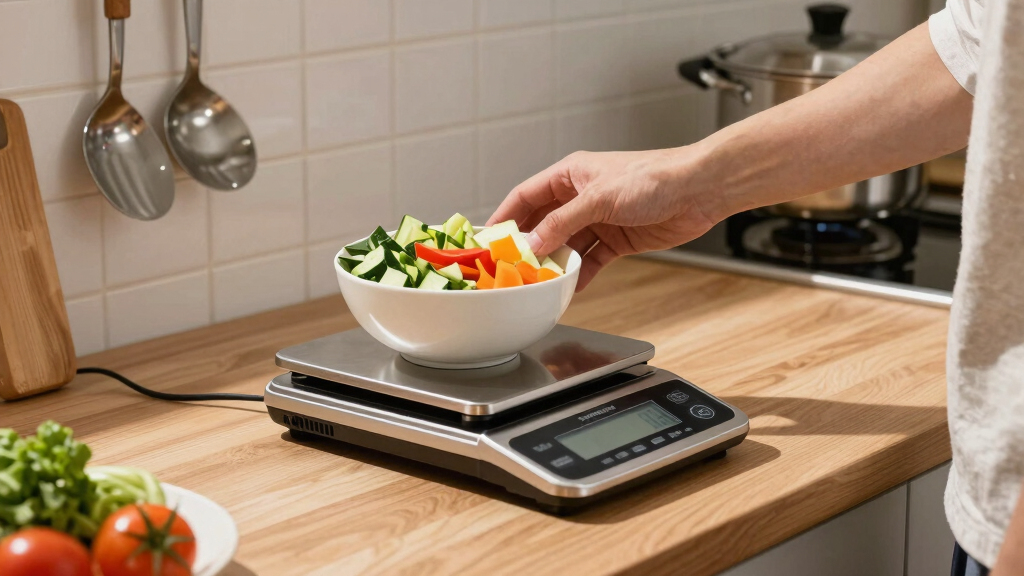
Look for features like a tare button, which resets the weight to zero after you add a container, and a clear, easy-to-read display. These little details make measuring faster and less frustrating. For example, a scale with a smooth tare function lets you place a bowl, zero it out, and then add ingredients without juggling.
digital food scale with tare function
As an affiliate, we earn on qualifying purchases.
As an affiliate, we earn on qualifying purchases.
Master the tare function—your shortcut to perfect portions
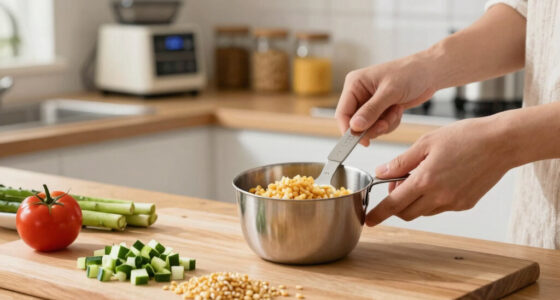
The tare button is your best friend. It resets the scale to zero after placing a container or plate, so you only weigh the food. For instance, if you want to measure 100 grams of almonds, place a bowl, tare the scale, then add almonds until it hits 100 grams—no guesswork involved.
This simple step keeps your measurements clean and accurate. It also prevents you from overestimating or underestimating portions, especially when dealing with bulky or irregularly shaped foods.
precise kitchen food scale for meal prep
As an affiliate, we earn on qualifying purchases.
As an affiliate, we earn on qualifying purchases.
Use containers and tools that make measuring easy and clean
Choose lightweight, non-absorbent containers like glass or plastic bowls. For liquids, a clear measuring cup with volume markings is handy, but weighing liquids directly on the scale yields better accuracy. Imagine pouring a splash of olive oil into a small bowl—then weighing it to get exactly 15 grams instead of guessing how many teaspoons that is.
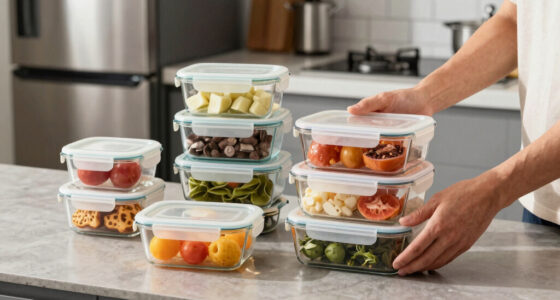
Pre-measuring ingredients into small containers or dishes can save time during busy mornings or meal prep marathons, ensuring you stick to your planned portion sizes.
smart food scale with app integration
As an affiliate, we earn on qualifying purchases.
As an affiliate, we earn on qualifying purchases.
Standardize portions for consistency and ease
Deciding on standard portion sizes for your meals isn’t just about convenience; it’s about creating a reliable framework that supports your dietary goals. When you measure a specific amount—say, 150 grams of cooked chicken—you establish a benchmark. Over time, this consistency helps your body adapt, whether you’re aiming for weight loss, muscle gain, or maintenance. It also simplifies tracking, as you can easily compare day-to-day intake without second-guessing every portion.
Furthermore, pre-portioned containers reduce the cognitive load during busy days, making it easier to stick to your plan without the temptation to over- or under-serve. This method also minimizes waste and ensures that your meals are balanced, both nutritionally and in portion sizes, supporting long-term adherence to your dietary strategy.
high-capacity digital kitchen scale
As an affiliate, we earn on qualifying purchases.
As an affiliate, we earn on qualifying purchases.
Record your measurements—stay on track effortlessly
Keep a simple food journal or use a nutrition app to log each measured portion. For example, after weighing your breakfast oats, jot down 40 grams. Over time, this builds a reliable record of your intake and helps you adjust portions to meet your goals.
Consistent recording turns your scale from a one-time tool into a habit that supports long-term success. Plus, it makes it easier to notice patterns or adjust when weight loss plateaus or muscle gain stalls.
Latest tech trends—smart scales make portioning even smarter
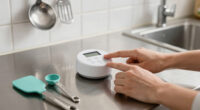
Smart food scales connect to apps that automatically log your measurements, analyze nutritional info, and suggest portion sizes based on your goals. For instance, a scale with Bluetooth sync can record 120 grams of cooked salmon, then add it to your daily log without manual input.
Recent models also feature barcode scanning, AI-driven portion suggestions, and sleek designs that fit into modern kitchens. These tools turn measuring from a chore into a seamless part of your routine—whether you’re tracking macros or managing calorie intake.
Quick comparison: measuring cups vs. food scales
| Feature | Measuring Cups | Food Scale |
|---|---|---|
| Accuracy | Less precise, varies with food density | Highly precise, regardless of food type |
| Consistency | Can vary between measurements | Consistent, repeatable results |
| Speed | Quick for liquids and powders | Requires weighing but faster with pre-measured portions |
| Ease of use | Simple, familiar | Requires initial setup but more reliable |
Frequently Asked Questions
Why should I use a food scale instead of measuring cups?
Because scales provide exact measurements, especially for foods that vary wildly in density. This means you get consistent portions and more accurate calorie counts, helping you stay on track with your goals.
How do I know what portion size is right for me?
Consult dietary guidelines or a nutritionist to determine your ideal serving sizes. Use your scale to measure these portions consistently, then adjust based on your progress and how you feel.
Can I use a food scale for liquids?
Absolutely. Weighing liquids is often more accurate than using volume measurements, especially for small amounts like oils or dressings. Just place the liquid in a container on the scale, tare, and then measure.
What if I don’t have a food scale?
Measuring cups are a decent fallback, but they’re less precise. Investing in a digital food scale will give you much more reliable, consistent results—worthwhile for serious meal planning.
How should I clean my food scale?
Wipe it with a damp cloth regularly. Avoid submerging it in water or using harsh cleaners that could damage the electronics. Store it in a dry place to keep it working accurately.
Conclusion
Incorporating a food scale into your routine transforms vague approximations into reliable, measurable portions. It’s a small investment that pays off with better consistency, clearer tracking, and healthier habits. So next time you prep, weigh with purpose—and enjoy the peace of mind that comes with knowing your portions are exactly right.
After all, the secret to steady progress isn’t just eating healthy—it’s measuring smartly. Your future self will thank you for it.
Halloween Picks
halloween
As an affiliate, we earn on qualifying purchases.