TL;DR

Get kitchen gear delivered free with Prime
- Fast, free delivery on millions of items
- Prime Video, Amazon Music and more included
- Member-only deals all year
Proper layering in mason jars keeps salads crisp and overnight oats fresh. Starting with dressing and sturdy ingredients at the bottom, delicate greens go on top. Follow these tips for 4-5 days of delicious, portable meals.
If you’ve ever packed a salad the night before and found the greens soggy or the dressing soaked through, you’re not alone. Mason jar meal prep is a game-changer, but only if you layer ingredients wisely.
Think of your jar as a mini fortress—each layer protecting the delicate ingredients from sogginess and spoilage. This guide will show you how to master the art of layering salads and overnight oats in mason jars, so your meals stay fresh, flavorful, and ready to grab on busy mornings.
Layer wet ingredients and dressings at the bottom, greens at the top to prevent sogginess.
Choose sturdy, airtight jars—preferably 16 oz or larger—for better storage and visual appeal.
Prepare meals 3-5 days in advance, but consume within recommended timeframes to ensure freshness.
Use separate layers for delicate ingredients like herbs or berries to keep textures intact.
Stay updated on trends like eco-friendly jars and pre-measured kits to streamline your prep.
Mason Jar Meal Prep, Layered Correctly
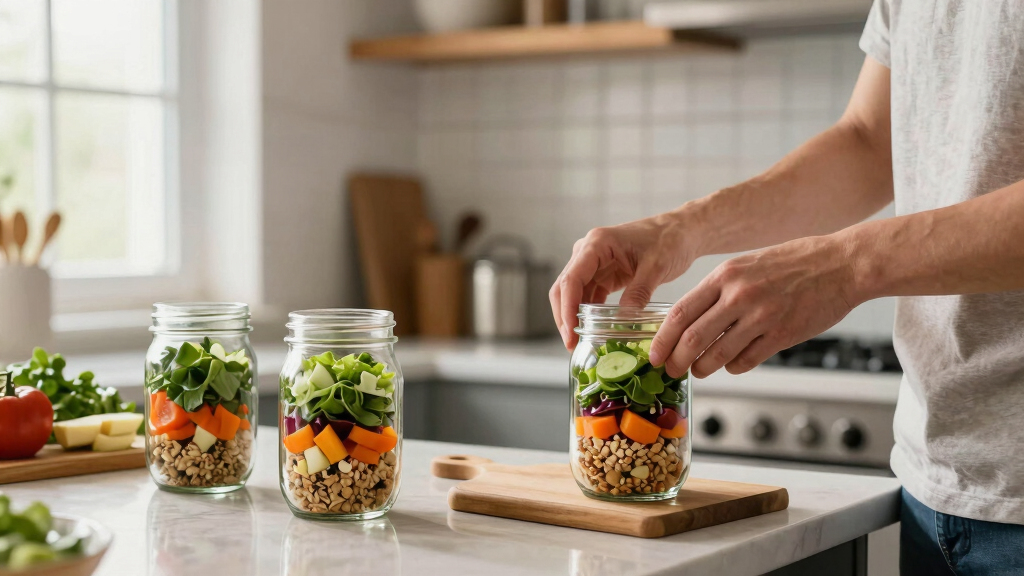
Treat every jar like a tiny fortress: wet ingredients stay below, sturdy barriers occupy the middle, and delicate greens or toppings remain safely above. The reward is fresher texture, cleaner transport, and several ready-to-grab meals.
When sealed, refrigerated, and correctly layered.
Freshness varies with dairy, fruit, and toppings.
The perfect layer order
Build from the bottom upward. Salad layers create a moisture barrier; oat layers support even soaking while protecting toppings from turning mushy.
Crisp Salad
Top → bottomWhy it works: dense ingredients form a buffer between dressing and fragile leaves.
Creamy Oats
Top → bottomTexture choice: rolled oats become creamier; steel-cut oats stay chewier and need longer soaking.
Five steps to breakfast
Use an airtight jar and leave a little headroom for stirring. The seal protects flavor, limits leaks, and keeps refrigerator odors out.
Use a clean, airtight vessel of 16 oz or larger.
Select rolled for creamy or steel-cut for chewy texture.
Add dairy, almond, soy, or coconut milk.
Add sweetener, fruit, nuts, or seeds; close tightly.
Refrigerate overnight, then mix before eating.
Salad vs. overnight oats
The same jar supports two different moisture strategies: salads isolate liquid; oats intentionally absorb it.
| Aspect | Salad layering | Overnight oats | Texture signal |
|---|---|---|---|
| Bottom layer | Dressing or wet ingredients | Dry oats or grains | ✓ Foundation |
| Middle layers | Hard vegetables, grains, protein | Milk, sweetener, nuts, seeds | ✓ Structure |
| Top layer | Greens, herbs, delicate toppings | Fruit and extra toppings | ✓ Protected |
| Best window | 4–5 refrigerated days | 2–3 refrigerated days | ~ Ingredient-dependent |
| Common mistake | Greens touching dressing | Soft fruit submerged too long | ✗ Texture loss |
| Serving move | Shake, then pour into a bowl | Stir; add liquid if needed | ✓ Ready to eat |
Plan to the shorter window
These ranges assume clean jars, cold refrigeration, tight seals, and fresh ingredients. Dairy, cooked protein, soft herbs, and cut fruit may shorten the useful window.
Layered salads
Sturdy vegetables and dry greens extend crunch.
Overnight oats
Fruit and dairy choices influence peak quality.
Six practical safeguards
Freshness comes from the whole system: ingredient order, container quality, refrigerator storage, timing, inspection, and cleaning.
Use airtight lids
Leak-proof lids reduce spills and protect ingredients from refrigerator odors.
Store upright
Vertical storage keeps liquid at the bottom and preserves clear layer boundaries.
Build sturdy barriers
Carrots, cucumbers, chickpeas, grains, and proteins shield delicate ingredients.
Label the prep date
Use salads within 4–5 days and oats within 2–3 days.
Check before eating
Discard meals with mold, unpleasant odor, unusual bubbling, or slimy texture.
Clean every seal
Wash with warm soapy water, avoid abrasive scrubbers, and dry completely.
The smarter jar era
Meal prep is moving toward reusable materials, modular storage, faster assembly, and recipes tailored to specific dietary needs.
Glass over plastic
Durable reusable jars support lower-waste routines and make every layer visible.
Pre-measured kits
Portioned ingredients and recipes reduce assembly time and decision fatigue.
Silicone-sealed lids
Vacuum-style seals and modular stacking improve organization and leak control.
Separate boosters
Citrus zest and vinegar-based dressings can stay separate until serving.
Diet-aware builds
Plant-based, gluten-free, and lower-carb jars offer more tailored meal options.
Lid off first
Only microwave jars marked microwave-safe; always remove the metal lid.
Jar prep FAQ
Good layering protects texture, but safe refrigeration and sensible timing remain essential.
How do I keep salad greens crisp?
Put dressing at the bottom, sturdy vegetables next, and completely dry greens at the top. Shake only when ready to eat.
Can I make seven days at once?
Four to five days is the practical salad limit. Soft greens and herbs may wilt sooner, so inspect each jar before eating.
What makes the best barrier?
Use carrots, cucumber, cabbage, chickpeas, grains, or firm proteins between liquid and delicate toppings.
Are meals safe after several days?
They can be when continuously refrigerated and used within the recommended window. Never rely on timing alone if spoilage signs appear.
For salads, place dressing low and greens high. For oats, let grains meet the liquid while keeping delicate fruit and crunch near the top. Seal tightly, refrigerate upright, and eat within the shorter freshness window.
How to Layer a Mason Jar Salad for Freshness and Flavor
The secret to a crisp, vibrant salad sitting safely in a jar? Proper layering. Start with the wetter, more pungent ingredients at the bottom—think dressings, chopped tomatoes, or marinated proteins.
Next, add sturdier vegetables like carrots, cucumbers, or roasted chickpeas. Keep the delicate greens and herbs at the very top—close to the lid—so they stay crisp and fresh. For example, a Greek salad jar might layer olive oil-based dressing, cucumbers, kalamata olives, cooked chicken, and spinach at the top.
By following this order, moisture from the dressing stays away from the greens, preventing sogginess. When you’re ready to eat, shake the jar to distribute the dressing evenly. This layering method not only preserves freshness but also allows you to customize flavors and textures with minimal prep time, making it easier to enjoy healthy, homemade meals throughout the week.
As an affiliate, we earn on qualifying purchases.
Simple Steps to Perfect Overnight Oats in Mason Jars
- Choose your jar—16 oz or larger works well. The size impacts how many ingredients you can layer and how portable the meal is, so select based on your appetite and storage space.
- Start with a base of oats—rolled oats or steel-cut, depending on your preferred texture. Rolled oats absorb liquid faster and create a creamier consistency, while steel-cut oats are chewier and require longer soaking.
- Add your choice of milk or plant-based alternative—dairy or almond, soy, or coconut milk. The type of milk influences the flavor and texture, and some options may require longer soaking or additional sweeteners.
- Mix in sweeteners like honey or maple syrup if you like a touch of sweetness. These ingredients not only enhance flavor but also help balance the texture of the oats.
- Layer fruits, nuts, or seeds on top—berries, sliced bananas, chia seeds. These toppings add nutritional value, texture, and flavor, but placing them on top prevents them from becoming mushy as the oats soak.
- Seal tightly and refrigerate overnight. This step allows the oats to soften and flavors to meld, but the quality of the seal ensures no leaks or spoilage.
In the morning, give it a good stir or shake. The oats soak up the liquid, softening into a creamy, flavorful breakfast. Choosing the right ingredients and understanding their interactions can make your overnight oats more enjoyable and customizable according to your dietary needs and taste preferences.
As an affiliate, we earn on qualifying purchases.
Comparison Table: Salad vs. Overnight Oats Layering Tips
| Aspect | Salad Layering | Overnight Oats |
|---|---|---|
| Bottom Layer | Dressing or wet ingredients | Dry oats or grains |
| Middle Layers | Hard vegetables, proteins | Fruits, nuts, seeds |
| Top Layer | Greens, delicate toppings | Extra fruits, toppings, or flavorings |
As an affiliate, we earn on qualifying purchases.
Tips for Keeping Mason Jar Meals Fresh for Several Days
- Use airtight, leak-proof lids to prevent spoilage and leaks. Proper sealing minimizes the risk of bacteria growth and keeps ingredients tasting fresh.
- Store jars upright in the fridge to keep ingredients separated and fresh. This position prevents cross-contamination and helps maintain individual flavors and textures.
- Keep dressings or liquids at the bottom, greens at the top, and add delicate ingredients last. This arrangement protects fragile components from wilting or becoming soggy, preserving the intended texture and appearance.
- Consume within 4-5 days for salads, 2-3 days for overnight oats. Understanding these timeframes helps prevent spoilage and ensures you enjoy meals at their peak freshness, which is critical for both safety and flavor.
- Wash jars thoroughly after each use to prevent mold and residue buildup. Proper cleaning extends the life of your jars and maintains food safety standards.
As an affiliate, we earn on qualifying purchases.
The Latest Trends in Mason Jar Meal Prep
Eco-friendly, reusable glass jars are gaining popularity, thanks to their durability and sustainability. Many home cooks now customize their layers with flavor-enhancing ingredients like citrus zest or vinegar-based dressings stored separately.
Some brands offer pre-measured, portioned ingredients for quick assembly, making meal prep even more accessible. Additionally, smart storage solutions like stackable jars and silicone-sealed lids keep everything organized and fresh for days.
Innovations in jar design focus on improving freshness preservation and ease of use. Features like vacuum-sealed lids and modular stacking systems reduce waste and make meal prep more efficient, appealing to busy individuals who want healthy, homemade options without extra hassle.
Frequently Asked Questions
How do I prevent my salads from getting soggy?
Layer dressings at the bottom, add sturdy vegetables next, and greens last. Keep moisture away from delicate ingredients, and shake the jar before eating to distribute the dressing evenly. This method preserves the texture and crunch of your greens, ensuring your salad remains appetizing over several days.
Can I prepare mason jar salads for a week?
Yes, but understanding the implications of ingredient freshness and spoilage is key. Typically, salads stay good for 4-5 days if stored properly, but ingredients like herbs or soft greens may start to wilt sooner. Proper storage, like keeping jars upright and sealed, helps maximize freshness and safety.
What ingredients are best for layering?
Hard vegetables, proteins, and grains at the bottom; dressings or sauces next; and delicate greens or herbs on top. This arrangement acts like a protective barrier—each layer supports the next and prevents sogginess, ensuring your meal maintains its intended texture and flavor.
Are mason jar meals safe after several days?
Yes, if stored correctly in the fridge and consumed within 4-5 days for salads or 2-3 days for oats. However, always check for any signs of spoilage such as foul odors, mold, or slimy textures before eating, especially if ingredients contain dairy or fresh produce. Proper timing and storage are crucial for food safety.
How do I clean and maintain my mason jars?
Wash with warm, soapy water after each use, paying attention to the lid seals. Avoid abrasive scrubbers that can scratch glass or damage seals. Dry thoroughly to prevent mold, especially around the lid area. Regular cleaning ensures your jars remain odor-free, safe, and ready for reuse, extending their lifespan and maintaining food safety standards.
Conclusion
Mastering the art of proper layering in mason jars turns simple ingredients into vibrant, portable meals that stay fresh longer. It’s about thinking ahead—placing moisture and delicate greens strategically so they shine on your plate.
Next time you grab a jar from the fridge, imagine it as a tiny, perfectly organized world—ready to serve up flavor and freshness in every bite. Your busy mornings just got a whole lot easier and tastier.
Halloween Picks
halloween
As an affiliate, we earn on qualifying purchases.