
TL;DR
Open a free Amazon Business account
Business pricing, bulk buying and tax-exempt orders.
Create a free accountAs an affiliate, we earn on qualifying purchases.
Egg timers started as basic hourglasses and mechanical devices, then advanced to digital and smart sensors. Today, they combine precise timing with connectivity, making cooking more accurate and convenient.
Imagine cracking an egg and setting a timer that not only counts down but also senses when your egg is perfectly done. It’s a far cry from the simple hourglass of centuries past. The evolution of egg timers mirrors our broader obsession with precision and convenience in the kitchen.
In this guide, you’ll explore the fascinating journey from ancient sand timers to sleek digital devices and smart sensors. Understanding this history isn’t just about nostalgia; it’s about appreciating the technology that makes your breakfast perfectly cooked every time.
Egg timers evolved from simple hourglasses to sophisticated smart sensors, reflecting advances in technology and user needs.
Mechanical timers from the 19th century set the stage for today’s digital and sensor-based devices, offering greater accuracy and convenience.
Smart egg timers leverage IoT and AI, providing real-time data, remote control, and personalized cooking recommendations.
Using sensors and connectivity reduces overcooking, making your eggs consistently perfect with less guesswork.
The future of egg timers will likely involve fully integrated, AI-driven kitchen ecosystems that automate and optimize your cooking experience.
How the First Egg Timers Looked and Worked
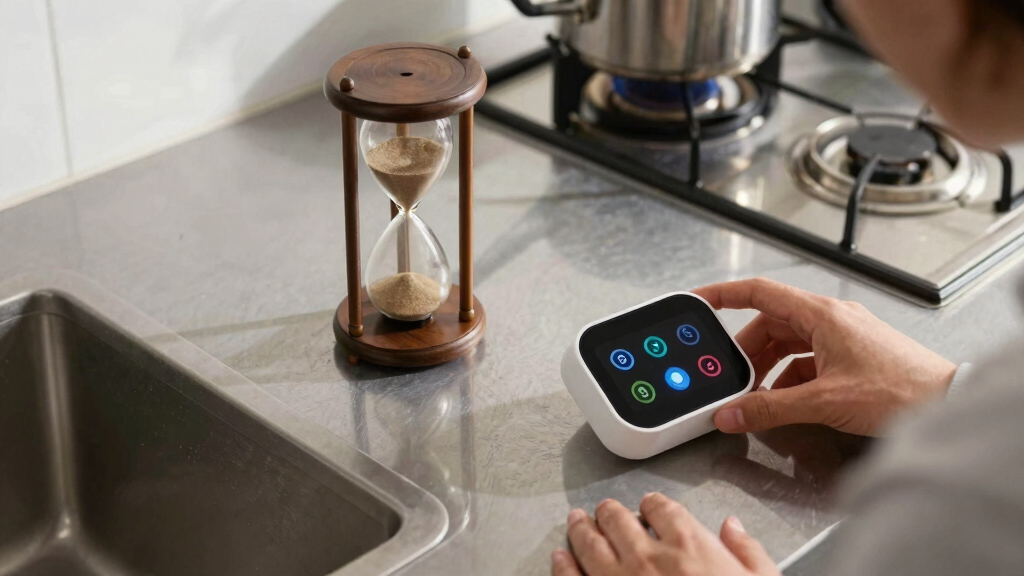
Early egg timers were straightforward. The hourglass, dating back to around the 8th century, was the go-to tool. Filled with sand or tiny granular materials, it measured fixed intervals—say, 3 or 5 minutes—by the flow of sand from one bulb to another. These timers were simple but effective, especially in maritime navigation and cooking.
Think about a sailor in the 1200s using an hourglass to time his ship’s watch or a housewife in the 1800s setting a sand timer for boiling eggs. These devices relied purely on gravity and the size of the grains, making them reliable but not very precise. Still, they laid the groundwork for all subsequent timing devices.
Understanding why these early timers mattered is key. They introduced the concept of measurable, repeatable intervals—an essential step toward precision in cooking. However, their reliance on gravity and grain size meant they couldn’t adapt to different conditions, leading to inconsistencies. This tradeoff between simplicity and accuracy set the stage for more advanced mechanisms.

Antonki 2 Pack Digital Timer for Kids Classroom Kitchen Timers for Cooking
- Dual Timer Modes: Count up and countdown functions
- Adjustable Alarm Settings: Loud and silent modes with flashing light
- Large, Clear Display: Easy-to-read screen and buttons
As an affiliate, we earn on qualifying purchases.
As an affiliate, we earn on qualifying purchases.
Why Mechanical Egg Timers Became Kitchen Staples
By the 19th century, mechanical egg timers started popping up. These wind-up or spring-driven devices used tiny gears and springs to measure time. They could be set for specific minutes—often 2, 3, or 5—and would ring a bell once the countdown finished.
Picture a Victorian kitchen, where a brass, wind-up device sat on the counter, ready to alert you when your eggs were perfect. These timers were durable, easy to use, and portable. They made timing eggs a ritual, reducing the guesswork and preventing overcooking.
The significance of mechanical timers lies in their ability to provide a more consistent and reliable measure of time. Unlike sand timers, they could be reset and used repeatedly without wear from grain degradation. This durability and repeatability made them essential tools for busy kitchens, especially as household cooking became more standardized. Yet, they still lacked the ability to adapt dynamically to different cooking conditions, highlighting a persistent need for innovation.

Lasubst Egg Timer for Boiling Eggs that Changes Color When Done, Tricolor
- Precise Cooking Stages: Calculates egg doneness by temperature
- Easy to Use: Indicates soft, medium, hard boiled levels
- Safe Materials: Made of BPA-free, food-grade materials
As an affiliate, we earn on qualifying purchases.
As an affiliate, we earn on qualifying purchases.
The Rise of Electric and Digital Egg Timers
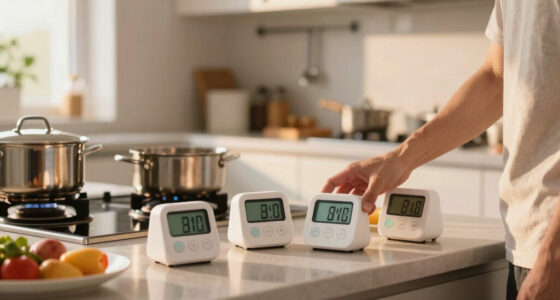
Come mid-20th century, electric timers entered the scene. Powered by electricity, they offered more precise, consistent timing. Then, in the late 20th century, digital timers arrived, transforming kitchen timing with buttons, LCD screens, and multiple modes.
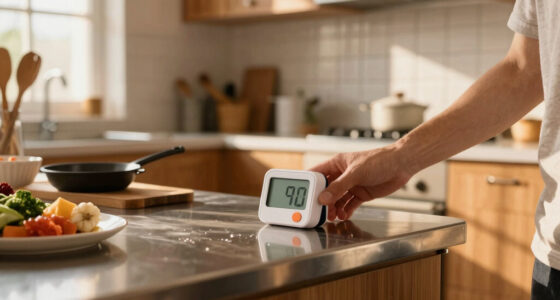
Imagine a modern kitchen with a sleek digital timer, set with a tap of your finger, counting down with a beeping alert. These timers can often be programmed for multiple tasks, making them versatile. They also brought features like pause, reset, and even memory functions, making cooking more predictable and less stressful.
Why this shift mattered is because it addressed the limitations of mechanical timers—mainly, ease of use and precision. Digital timers reduced human error, allowing cooks to rely on exact times rather than estimations. The multiple modes and memory functions enabled complex cooking routines, saving time and reducing frustration. However, they still operated primarily on fixed time settings, without sensing or adapting to the actual cooking process, which limited their potential for perfection.
Lasubst Egg Timer for Boiling Eggs that Changes Color When Done, Tricolor
- Precise Cooking Stages: Calculates egg doneness by temperature
- Easy to Use: Indicates soft, medium, hard boiled levels
- Safe Materials: Made of BPA-free, food-grade materials
As an affiliate, we earn on qualifying purchases.
As an affiliate, we earn on qualifying purchases.
How Modern Smart Egg Timers Take It to the Next Level
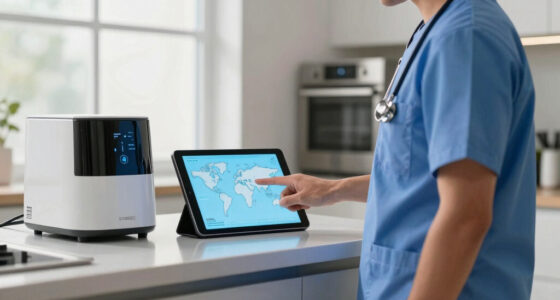
Today’s egg timers aren’t just about counting down. They’re smart. Many include sensors that detect water boiling, egg firmness, or temperature. Connected via Bluetooth or Wi-Fi, they sync with your smartphone, letting you set timers remotely or get notifications when your eggs are ready.
For example, some smart timers monitor the exact temperature of boiling water and adjust timing automatically. Others use sensors to gauge egg doneness, delivering perfect results every time. They often integrate with voice assistants like Alexa or Google, turning your kitchen into a high-tech playground.
The importance of these innovations lies in their ability to account for variables that traditional timers ignore. Eggs can vary in size, freshness, and cooking environment—factors that influence cooking time. Smart sensors analyze these variables in real-time, offering a tailored experience that minimizes overcooking or undercooking. This shift from static timing to dynamic, data-driven adjustments signifies a major leap toward culinary precision and consistency, ultimately elevating everyday cooking to a level once reserved for professional kitchens.
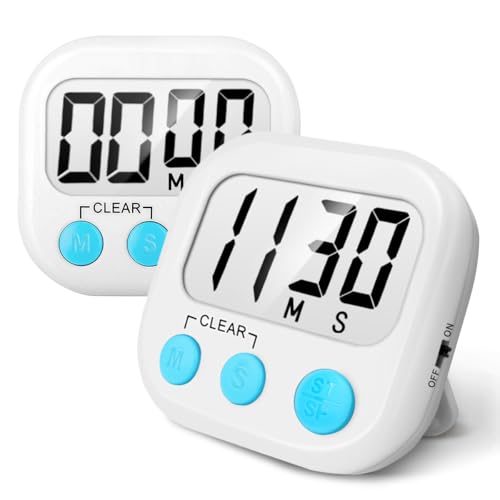
AOUCE Digital Kitchen Timers for Cooking, Timer for Kids 2 Pack White
- Large Digital Display: Easy-to-read digital timer
- Loud Audible Alarm: Hear the alarm from another room
- Magnetic & Stand Backing: Flexible placement options for convenience
As an affiliate, we earn on qualifying purchases.
As an affiliate, we earn on qualifying purchases.
The Tech Behind Today’s Egg Timers: Sensors and Connectivity
Modern egg timers leverage sensors—temperature, humidity, water level—to optimize cooking times. These sensors feed data into a microcontroller, which adjusts timing based on real-time conditions. This means fewer overcooked eggs and more consistent results.
Plus, connectivity plays a big role. Using Bluetooth or Wi-Fi, timers sync with apps, allowing remote monitoring and alerts. Some even learn your preferences over time, using AI to suggest perfect cooking durations for different eggs or recipes.
The significance of this technology lies in its ability to adapt to changing conditions, providing a level of precision that static timers can’t match. By continuously monitoring and adjusting, these timers reduce the margin of error inherent in manual timing, leading to better culinary outcomes and saving time. The integration of connectivity and AI not only enhances accuracy but also personalizes the cooking experience, making it more intuitive and aligned with individual preferences—an essential advancement for modern kitchens.
Comparison: Traditional vs. Smart Egg Timers
| Feature | Traditional Egg Timer |
|---|---|
| Type | Mechanical or simple digital |
| Accuracy | Moderate, depends on user setting |
| Features | Single countdown, alarm |
| Connectivity | None |
| Feature | Smart Egg Timer |
|---|---|
| Type | Sensor-based, connected device |
| Accuracy | High, adjusts for water/egg condition |
| Features | Remote control, alerts, data logging |
| Connectivity | Bluetooth, Wi-Fi, app integration |
Practical Tips for Using Egg Timers Now
- Use a digital or smart timer for more consistent results—especially for soft or hard eggs.
- Take advantage of app features to monitor your eggs from another room or while multitasking.
- Calibrate your traditional timer by testing with a known boiling time—like a 7-minute egg—to get familiar with its accuracy.
- Pair smart sensors with your favorite recipes to learn your ideal timing—over time, these tools adapt to your preferences.
What’s Next for Egg Timers? The Future of Kitchen Timing
Expect smarter sensors that not only monitor water or egg firmness but also integrate with your entire kitchen system. Imagine a timer that detects when your water reaches a precise temperature and adjusts itself automatically. AI will personalize cooking based on your habits and preferences, making perfect eggs effortless.
With the rise of IoT, your kitchen could become a seamless, intelligent environment—where timers, ovens, and even refrigerators talk to each other. The future is about simplicity, precision, and customization at your fingertips.
Frequently Asked Questions
Are traditional egg timers still useful today?
Absolutely. They’re simple, reliable, and don’t need batteries. Just test and calibrate them a few times to match your preferred boiling times. They’re great for quick, no-fuss timing.
How accurate are smart sensors compared to manual timers?
Smart sensors can adjust for variables like water temperature and egg size, making them more accurate than traditional timers—especially for achieving consistent results with soft or runny eggs.
Can I use a smart timer for other cooking tasks?
Yes. Many smart timers are versatile, suitable for boiling, baking, or even sous-vide cooking. They can be programmed for different recipes and monitoring needs.
Are smart egg timers worth the investment?
If you love precision, convenience, and tech integration, they’re a smart investment. For simple boiling, a traditional timer often suffices—so it depends on your cooking style.
What safety precautions should I take with electronic timers?
Always keep electronic devices away from water and heat sources. Use surge protectors if needed, and follow manufacturer instructions. For any electrical work, consult a licensed professional.
Conclusion
Egg timers have come a long way—from grains of sand to sensors that watch over your eggs like a kitchen sentinel. The next time you hear that beep, remember: it’s the result of centuries of innovation, making your cooking easier and more precise than ever.
Next time you set a timer, think about how you’re part of a tradition that’s grown smarter with each generation. Your kitchen’s future is here—let it make your mornings simpler and your eggs perfect every time.
College move-in / dorm season Picks
dorm essentials
As an affiliate, we earn on qualifying purchases.