TL;DR
Open a free Amazon Business account
Business pricing, bulk buying and tax-exempt orders.
Create a free accountAs an affiliate, we earn on qualifying purchases.
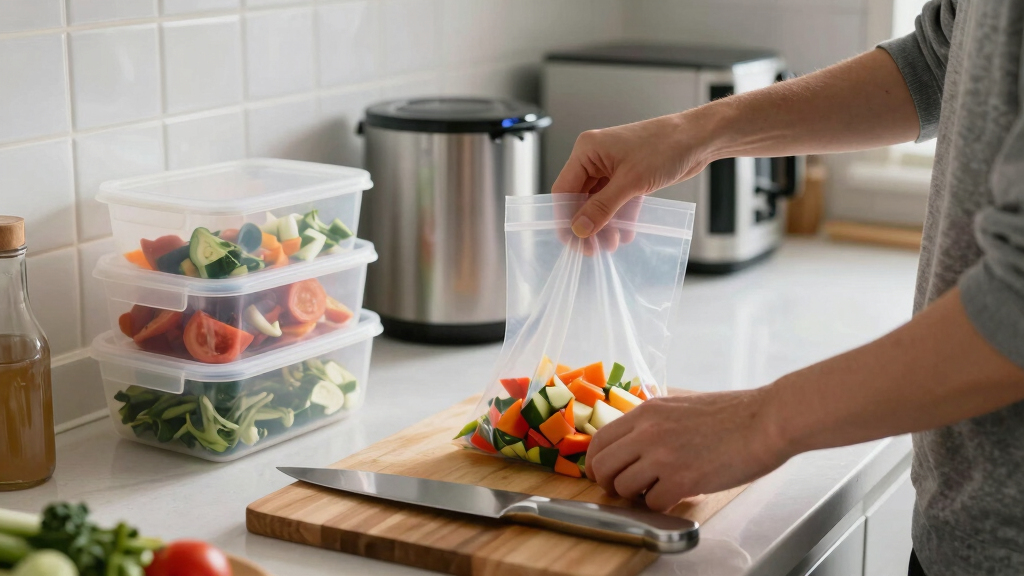
Silicone storage bags are flexible and space-saving, great for sous-vide and freezing. Rigid containers are sturdy and stackable, perfect for leftovers and meal prep. Your choice depends on your prep habits and storage priorities.
When you’re juggling meal prep, storage, and on-the-go snacking, your choice of containers matters. It can affect freshness, convenience, and even your environmental footprint. But with options like silicone bags and rigid containers, which one really fits your prep style? That’s what we’re here to figure out.
Whether you’re freezing bulk meals, marinating chicken, or packing lunch for the kids, understanding the strengths of each storage type helps you make smarter, more practical choices. Let’s break down what sets them apart — and how to pick the right one for your kitchen.
Silicone bags are perfect for freezing, sous-vide, and space-saving storage thanks to their flexibility and heat resistance.
Rigid containers excel at stacking, protecting, and storing leftovers long-term, especially in glass or stainless steel options.
Both options are environmentally friendly when reused, but initial costs and durability vary—consider your budget and needs.
Proper cleaning extends lifespan: silicone bags need thorough rinsing or dishwasher cleaning; glass/stainless containers are simple to maintain.
Evaluate your prep style with questions about freezing, stacking, and space to pick the best storage for your routines.
Silicone Storage Bags vs Rigid Containers
Which fits your prep style? Flexible bags save space and move easily from freezer to sous-vide. Rigid containers stack cleanly, guard delicate food, and make leftovers effortless. The right answer is usually a smarter mix—not a single winner.
Two storage philosophies
Silicone adapts around food and unused space. Rigid storage creates a stable shell around it. Your ideal choice follows the thing you value most: compact versatility or structured protection.
Silicone storage bags
Reusable food-grade silicone pouches behave like high-performance snack bags. They conform to irregular contents, squeeze out excess air and fold flat when empty.
- Best at: freezing, marinating, portioning and sous-vide
- Space profile: compact in use and collapsible when empty
- Tradeoff: softer structure and seals that demand attention
- Care watch: rinse promptly to limit staining and odors
Rigid containers
Glass, stainless steel and sturdy plastic containers form a protective shell. They keep meals level, resist crushing and create orderly stacks in refrigerators.
- Best at: leftovers, meal prep, lunches and liquid-rich foods
- Space profile: predictable stacks but bulky when empty
- Tradeoff: extra weight and less shape flexibility
- Material edge: glass is non-porous and resists odors
Choose bags when food should fit the space. Choose rigid containers when the space should protect the food.
Where each format wins
No material dominates every task. Compare real kitchen behaviors—stacking, sealing, temperature, cleanup and protection—before investing in a full set.
| Feature | Silicone storage bags | Rigid containers | Practical edge |
|---|---|---|---|
| Flexibility | ✓Conforms to contents | ✗Fixed shape | Silicone |
| Empty storage | ✓Folds nearly flat | ✗Retains full volume | Silicone |
| Stackability | ~Possible, less stable | ✓Stable modular stacks | Rigid |
| Impact protection | ✗Can puncture or squash | ✓Protective shell | Rigid |
| Liquid security | ~Depends on perfect seal | ✓Secure snap or screw lids | Rigid |
| Heat versatility | ✓Up to about 428°F / 220°C | ~Varies by material and lid | Silicone |
| Odor resistance | ~May retain strong aromas | ✓Excellent in glass or steel | Rigid |
| Portability | ✓Light and adaptable | ~Bulkier, especially glass | Silicone |
| Long-term durability | ~Years with careful use | ✓Glass may last decades | Rigid |
Always follow manufacturer instructions for microwave, oven, boiling and dishwasher use. Lid temperature limits may differ from the container body.
Match the vessel to the job
These directional scores translate common storage characteristics into a quick visual. A higher score means the format is generally better suited to that particular priority.
Capability scorecard
Fast use-case selector
Press out excess air and fit irregular gaps.
Stack uniform servings without crushing them.
Maximize food-to-marinade contact and heat access.
Favor a secure lid and upright stability.
Collapse empty bags to recover cabinet space.
Shield fruit, baked goods and composed meals.
Make the choice in five moves
Start with the food—not the product. Temperature, contents, storage geometry and transport risk reveal which format will create the least friction.
Define the food
Is it crushable, liquid-rich, irregularly shaped or portioned?
Check temperature
Will it be frozen, microwaved, boiled or used for sous-vide?
Audit your space
Do you need flat storage, flexible gaps or tidy vertical stacks?
Assess the journey
Will the food be jostled in a backpack or remain in the fridge?
Select the fit
Choose silicone for adaptability or rigid for structural security.
Five takeaways to keep
Both formats can reduce dependence on single-use storage when reused consistently. Longevity comes down to choosing the right material for each job and maintaining it well.
Flex for freezing
Silicone excels at freezer portions, marinades and sous-vide cooking.
Structure for stacks
Rigid formats protect leftovers and organize meal-prep shelves.
Reuse changes the math
Higher upfront costs can pay back through repeated, long-term use.
Care extends lifespan
Prompt cleaning prevents residue, staining and persistent odors.
A hybrid kit wins
Use each format where its defining strength removes friction.
Open, rinse, dry fully
Clean corners and seals thoroughly. Prop bags open while drying to prevent trapped moisture and odors.
Inspect lids and seals
Glass and stainless steel clean easily, but removable gaskets and lid hinges still need regular attention.
Vent before reheating
Release steam by opening or venting the closure, and always verify the maker’s temperature guidance.
What Are Silicone Storage Bags and Why Do They Matter?
Silicone storage bags are flexible, durable pouches made from food-grade silicone—think of them as high-tech, reusable snack bags on steroids. They’re heat-resistant, freezer-safe, and can go from microwave to boiling water without melting or warping. For example, you can fill one with berries, squeeze out the air, and toss it in the freezer—then pop it into the microwave for a quick thaw.
Their main advantage? Flexibility. They conform to the contents, which means they can adapt to a variety of shapes and sizes, allowing you to optimize space in your fridge or freezer. This flexibility can significantly reduce clutter and make stacking more efficient. Additionally, their ease of cleaning—either by rinsing or placing in the dishwasher—makes them a practical choice. However, this flexibility comes with tradeoffs: they may not provide the same level of leak-proof security for liquids or messy foods compared to rigid options, and their pliability can sometimes make sealing more challenging if not used properly.
Understanding why this matters: in a busy kitchen, space efficiency and ease of use are crucial. Silicone bags’ adaptability means you can store more in less space, but you must also consider the importance of a secure seal for certain foods. Their versatility makes them ideal for a wide range of tasks, but knowing when they might fall short helps you avoid potential spills or spoilage. This understanding can influence how you plan your storage—whether you prioritize maximizing space or ensuring leak-proof containment for liquids or messy ingredients.

Reusable Food Bags, 12 Pack 100% Silicone Food Storage Bags Stand Up Zip Lock Container, Freezer Microwave Oven Dishwasher Safe, 4 Medium 4 Small 4 Extra Small, Aqua
- Food-Grade Silicone Material: 100% food-grade, BPA-free, non-toxic
- Multi-Size Set: Includes 4 medium, 4 small, 4 extra small
- Safe for Microwave, Freezer, Oven: Heat resistant up to 428℉
As an affiliate, we earn on qualifying purchases.
As an affiliate, we earn on qualifying purchases.
Rigid Containers: The Sturdy Workhorse of Food Storage
Rigid containers are your classic, solid options—made from glass, stainless steel, or sturdy plastics. They’re designed to provide a firm, protective shell around your food, which is especially important for items that need to stay intact or avoid contamination. For example, a glass container filled with roasted vegetables not only keeps the food fresh but also prevents accidental spills and physical damage. Their sturdy construction ensures that contents are protected from crushing, squishing, or external impacts during transport or stacking.
Their strength lies in Protection. They prevent crushing or squishing your food, and glass, in particular, doesn’t stain or absorb odors over time, maintaining food purity. This durability is crucial when storing items that might leak or are sensitive to environmental factors. The tradeoff? They tend to be less flexible—bulkier and heavier—making them less ideal for maximizing space in small kitchens or for on-the-go use. Yet, their stability and long-term resilience make them invaluable for meal prepping, leftovers, and situations where food integrity is paramount. Choosing rigid containers means prioritizing protection and longevity over flexibility and compactness.
Understanding this tradeoff: rigid containers are like the armored vehicles of food storage—they offer unmatched protection but at the expense of portability and space efficiency. This means they’re better suited for home storage or situations where durability is key, rather than for quick trips or limited-space environments. Their ability to withstand impacts and prevent leaks makes them a reliable choice when you need your food to arrive safely and stay fresh for longer periods.
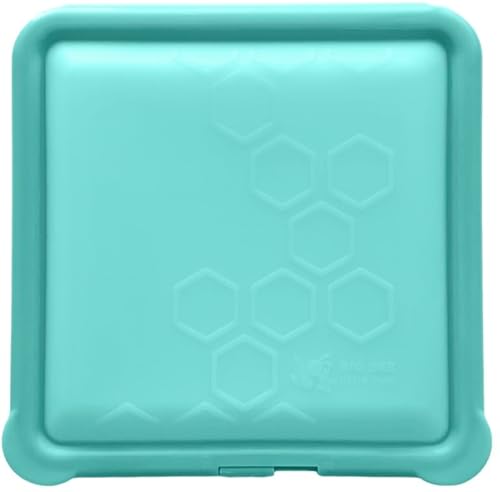
Big Bee, Little Bee SoftShell Reusable Silicone Food Storage Container – Clamshell Snap-Close Design, No Lost Lids, Easy to Clean, Compact for Travel, Meal Prep, Microwave Freezer and Dishwasher Safe
- Lid stays attached: Connected clamshell design prevents lid loss
- Spill-resistant slide lock: Secure closure for travel and meal prep
- Dishwasher safe: Easy to clean with wide opening
As an affiliate, we earn on qualifying purchases.
As an affiliate, we earn on qualifying purchases.
Silicone Bags vs Rigid Containers: The Head-to-Head Comparison
| Feature | Silicone Storage Bags | Rigid Containers |
|---|---|---|
| Flexibility | Highly flexible, conform to contents, adapt to various shapes, saving space | |
| Space Saving | Very compact, foldable when empty, ideal for maximizing space | |
| Seal Security | Zip-top or pinch-lock, generally reliable but can sometimes leak if not sealed properly | |
| Protection | Protects against leaks and spills, but less impact resistant; prone to punctures or tearing | |
| Ease of Cleaning | Dishwasher safe, but may stain or retain odors over time if not rinsed promptly | |
| Temperature Range | Up to 428°F (220°C), microwave, freezer safe, versatile for hot and cold | |
| Durability | Long-lasting with proper care, but can stain or tear over years of frequent use | |
| Cost | Higher upfront cost, but a cost-effective investment due to longevity and reusability | |
| Best For | Sous-vide, freezing, portioning, marinating | |
| Use For | Leftovers, snacks, marinating, travel | |
| Stackability | Limited, folds flat and can be stored easily when not in use | |
| Protection from Impact | Less impact resistant; prone to punctures or tears if mishandled |

Winrock Reusable 100% Silicone Food Storage Bags, Sandwich Snack Bags New Generation Stand Up Zip Container for Soup and Leftovers, Plastice & BPA Free, Microwave Oven Safe 3 Pack (51oz, 34oz, 17oz)
- Set Includes: Three sizes of silicone storage bags
- Material: 100% pure, BPA-free silicone
- Reusable Design: Durable and easy to wash
As an affiliate, we earn on qualifying purchases.
As an affiliate, we earn on qualifying purchases.
Frequently Asked Questions
Are silicone storage bags safe for microwave use?
Yes, food-grade silicone bags are safe for microwave reheating up to 428°F (220°C). Just ensure they are vented or partially open to release steam and prevent pressure buildup. Always check the manufacturer’s guidelines for specific temperature limits.
Which lasts longer: silicone bags or glass containers?
Both are durable, but glass containers often last decades if taken care of properly. Silicone bags can also last several years but may show signs of wear like staining or tearing over time, especially with frequent use. The longevity depends on usage and maintenance; glass can withstand more impacts without damage, but silicone’s flexibility can sometimes prolong its usability if handled carefully. This longevity impacts your decision: investing in durable, long-lasting containers can save money and reduce waste over time, but you should also consider how each type fits your lifestyle and storage needs.
Can silicone bags be used for hot foods or liquids?
Absolutely. Silicone bags handle hot foods and liquids well—up to 428°F (220°C). They’re perfect for steaming, boiling, or reheating, making them versatile for various cooking needs. Proper sealing and venting are essential to avoid pressure buildup during heating. Their heat resistance means you can cook or reheat directly in the bag, which can streamline meal prep and reduce dishwashing. This capability makes them a flexible, multifunctional tool in your kitchen arsenal.
Are rigid containers better for storing leftovers?
Rigid containers, especially glass or stainless steel, provide excellent protection and stackability for leftovers. They’re less prone to leaks and can often go from fridge to oven or microwave without transferring food to another dish. Their sturdy design also helps prevent accidental spills during transport, making them ideal for meal prep and storage that demands durability. The tradeoff is that they are bulkier and heavier, which might be less convenient for on-the-go use or limited storage spaces, but their reliability in protecting food makes them a preferred choice for long-term storage and handling fragile or spill-prone foods.
Which is more eco-friendly: silicone bags or rigid containers?
Both are reusable and reduce single-use plastic waste. Silicone bags tend to be more space-efficient and durable, making them a great eco choice for many users, especially when storage space is limited. Glass containers are non-porous, long-lasting, and free from chemicals, making them a sustainable option if handled with care. Their environmental impact depends on factors like durability, frequency of reuse, and end-of-life disposal. Investing in high-quality, long-lasting options reduces waste and minimizes environmental harm over time, making both options environmentally friendly choices when used responsibly.

10PCS 304 Stainless Steel Food Storage Containers with Airtight Leakproof Lids, Stackable Bento Lunch Box for Meal Prep, Reusable Metal Containers, Oven/Dishwasher/Freezer Safe(31.5/21/14 Oz)
- Set Includes Multiple Sizes: 10 stainless steel containers in 3 sizes
- Food-Grade Stainless Steel: Made from 304 stainless steel, BPA-free
- Durable and Rust-Resistant: Resists rust, corrosion, and odors
As an affiliate, we earn on qualifying purchases.
As an affiliate, we earn on qualifying purchases.
Conclusion
Choosing between silicone storage bags and rigid containers isn’t about which is better—it’s about what fits your kitchen flow. Think about your prep habits, space, and how often you freeze or reheat. The right tool simplifies your routine and keeps food fresher longer.
Next time you pack leftovers or batch cook, imagine the perfect container for the job. That’s the one that turns your meal prep from a chore into a breeze.
Back to school Picks
back to school
As an affiliate, we earn on qualifying purchases.