TL;DR

Get kitchen gear delivered free with Prime
- Fast, free delivery on millions of items
- Prime Video, Amazon Music and more included
- Member-only deals all year
Food safety hinges on keeping foods out of the danger zone—between 40°F and 140°F—where bacteria multiply fastest. Using a thermometer and proper storage can prevent illness and spoilage.
Ever pulled a dish out of the fridge and wondered if it’s still safe to eat? Or left leftovers on the counter a little too long? The secret to safe meal prep lies in understanding the ‘danger zone’—that temperature range where bacteria come alive and multiply fast. Get this right, and you not only keep your food tasty but also dodge serious health risks.
In this guide, you’ll learn exactly what temperatures to watch for, how to measure them, and the best habits to keep bacteria at bay. Think of it as your practical toolkit for turning home cooking into a safe and satisfying experience.
Bacteria grow fastest between 40°F and 140°F, so keeping food outside this range is a must.
Always use a food thermometer to verify internal cooking and reheating temperatures.
Cool cooked foods quickly—within 2 hours—before refrigerating to prevent bacteria growth.
Reheat leftovers thoroughly to at least 165°F for safe consumption.
Regularly check refrigerator and freezer temperatures to stay within safe limits.
The Food Danger Zone: Meal-Prep Safety Temperatures Explained
Food safety hinges on keeping perishables out of the 40°F–140°F danger zone, where bacteria multiply fastest. A reliable thermometer, rapid cooling and consistent cold storage turn temperature control into a simple daily habit.
The range where harmful bacteria can grow rapidly.
Reduce to 1 hour when the air temperature is above 90°F.
Minimum internal temperature when reheating leftovers.
Cold. Danger zone. Safely hot.
Temperature creates the conditions for bacterial growth. Refrigeration slows it, freezing halts growth while food remains frozen, and sufficient cooking heat destroys many harmful organisms. Time still matters whenever food passes through the middle range.
The safest strategy is prevention: minimize time between 40°F and 140°F, especially while cooling, serving and transporting prepared food.
The internal targets that matter
Insert a clean food thermometer into the thickest part of the food, away from bone, fat and the cooking surface. Check more than one spot in large or irregular dishes because cold pockets can remain.
Chicken and turkey
Check the thickest breast area and the innermost thigh or wing area.
Ground beef, pork and lamb
Grinding can distribute surface bacteria throughout the meat.
Steaks, chops and roasts
Follow the temperature check with a full 3-minute rest before serving.
Fish and shellfish dishes
Measure at the thickest point for a dependable internal reading.
Casseroles and mixed egg meals
Use the center of the dish rather than judging safety by appearance.
Reheated prepared foods
Stir and rotate where possible, then verify the coolest portion.
From heat to fridge to plate
A safe meal-prep routine is a connected chain. One weak link—slow cooling, a warm refrigerator or incomplete reheating—can undo careful cooking.
Measure
Probe the thickest part and verify the food-specific target.
Portion
Divide large batches into smaller amounts for faster cooling.
Cool quickly
Use shallow containers and refrigerate within the time limit.
Store cold
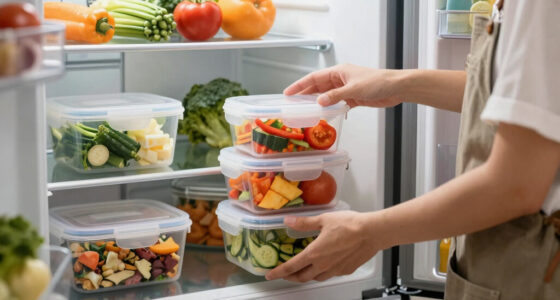
Keep the refrigerator at 40°F or below; freezer at 0°F or below.
Reheat
Bring leftovers to 165°F and confirm with the thermometer.
What each temperature does—and does not do
Cold storage controls growth; it does not make mishandled food safe again. Keep appliances consistently cold and avoid relying on smell, appearance or taste as a safety test.
| Condition | Target | Bacterial activity | Best practice |
|---|---|---|---|
| Refrigerated | ≤40°F / 4°C | ✓Growth slowed significantly | Check the appliance with a refrigerator thermometer. |
| Frozen | ≤0°F / −18°C | ✓Growth halted while frozen | Remember that bacteria may resume growth after thawing. |
| Cooling on counter | 40–140°F | ✗Rapid multiplication possible | Transfer to shallow containers and refrigerate promptly. |
| Hot holding | ≥140°F / 60°C | ✓Outside the danger zone | Monitor periodically rather than trusting the warmer setting. |
| Visual inspection | No target | ~Cannot reveal invisible hazards | Use time and temperature records instead of appearance alone. |
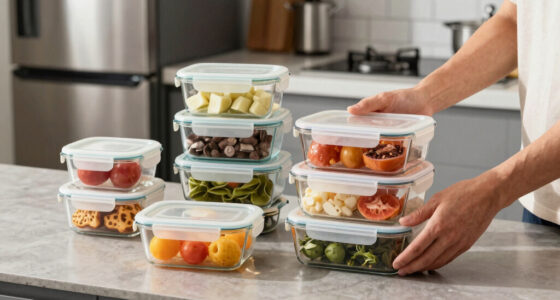
Turn one deep pot into several shallow containers.
A large batch of stew cools slowly in a deep vessel. Smaller, shallow portions release heat faster and reduce time spent in the danger zone before Wednesday’s meal.
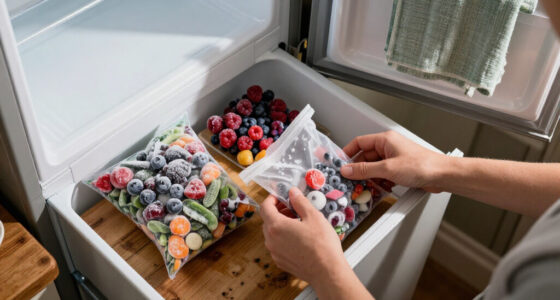
Freezing pauses growth; it does not sterilize food.
Thaw in the refrigerator, under controlled cold running water or as part of cooking—not unattended on the counter, where the surface warms before the center.
A compact meal-prep safety toolkit
Precision tools are increasingly affordable, but they work best alongside basic hygiene. Temperature control and cross-contamination prevention belong in the same routine.
Five habits to repeat
- Use a digital thermometer instead of visual cues.
- Wash hands and sanitize food-contact surfaces.
- Keep raw meat separate from ready-to-eat foods.
- Cool cooked food in shallow, covered containers.
- Check refrigerator and freezer temperatures regularly.
Tools that reduce guesswork
What exactly is the ‘danger zone’ and why does it matter?
The ‘danger zone’ is the temperature range between 40°F (4°C) and 140°F (60°C). This is where bacteria like Salmonella and E. coli thrive and multiply rapidly. When food remains within this range for too long, bacteria can grow exponentially, significantly increasing the risk of foodborne illness. For example, leaving cooked chicken at room temperature—around 70°F—for more than 2 hours provides bacteria the perfect environment to multiply, turning your safe meal into a health hazard. Understanding this range is crucial because it highlights the window where food safety is most vulnerable. The tradeoff is that while some bacteria are harmless or even beneficial at certain levels, pathogenic bacteria in this zone can produce toxins that aren’t destroyed by reheating, making prevention essential. Keeping food out of this zone isn’t just about avoiding immediate illness; it’s about preventing the accumulation of dangerous bacteria that can cause severe health issues over time.
digital food thermometer for cooking
As an affiliate, we earn on qualifying purchases.
As an affiliate, we earn on qualifying purchases.
How to safely cook foods to the right temperature
- Insert a reliable food thermometer into the thickest part of the meat or dish.
- Ensure it reaches the safe internal temp for that food: 165°F for poultry, 160°F for ground meats, 145°F for steaks with a 3-minute rest, and 145°F for seafood.
- Once it hits the mark, remove from heat and let it rest for a few minutes to let juices redistribute and temperature stabilize.
Cooking to the proper temperature isn’t just about killing bacteria—it’s about ensuring the food is cooked evenly and thoroughly, which prevents cold spots where bacteria could survive. For instance, undercooked poultry may look done but can harbor Salmonella, which is only destroyed at 165°F. Overcooking, on the other hand, can lead to dry, tough meat, so balancing the temperature is key. Using a thermometer helps you avoid the tradeoff between undercooking and overcooking, giving you precise control that enhances both safety and quality.
As an affiliate, we earn on qualifying purchases.
Why temperature control during storage prevents spoilage
| Storage Temperature | Why It Matters |
|---|---|
| 40°F (4°C) or below | Slows bacteria growth significantly, extending the shelf life of foods and reducing the risk of pathogenic bacteria reaching dangerous levels. Proper refrigeration prevents bacteria from multiplying to levels that can cause illness, especially in cooked leftovers and perishables. |
| 0°F (-18°C) or below | Freezing bacteria, effectively halting their growth. While freezing doesn’t kill bacteria, it prevents them from multiplying, which is crucial for long-term storage. However, once thawed, bacteria can resume growth, so proper handling after thawing is essential. The tradeoff here is that improper storage or fluctuating temperatures can allow bacteria to recover and multiply when foods are thawed or partially thawed, making consistent temperature maintenance vital. |
Imagine you cooked a big batch of stew on Sunday. To keep it safe until Wednesday, divide it into shallow containers and refrigerate promptly. Using a thermometer to confirm your fridge stays at or below 40°F ensures bacteria remain dormant rather than multiplying. Quick cooling—within 2 hours—is essential because bacteria can quickly recover and grow if foods stay in the danger zone during cooling or storage. Always reheat leftovers to at least 165°F to destroy any bacteria that might have survived or multiplied during storage, thus reducing the risk of foodborne illness.
As an affiliate, we earn on qualifying purchases.
Latest tools and trends that boost meal-prep safety
Digital instant-read thermometers now cost less than a fancy coffee. They give you a quick, accurate reading, so you know exactly when your food hits the right temp. Some smart probes even connect to apps, sending alerts if your food dips into the danger zone during storage.
Meanwhile, more people are paying attention to cross-contamination—using separate cutting boards for raw meat and veggies, washing hands thoroughly, and sanitizing surfaces. These simple habits, combined with precise temperature control, make a huge difference.
For example, a home cook might use a smart probe to monitor turkey during roasting, ensuring it reaches 165°F without overcooking or undercooking. That’s safety and quality in one.
As an affiliate, we earn on qualifying purchases.
What happens if you ignore temperature guidelines?
Failing to follow these guidelines isn’t just about risking a stomach upset—it’s about understanding the broader implications for your health. When foods are kept in the danger zone, bacteria multiply exponentially, increasing the chances of toxins forming that can cause severe food poisoning. Consuming undercooked or improperly stored foods can lead to symptoms like nausea, vomiting, diarrhea, dehydration, or even hospitalization. For example, bacteria like Salmonella produce toxins that aren’t destroyed by reheating, meaning even if you cook the food thoroughly later, the toxins can still cause illness. Ignoring temperature guidelines can also contribute to antibiotic resistance if pathogenic bacteria survive and propagate. The tradeoff here is that neglecting proper storage and cooking practices not only risks immediate illness but can also contribute to longer-term health issues and increased healthcare costs. It’s a clear reminder that paying attention to temperature isn’t just about following rules—it’s about protecting your health and that of your loved ones.
Frequently Asked Questions
How do I know if my food is cooked to the right temperature?
Use a digital food thermometer inserted into the thickest part of the food. For example, chicken should reach 165°F, and ground beef should hit 160°F. Relying on visual cues alone isn’t enough for safety.
How long can cooked food sit out before it’s unsafe?
Cooked food should not sit out at room temperature longer than 2 hours. If the ambient temp exceeds 90°F, cut that time down to 1 hour. Bacteria multiply quickly in warm environments.
What are the risks if I ignore temperature guidelines?
Ignoring these rules can lead to foodborne illnesses like Salmonella and E. coli infections. Symptoms include nausea, diarrhea, and vomiting, with some cases requiring medical attention. Proper temperature control keeps you safe.
Can I rely on appearance to tell if food is safe?
No. Many bacteria are invisible and don’t change the look, smell, or taste of food. Always check internal temperature with a thermometer for certainty.
Are there easy tools to help me monitor temperatures during meal prep?
Yes, digital instant-read thermometers and smart probes are affordable, accurate, and easy to use. Some connect to apps, providing real-time alerts and making food safety a breeze.
Conclusion
Getting comfortable with temperature control is your best defense against foodborne illness. Think of it as setting a safety net—you might not see bacteria, but they grow fast in the danger zone. Use your thermometer, keep foods cold or hot, and handle leftovers with care. That’s how you turn meal prep into a safe, satisfying routine.
Remember, a simple step like checking your fridge or reheating properly can save you from days of stomach trouble. Stay vigilant, stay safe—your kitchen’s health depends on it.
Fall Picks
fall essentials
As an affiliate, we earn on qualifying purchases.