TL;DR

Get kitchen gear delivered free with Prime
- Fast, free delivery on millions of items
- Prime Video, Amazon Music and more included
- Member-only deals all year
Mechanical timers rely on a wound spring and gear system, while digital timers use electronic circuits and quartz crystals. Digital offers more precision, but mechanical timers are simple and battery-free.
Mechanical timers rely on a wound spring and gear system, no batteries needed, but less precise.
Digital timers use quartz crystals and microprocessors for pinpoint accuracy and extra features.
Both types are reliable; choose based on your need for durability versus precision.
Recent tech trends include smart timers with app connectivity and customizable alerts.
Decide what matters most: simplicity and eco-friendliness or versatility and accuracy.
How Kitchen Timers Actually Work: Mechanical vs Digital Explained
TL;DR: Mechanical timers rely on a wound spring and gear system, while digital timers use electronic circuits and quartz crystals. Digital timers offer more precision, but mechanical timers are simple, durable, and battery-free.
One measures time with stored physical energy. The other counts microscopic vibrations.
Key insight: different engines, same kitchen jobTwo timer families, two ways of thinking.
Mechanical timers are like classic utility tools: turn the dial, wind the spring, wait for the bell. Digital timers are tiny timing computers: set an interval, let the circuit count down, wait for the buzzer.
Stored energy does the work
Turning the dial tightens a spring. As it unwinds, gears regulate the motion until a lever releases the bell.
Electronics count the seconds
A quartz oscillator creates a stable pulse. A microprocessor counts those pulses and triggers an electronic alarm.
Choose by cooking style
Pick mechanical for toughness and battery-free reliability. Pick digital for accuracy, multiple alarms, and flexible features.
How a mechanical timer turns a dial into a ring.
Mechanical timers are governed by physical resistance: spring tension, gear ratios, and friction. That makes them wonderfully robust, though slightly less exact than electronic timers.
Turn dial
The user rotates the knob, winding the mainspring and storing potential energy.
Spring unwinds
The spring releases energy gradually instead of snapping back all at once.
Gears regulate
A gear train and escapement control the countdown rate and move the pointer.
Bell strikes
At zero, a lever releases stored energy into a bell, chime, or ringing mechanism.
Mechanical vs digital kitchen timers.
Both are reliable for everyday cooking, but they optimize for different strengths: durability and independence on one side, precision and features on the other.
| Feature | Mechanical Timer | Digital Timer | Practical Meaning |
|---|---|---|---|
| Power source | ✓ Spring-driven, no batteries | ~ Batteries or power supply | Mechanical wins when maintenance and battery waste matter. |
| Precision | ~ Usually close enough for most cooking | ✓ Accurate to seconds | Digital is better for delicate baking and exact intervals. |
| Durability | ✓ Minimal electronics, rough handling friendly | ~ Depends on circuitry and battery condition | Mechanical is useful for outdoor cooking or busy kitchens. |
| Features | ✗ Simple countdown only | ✓ Multiple alarms, memory, count-up modes | Digital supports multitasking and complex cooking schedules. |
| Eco profile | ✓ Battery-free and long-lived | ~ Battery replacement may be required | Mechanical is the lower-maintenance, lower-waste choice. |
What each timer type optimizes.
These relative ratings summarize common real-world performance: digital dominates exact timing and feature depth, while mechanical shines in durability and battery-free simplicity.
Strength profile
Accuracy spectrum
Mechanical timers are typically sufficient within about a minute. Digital timers can target second-by-second control.
How digital timers keep such accurate time.
A tiny quartz crystal vibrates at a stable frequency, commonly 32,768 times per second. The microprocessor counts those pulses, converts them into seconds, and activates the buzzer when the countdown reaches zero.
Which timer fits your cooking style?
The best timer is the one that matches how you actually cook: quick meals, precision baking, outdoor grilling, batch prep, or smart-home multitasking.
Choose mechanical when…
- You want a battery-free device with minimal maintenance.
- You cook outdoors, camp, grill, or need rough handling resistance.
- You prefer a simple dial over programmable modes.
- You care more about reliability than second-level precision.
Choose digital when…
- You bake delicate recipes that need exact timing.
- You manage multiple pots, trays, or cooking stages at once.
- You want memory functions, backlit displays, or custom alerts.
- You like smart features such as app notifications or voice assistant support.
Smart timers add convenience, but also complexity.
Newer timers can connect by Bluetooth or Wi-Fi, send phone notifications, sync with voice assistants, and customize alarms. For busy cooks, that can be a genuine upgrade. For simple countdowns, a classic dial may still be the cleanest tool.
Classic dial
Fast setup, no screen, no battery dependency, no learning curve.
Digital timer
Precise countdowns, multiple alarms, compact display, better multitasking.
Smart timer
Remote alerts, app control, voice assistant links, customizable sounds.
Best fit
Pick the simplest tool that solves your real kitchen timing problem.
What Are the Main Types of Kitchen Timers and How Do They Differ?
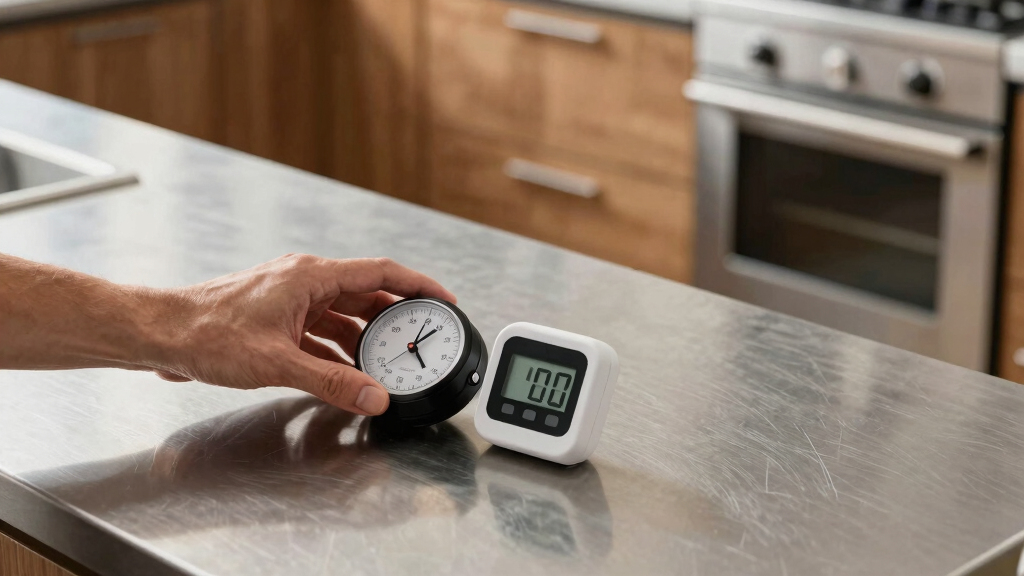
Kitchen timers come mainly in two flavors: mechanical and digital. Mechanical timers run on a simple gear and spring system, without any need for batteries. Digital timers, on the other hand, depend on electronic circuits and often feature a digital display. Imagine turning a dial on a vintage oven timer versus tapping buttons on a sleek touchscreen—each works differently but aims for the same goal: perfectly timed cooking.
Think of mechanical timers as the classic, sturdy bicycle—reliable and straightforward. Digital timers are like a smartwatch—compact, feature-rich, and precise. Your choice depends on what matters most: durability and simplicity or accuracy and versatility.
As an affiliate, we earn on qualifying purchases.
How Does a Mechanical Kitchen Timer Keep Time? It’s All About Gears and Springs
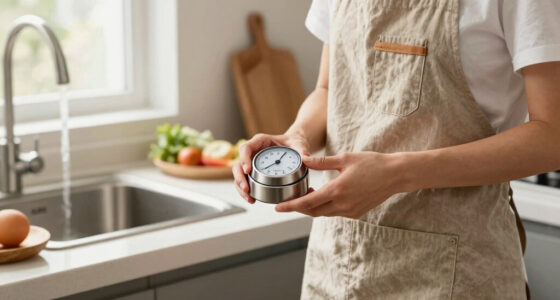
Mechanical timers keep time through a wound spring that slowly unwinds, turning a series of tiny gears. When you turn the dial to set it, you’re actually tightening that spring. As the spring unwinds at a controlled rate, it moves the gear train, which slowly turns a pointer or dial. When the set time hits zero, a lever releases the stored energy, striking a bell or ring.
Picture winding up a vintage pocket watch—once you release it, the gears keep ticking steadily until it’s time to stop. This simple yet clever gear system was perfected over centuries, making mechanical timers a durable choice for kitchens. The tradeoff, however, is that mechanical timers are less precise because tiny variations in spring tension or gear friction can slightly alter the timing. Yet, their robustness makes them ideal for rougher environments or outdoor use, where electronic components might fail.
As an affiliate, we earn on qualifying purchases.
How Do Digital Kitchen Timers Keep Accurate Time? The Role of Quartz Crystals and Microchips
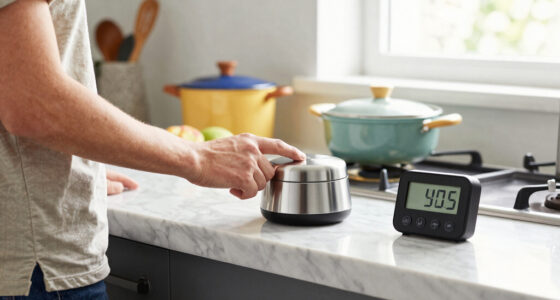
Digital timers depend on a tiny quartz crystal oscillator that vibrates at a precise frequency—usually 32,768 times per second. This consistent vibration acts like a super-accurate clock, allowing digital timers to measure time with remarkable precision. The timer’s microprocessor counts these vibrations to keep track of seconds, minutes, and hours. When you set the timer, the microchip starts counting down, and once it hits zero, it activates an electronic buzzer.
Think of a digital timer as a mini computer—small, fast, and precise. This technology means you can set timers with second-by-second accuracy, which is crucial for delicate recipes like soufflés or tempering chocolate. Additionally, digital timers often include features like multiple alarms, countdown memory, or backlit displays, which enhance usability. The tradeoff is that digital timers rely on batteries or external power sources, making them potentially less durable over long-term use if not maintained properly. The precision and extra features, however, often justify this dependency for serious cooks or those managing complex cooking schedules.
As an affiliate, we earn on qualifying purchases.
Comparison Table: Mechanical vs Digital Kitchen Timers
| Feature | Mechanical Timer | Digital Timer |
|---|---|---|
| Power source | Spring-driven, no batteries needed | Batteries or power supply |
| Precision | Less precise, typically within a minute, but sufficient for most cooking tasks | Highly precise, accurate to seconds, ideal for delicate recipes |
| Durability | Very durable, with minimal electronic components, suitable for rough handling and outdoor use | Depends on battery life and circuitry, susceptible to electronic failure over time |
| Features | Simple, one function: countdown timer | Multiple alarms, memory functions, connectivity options |
| Ease of use | Turn dial, wind spring, minimal setup | Press buttons, view digital display, sometimes programmable |
| Eco-friendliness | Very eco-friendly, no batteries or electronics | Requires batteries, which may need replacement |
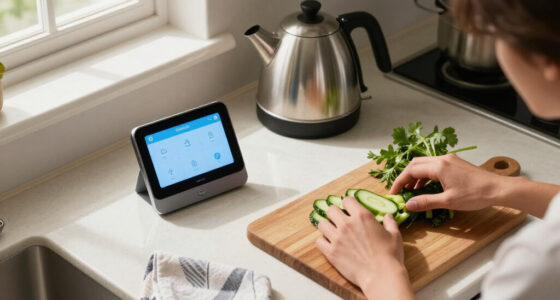
smart kitchen timer with app connectivity
As an affiliate, we earn on qualifying purchases.
As an affiliate, we earn on qualifying purchases.
Recent Trends: Tech and Design Making Timers Smarter
Today’s kitchen timers are evolving fast. Smart timers connect to your smartphone via Bluetooth or Wi-Fi, letting you control them remotely or get notifications. Some even sync with voice assistants like Alexa or Google Home. Meanwhile, digital timers now offer multiple alarms, customizable alerts, and sleek, colorful designs that brighten up your kitchen.
For example, imagine setting a timer on your phone while you’re prepping dinner and hearing the alert as you cross the room. These innovations save you from constantly glancing at the clock and make cooking more seamless. They also open up new possibilities for multitasking and integrating your cooking schedule with other smart home devices, which can significantly improve efficiency but may require a learning curve or additional setup. The tradeoff is that these features add complexity and cost, but for busy or tech-savvy cooks, they can be game-changers.
Which Timer Fits Your Cooking Style? Pros and Cons at a Glance
Choosing between a mechanical and digital timer boils down to your priorities. Here’s a quick rundown:
- Mechanical: Durable, no batteries, straightforward, and often more reliable in rough environments. Great for outdoor cooking, camping, or rustic kitchens where simplicity and toughness matter.
- Digital: Precise, versatile, packed with features like multiple alarms, timers, and connectivity options. Ideal for multitasking, complex recipes, or tech-savvy cooks who want more control and customization.
If you’re often in a hurry or love tech, go digital. If you prefer simplicity, eco-friendliness, or need a device that can withstand harsher conditions, mechanical might be your best bet. Understanding these tradeoffs helps you choose a timer that aligns with your cooking habits and environment, ensuring it’s a tool that enhances your kitchen experience.
Your Practical Guide to Picking the Right Kitchen Timer
Think about these questions before buying:
- Do you need pinpoint accuracy or just a rough estimate? Recognizing the importance of timing precision helps determine whether a digital timer’s accuracy or a mechanical timer’s simplicity suits your cooking style.
- Are you okay with replacing batteries or prefer battery-free devices? This impacts long-term maintenance and environmental impact.
- Do you want extra features like multiple alarms, memory functions, or app connectivity? These can streamline complex cooking tasks but may add complexity or cost.
- Will this timer get knocked around or need to last for years? Durability considerations influence material choice and construction quality.
For example, if you bake bread weekly and need perfect timing, a digital timer with alarms is ideal. If you enjoy outdoor grilling or want a device that can withstand rough handling, a sturdy mechanical timer may be better suited. Considering these factors ensures you select a timer that truly fits your cooking style and environment, making your kitchen routines smoother and more reliable.
What’s the Big Takeaway? Pick What Suits You Best
Understanding how each type of timer works helps you pick the right one. Mechanical timers are simple and eco-friendly, perfect for those who want reliability and durability without fuss. Digital timers offer precision, extra features, and customization, making them ideal for multitasking and complex recipes. Both types have their place in the kitchen—your choice depends on your specific needs, environment, and preferences.
Next time you set a timer, you’ll know exactly what’s happening inside that device. Maybe you’ll even appreciate the tiny gear wheels turning or the flashing digital numbers more, understanding that these are the silent partners in your culinary successes.
Frequently Asked Questions
Are mechanical timers more accurate than digital ones?
Generally, digital timers are more precise because they rely on quartz crystals and electronic components. Mechanical timers offer a rough estimate, usually within a minute, but they excel in durability and simplicity. This tradeoff means that for critical timing—like baking delicate pastries—digital timers provide peace of mind, whereas mechanical timers are reliable workhorses for everyday tasks where a few seconds’ discrepancy isn’t crucial.Can I rely on a mechanical timer for baking bread?
Yes, mechanical timers are reliable for most cooking tasks. However, their less precise nature means they might not be ideal for recipes requiring exact timing, such as proofing dough or delicate baking. The tradeoff here is between robustness and precision—mechanical timers are sturdy and dependable but may require a bit of extra attention to ensure perfect results in recipes that demand exact timing.Do digital timers require batteries?
Most digital timers need batteries to operate, which introduces a dependency on power sources and potential maintenance. Some newer models include rechargeable batteries or can be plugged into an outlet, reducing battery replacements. The tradeoff is convenience versus environmental impact—batteries add to waste and cost, but they enable advanced features and portability that many cooks find valuable.Are smart timers worth the extra cost?
If you love controlling your kitchen from your phone or want advanced features like voice commands and remote monitoring, smart timers can be a game-changer. They add convenience and integration with other smart home devices, saving time and reducing the mental load. The tradeoff is that they are more expensive, require setup, and depend on your Wi-Fi connection—so they’re best suited for tech-savvy cooks or those managing busy schedules who value automation.How should I clean and maintain my mechanical timer?
Keep your mechanical timer dry and dust-free to ensure smooth operation. Avoid dropping or exposing it to moisture, which can damage internal components. Periodic gentle cleaning with a dry cloth is sufficient, and lubricating the gears occasionally can prolong its lifespan. The tradeoff is minimal maintenance for maximum durability—these timers are designed to withstand everyday kitchen conditions and can last for years with proper care.Conclusion
Knowing what makes each timer tick helps you choose the right tool for your kitchen. Whether you prefer the rugged charm of mechanical gears or the sleek precision of digital circuits, understanding their inner workings makes cooking more confident and fun. Next time you set a timer, think of the tiny gears turning or the microchip counting down—your secret kitchen allies.Fall Picks
fall essentials
As an affiliate, we earn on qualifying purchases.